MENU

BILINGUAL BLOG – BLOG SONG NGỮ ANH VIỆT SHARE KNOWLEGE AND IMPROVE LANGUAGE

--------------------------- TÌM KIẾM TRÊN BLOG NÀY BẰNG GOOGLE SEARCH ----------------------------

TXT-TO-SPEECH – PHẦN MỀM ĐỌC VĂN BẢN

Click phải, chọn open link in New tab, chọn ngôn ngữ trên giao diện mới, dán văn bản vào và Click SAY – văn bản sẽ được đọc với các thứ tiếng theo hai giọng nam và nữ (chọn male/female)

- HOME - VỀ TRANG ĐẦU

CONN'S CURENT THERAPY 2016 - ANH-VIỆT

150 ECG - 150 ĐTĐ - HAMPTON - 4th ED.

VISUAL DIAGNOSIS IN THE NEWBORN

Friday, April 8, 2011

Traffic Safety Poster Contest 2 - Thi vẽ áp-phích cổ động An Toàn Giao thông 2

Traffic Safety Poster Contest 2 - Thi vẽ áp-phích cổ động An Toàn Giao thông 2

its 65th year, AAA's Traffic Safety Poster Contest communicates safety messages in schools, encourages peer-to-peer communication through creativity and establishes trust in AAA for future members and their parents.

The program continues its primary aim of reducing traffic and pedestrian crashes, the No. 1 cause of death for children ages 3 to 14.

Older students are invited to compete in subject categories relevant to novice driver safety. Students of all ages illustrate a selected safety category, under the supervision of dedicated educators and youth leaders. The program allows youth to become creative in slogan design while striving to create memorable entries, leading others to safety through example and enthusiasm. Entries are judged locally and nationally for recognition.

More than $18,000 in prize money was awarded to the 2009 national winners.

In addition to Flickr.com, winning entries are also posted on other official AAA social media sites including YouTube.com/AAA and MySpace.com/AAAeveryday.

The 2009 AAA Traffic Safety Poster Contest categories were:

PRIMARY (Grades K-2):
Pedestrian and Child Passenger Safety
(Night Time Visibility, Proper Use of Booster Seats)

ELEMENTARY (Grades 3-5):
Getting to School Safely
(Obey Your AAA School Safety Patrols, Helmet Use, Interacting With Motorists)

JUNIOR HIGH (Grades 6-8):
How to be a Good Passenger
(Buckle Up, Don’t Distract the Driver, Dangers of Using a Cell Phone or Changing the Radio/CD While Driving)

SENIOR HIGH (Grades 9-12):
Safe Teen Driving
(Alcohol Awareness, Distracted Driving, Aggressive Driving/Speeding)

photo

When you go to school, follow the rules


photo

Stop and Look

photo

A turtle doesn't go anywhere without a shell, and a bicyclist doesn't go anywhere without a helmet.

photo

Your Satisfaction can be a Distraction

photo

Buckle Up

photo

The Belt That's Always in Fashion

photo

Txt and drive you won't survive :(

photo

Stay Back, Don't Distract

photo

Don't Distract the Driver

photo

Road Rider Rules

photo

It's as eas as... 1. 2. 3. Buckle Up! Save a Life.

photo

Missing Something?

photo

Don't Distract the Driver

photo

Watch out for yourself... & others

photo

Beer Goggles Won't Improve Your Looks

photo

Don't Gamble With Your Life; Drive Safely

photo

What's Your Destination? Don't Drink and Drive.

photo

Donorcycles: Start young, always wear a helmet

photo

'B there in a sec' - Driver; 'I Know' - God

photo

Teen Driving Insanity 2


Traffic Safety Poster Contest - Thi vẽ áp-phích cổ động An Toàn Giao thông

Traffic Safety Poster Contest - Thi vẽ áp-phích cổ động An Toàn Giao thông

In its 65th year, AAA's Traffic Safety Poster Contest communicates safety messages in schools, encourages peer-to-peer communication through creativity and establishes trust in AAA for future members and their parents.

The program continues its primary aim of reducing traffic and pedestrian crashes, the No. 1 cause of death for children ages 3 to 14.

Older students are invited to compete in subject categories relevant to novice driver safety. Students of all ages illustrate a selected safety category, under the supervision of dedicated educators and youth leaders. The program allows youth to become creative in slogan design while striving to create memorable entries, leading others to safety through example and enthusiasm. Entries are judged locally and nationally for recognition.

More than $18,000 in prize money was awarded to the 2009 national winners.

In addition to Flickr.com, winning entries are also posted on other official AAA social media sites including YouTube.com/AAA and MySpace.com/AAAeveryday.

The 2009 AAA Traffic Safety Poster Contest categories were:

PRIMARY (Grades K-2):
Pedestrian and Child Passenger Safety
(Night Time Visibility, Proper Use of Booster Seats)

ELEMENTARY (Grades 3-5):
Getting to School Safely
(Obey Your AAA School Safety Patrols, Helmet Use, Interacting With Motorists)

JUNIOR HIGH (Grades 6-8):
How to be a Good Passenger
(Buckle Up, Don’t Distract the Driver, Dangers of Using a Cell Phone or Changing the Radio/CD While Driving)

SENIOR HIGH (Grades 9-12):
Safe Teen Driving
(Alcohol Awareness, Distracted Driving, Aggressive Driving/Speeding)

photo

Booster Safe Than Sorry!


photo

Look & Listen B4 Crossin' Driveways

photo

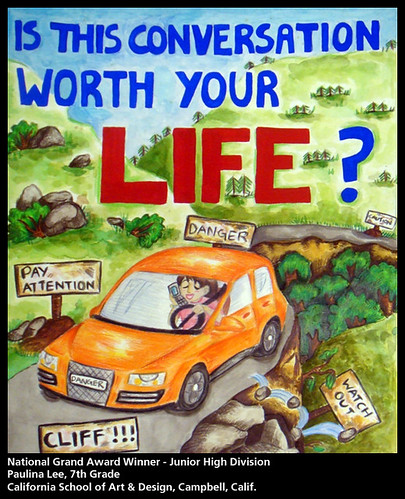
Is this conversation worth your life?

photo

Seriously???

photo

Distractions = Crashes

photo

Night Time Visibility - Wear White

photo

Look left, look right, then look left again before crossing

photo

Look both ways befor you cross the street

photo

Be Bright at Night; Stay in Sight

photo

Walk on the sidewalk, not the street

photo

Be Bright with a Flashlight

photo

Be Bright at Night

photo

Stop on Red; Kids Ahead

photo

Be Bright at Night

photo

Be Seen at Night

photo

Look Both Ways

photo

Listen to your safety patrol at your school

photo

Keep safety your primary goal; Obey your AAA School Safety Patrol

photo

Use Your Head, Wear a Helmet

photo

Avoid the worst; Put safety first

photo

Be Safe, Wear a Helmet

photo

Keep Your Head on Track

photo

Seguridad camino a la escuela

photo

There is safety in numbers


Traffic Safety Contest - Cuộc thi tìm Hiểu An Toàn Giao Thông


Traffic Safety Contest - Cuộc thi tìm Hiểu An Toàn Giao Thông

HCM CITY — About 250 children from 15 provinces nationwide took part in the National Traffic Safety Contest for Primary School Pupils in HCM City on April 2-3.

Vào ngày mùng 2 và mùng 3 tháng 4 khoảng 250 học sinh từ 15 tỉnh thành trên toàn quốc đã tham gia cuộc thi “Tìm hiểu an toàn giao thông quốc gia” dành cho học sinh tiểu học được tổ chức tại thành phố HCM.

The teams were selected from local contests that had a total participation of 4,000 pupils.

Các đội đã được chọn từ các cuộc thi tại địa phương với sự tham gia của 4000 học sinh.

"Traffic safety education is considered to be the most important, urgent issue for the education sector," said Tran Quang Quy, deputy minister of Education and Training.

Ông Trần Quang Huy thứ trưởng Bộ giáo dục và đào tạo cho biết “Giáo dục an toàn giao thông được xem là vấn đề quan trọng và cấp bách nhất của ngành giáo dục.”

The contest consisted of four main parts, including traffic safety knowledge, drawing pictures, performing role plays and composing poems, and writing and performing folk songs with new lyrics.

Cuộc thi bao gồm 4 phần chính trong đó có thi tìm hiểu kiến thức về an toàn giao thông, vẽ trang, diễn kịch và sáng tác thơ, viết và thể hiện lại các bài hát dân gian với lời mới.

Interesting games related to traffic safety and other activities were created to create a fun, joyful learning atmosphere.

Các trò chơi thú vị lien quan tới an toàn giao thông cùng các hoạt động khác đã được thực hiện nhằm tạo ra bầu không khí học tập vui vẻ.

The contest is part of the Toyota and I Learn About Traffic (TSEP) programme, organised by Toyota Viet Nam Foundation (TVF) in cooperation with the MinistryTraffic Safety Committee. of Education and Training (MOET) and the National TSEP has been implemented since the school year 2005-2006. It provides teacher manuals and teaching materials on traffic safety for teachers and pupils in all primary schools.

Cuộc thi là 1 phần của chương trình “Toyota cùng em tìm hiểu an toàn giao thông TSEP” được Tổng công ty Toyota Việt Nam và Ủy ban an toàn giao thông, Bộ giáo dục đào tạo tổ chức từ năm học 2005-2006. Chương trình hỗ trợ tài liệu về an toàn giao thông cho giáo viên và học sinh ở tất cả trường tiểu học.

Role plays are performed and seminars are organised for teachers and education officers to introduce TSEP and explain its deeper social impact.

Các buổi biểu diễn hoạt cảnh ATGT và hội thảo đã được tổ chức cho giáo viên và các cán bộ giáo dục nhằm giới thiệu chương trình TSEP và giải thích về ảnh hưởng sâu hơn của chương trình tới xã hội.

After five years of implementation, the programme has provided more than 7.5 million traffic-safety publications to first graders over the past five years since 2005.

Sau năm năm thưc hiện từ năm 2005 chương trình đã cung cấp hơn 7.5 triệu ấn bản an toàn giao thông cho học sinh lớp 1.

It freely distributed 82,000 VCDs and 82,000 guidebooks to teach traffic safety to elementary teachers, and 32 seminars for 5,000 key managers and teachers.

Tặng miễn phí 82000 đĩa VCD và 82000 sách hướng dẫn giúp các giáo viên tiểu học giảng dạy về an toàn giao thông và mở 32 cuộc hội thảo chuyên đề cho 5000 cán bộ quản lý và giáo viên điền hình.

Around 20 provincial traffic safety contests, with a total of 10,000 pupils and three national contests for 7,000 elementary students, were organised.

Ten provinces have performed hand puppet shows in 700 primary schools before 427,000 students.

Có khoảng 20 cuộc thi ở các tỉnh thành với sự tham gia của 10000 học sinh và 3 cuộc thi quốc gia với 7000 học sinh tham gia đã được tổ chức.

10 tỉnh đã có các buổi trình diễn múa rối tay tại 700 trường tiểu học cho 427000 học sinh.

"In order to reach the Government's target of preventing bad traffic accidents, we must mobilise all social resources and political organisations as well as individuals. Toyota Viet Nam Foundation is the pioneer in traffic safety education with new ideas and methods," said Than Van Thanh, the deputy head of National Traffic Safety Committee. — VNS

Ông Thân Văn Thanh, phó chủ nhiệm Ủy ban an toàn giao thông quốc gia nói “Để đạt được mục tiêu của chính phủ nhằm giảm các vụ tai nạn giao thông nghiêm trọng, chúng ta phải huy động tất cả nguồn lực xã hội các tổ chức chính trị cũng như các cá nhân. Tập đoàn Toyota đã đi đầu về giáo dục an toàn giao thông với các phương pháp và ý tưởng mới.”

TTXVN

Translated by Mr Bill


Thursday, April 7, 2011

The Science of Love - Khoa học Tình Yêu


The Science of Love - Khoa học Tình Yêu

  • There are three phases to falling in love and different hormones are involved at each stage.
  • Events occurring in the brain when we are in love have similarities with mental illness.
  • When we are attracted to somebody, it could be because subconsciously we like their genes.
  • Smell could be as important as looks when it comes to the fanciability factor. We like the look and smell of people who are most like our parents.
  • Science can help determine whether a relationship will last.

Cupid's chemicals

A man and woman's feet
People are usually in 'cloud nine' when they fall in love.

Flushed cheeks, a racing heart beat and clammy hands are some of the outward signs of being in love. But inside the body there are definite chemical signs that cupid has fired his arrow.

When it comes to love it seems we are at the mercy of our biochemistry. One of the best known researchers in this area is Helen Fisher of Rutgers University in New Jersey. She has proposed that we fall in love in three stages. Each involving a different set of chemicals.

Three Stages of Falling in Love

Stage 1: Lust

Lust is driven by the sex hormones testosterone and oestrogen. Testosterone is not confined only to men. It has also been shown to play a major role in the sex drive of women. These hormones as Helen Fisher says "get you out looking for anything".

Stage 2: Attraction

This is the truly love-struck phase. When people fall in love they can think of nothing else. They might even lose their appetite and need less sleep, preferring to spend hours at a time daydreaming about their new lover.

In the attraction stage, a group of neuro-transmitters called 'monoamines' play an important role:

  • Dopamine - Also activated by cocaine and nicotine.
  • Norepinephrine - Otherwise known as adrenalin. Starts us sweating and gets the heart racing.
  • Serotonin - One of love's most important chemicals and one that may actually send us temporarily insane.

Discover which type of partner you're attracted to by taking our face perception test.

Stage 3: Attachment

This is what takes over after the attraction stage, if a relationship is going to last. People couldn't possibly stay in the attraction stage forever, otherwise they'd never get any work done!

Attachment is a longer lasting commitment and is the bond that keeps couples together when they go on to have children. Important in this stage are two hormones released by the nervous system, which are thought to play a role in social attachments:

  • Oxytocin - This is released by the hypothalamus gland during child birth and also helps the breast express milk. It helps cement the strong bond between mother and child. It is also released by both sexes during orgasm and it is thought that it promotes bonding when adults are intimate. The theory goes that the more sex a couple has, the deeper their bond becomes
  • Vasopressin - Another important chemical in the long-term commitment stage. It is an important controller of the kidney and its role in long-term relationships was discovered when scientists looked at the prairie vole

Find out how the three stages can feel even stronger for teenagers in love, experiencing first love and first sex.

The frisky Prairie Vole

A shadow of two people kissing

In prairie vole society, sex is the prelude to a long-term pair bonding of a male and female. Prairie voles indulge in far more sex than is strictly necessary for the purposes of reproduction.

It was thought that the two hormones, vasopressin and oxytocin, released after mating, could forge this bond. In an experiment, male prairie voles were given a drug that suppresses the effect of vasopressin. The bond with their partner deteriorated immediately as they lost their devotion and failed to protect their partner from new suitors.

Looking in their genes

When it comes to choosing a partner, are we at the mercy of our subconscious? Researchers studying the science of attraction draw on evolutionary theory to explain the way humans pick partners.

It is to our advantage to mate with somebody with the best possible genes. These will then be passed on to our children, ensuring that we have healthy kids, who will pass our own genes on for generations to come.

When we look at a potential mate, we are assessing whether we would like our children to have their genes. There are two ways of doing this that are currently being studied, (to find out more click on the links): pheromones and appearance.


The Chemistry of Love - Hóa học tình yêu

The Chemistry of Love - Hóa học tình yêu

There are a lot of chemicals racing around your brain and body when you're in love. Researchers are gradually learning more and more about the roles they play both when we are falling in love and when we're in long-term relationships. Of course, estrogen and testosterone play a role in the sex drive area (see How Sex Works). Without them, we might never venture into the "real love" arena.

That initial giddiness that comes when we're first falling in love includes a racing heart, flushed skin and sweaty palms. Researchers say this is due to the dopamine, norepinephrine and phenylethylamine we're releasing. Dopamine is thought to be the "pleasure chemical," producing a feeling of bliss. Norepinephrine is similar to adrenaline and produces the racing heart and excitement. According to Helen Fisher, anthropologist and well-known love researcher from Rutgers University, together these two chemicals produce elation, intense energy, sleeplessness, craving, loss of appetite and focused attention. She also says, "The human body releases the cocktail of love rapture only when certain conditions are met and ... men more readily produce it than women, because of their more visual nature."


Researchers are using functional magnetic resonance imaging (fMRI) to watch people's brains when they look at a photograph of their object of affection. According to Helen Fisher, a well-known love researcher and an anthropologist at Rutgers University, what they see in those scans during that "crazed, can't-think-of-anything-but stage of romance" -- the attraction stage -- is the biological drive to focus on one person. The scans showed increased blood flow in areas of the brain with high concentrations of receptors for dopamine -- associated with states of euphoria, craving and addiction. High levels of dopamine are also associated with norepinephrine, which heightens attention, short-term memory, hyperactivity, sleeplessness and goal-oriented behavior. In other words, couples in this stage of love focus intently on the relationship and often on little else.

Another possible explanation for the intense focus and idealizing view that occurs in the attraction stage comes from researchers at University College London. They discovered that people in love have lower levels of serotonin and also that neural circuits associated with the way we assess others are suppressed. These lower serotonin levels are the same as those found in people with obsessive-compulsive disorders, possibly explaining why those in love "obsess" about their partner.


Chemical Bonding

Love Junkies
There are those who may be addicted to that love "high." They need that amphetamine-like rush of dopamine, norepinephrine and phenylethylamine. Because the body builds up a tolerance to these chemicals, it begins to take more and more to give love junkies that high. They go through relationship after relationship to get their fix.

In romantic love, when two people have sex, oxytocin is released, which helps bond the relationship. According to researchers at the University of California, San Francisco, the hormone oxytocin has been shown to be "associated with the ability to maintain healthy interpersonal relationships and healthy psychological boundaries with other people." When it is released during orgasm, it begins creating an emotional bond -- the more sex, the greater the bond. Oxytocin is also associated with mother/infant bonding, uterine contractions during labor in childbirth and the "let down" reflex necessary for breastfeeding.

Vasopressin, an antidiuretic hormone, is another chemical that has been associated with the formation of long-term, monogamous relationships (see "Are We Alone in Love?"). Dr. Fisher believes that oxytocin and vasopressin interfere with the dopamine and norepinephrine pathways, which might explain why passionate love fades as attachment grows.

Endorphins, the body's natural painkillers, also play a key role in long-term relationships. They produce a general sense of well-being, including feeling soothed, peaceful and secure. Like dopamine and norepinephrine, endorphins are released during sex; they are also released during physical contact, exercise and other activities. According to Michel Odent of London's Primal Health Research Center, endorphins induce a "drug-like dependency."

The Long Haul?


©2002 FOX BROADCASTING
Homer and Marge of "The Simpsons" stay together week after week.

What about when that euphoric feeling is gone? According to Ted Huston at the University of Texas, the speed at which courtship progresses often determines the ultimate success of the relationship. What they found was that the longer the courtship, the stronger the long-term relationship.

The feelings of passionate love, however, do lose their strength over time. Studies have shown that passionate love fades quickly and is nearly gone after two or three years. The chemicals responsible for "that lovin' feeling" (adrenaline, dopamine, norepinephrine, phenylethylamine, etc.) dwindle. Suddenly your lover has faults. Why has he or she changed, you may wonder. Actually, your partner probably hasn't changed at all; it's just that you're now able to see him or her rationally, rather than through the blinding hormones of infatuation and passionate love. At this stage, the relationship is either strong enough to endure, or the relationship ends.

If the relationship can advance, then other chemicals kick in. Endorphins, for example, are still providing a sense of well-being and security. Additionally, oxytocin is still released when you're having sex, producing feelings of satisfaction and attachment. Vasopressin also continues to play a role in attachment.

Are We Alone in Love?


Photo courtesy USGS
Prairie vole

Only three percent of mammals (aside from the human species) form "family" relationships like we do. The prairie vole is one such animal. This vole mates for life and prefers spending time with its mate over spending time with any other voles. Voles even go to the extreme of avoiding voles of the opposite sex.

When they have offspring, the couple works together to care for them. They spend hours grooming each other and just hanging out together. Studies have been done to try to determine the chemical makeup that might explain why the prairie vole forms this lifelong, monogamous relationship when its very close relative, the montane vole, does not.

According to studies by Larry Young, a social attachment researcher at Emory University, what happens is that when the prairie vole mates, like humans, the hormones oxytocin and vasopressin are released. Because the prairie vole has the needed receptors in its brain for these hormones in the regions responsible for reward and reinforcement, it forms a bond with its mate. That bond is for that particular vole based on its smell -- sort of like an imprint. As further reinforcement, dopamine is also released in the brain's reward center when they have sex, making the experience enjoyable and ensuring that they want to do it again. And because of the oxytocin and vasopressin, they want to have sex with the same vole.

Because the montane vole does not have receptors for oxytocin or vasopressin in its brain, those chemicals have no effect, and they continue with their one-night stands. Other than those receptors, the two vole species are almost entirely the same in their physical makeup.


Download a book here

WHY HIM WHY HER