MENU

BILINGUAL BLOG – BLOG SONG NGỮ ANH VIỆT SHARE KNOWLEGE AND IMPROVE LANGUAGE

--------------------------- TÌM KIẾM TRÊN BLOG NÀY BẰNG GOOGLE SEARCH ----------------------------

TXT-TO-SPEECH – PHẦN MỀM ĐỌC VĂN BẢN

Click phải, chọn open link in New tab, chọn ngôn ngữ trên giao diện mới, dán văn bản vào và Click SAY – văn bản sẽ được đọc với các thứ tiếng theo hai giọng nam và nữ (chọn male/female)

- HOME - VỀ TRANG ĐẦU

CONN'S CURENT THERAPY 2016 - ANH-VIỆT

150 ECG - 150 ĐTĐ - HAMPTON - 4th ED.

VISUAL DIAGNOSIS IN THE NEWBORN

Saturday, February 5, 2011

DREW GILPIN FAUST's Installation address: Diễn văn nhậm chức của Hiệu trưởng Trường Đại học Harvard


Installation address:

Cambridge, Mass.

Oct. 12, 2007

Unleashing our most ambitious imaginings

DREW GILPIN FAUST

Diễn văn nhậm chức của Hiệu trưởng Trường Đại học Harvard

Cambridge, Mass.

12/10/ 2007

Hãy chắp cánh cho những ước mơ đầy tham vọng nhất của chúng ta

DREW GILPIN FAUST

I stand honored by your trust, inspired by your charge. I am grateful to the Governing Boards for their confidence, and I thank all of you for gathering in these festival rites. I am indebted to my three predecessors, sitting behind me, for joining me today. But I am grateful to them for much more – for all that they have given to Harvard and for what each of them has generously given to me – advice, wisdom, support. I am touched by the greetings from staff, faculty, students, alumni, universities, from our honorable Governor, and from the remarkable John Hope Franklin, who has both lived and written history. I am grateful to the community leaders from Boston and Cambridge who have come to welcome their new neighbor. I am a little stunned to see almost every person I am related to on earth sitting in the front rows. And I would like to offer a special greeting of my own to my teachers who are here – teachers from grade school, high school, college and graduate school – who taught me to love learning and the institutions that nurture it.

Tôi được vinh dự đứng ở nơi đây là nhờ lòng tin của quý vị, được tiếp thêm nghị lực và sức sáng tạo nhờ sự giao phó trách nhiệm của quý vị. Tôi rất biết ơn Hội đồng Quản trị nhà trường về sự tin cậy đối với tôi, và tôi xin cảm ơn tất cả quý vị đã đến đây tham dự nghi lễ này. Tôi rất biết ơn ba vị tiền nhiệm đang ngồi sau tôi đã đến với tôi hôm nay, nhưng tôi còn mang ơn họ sâu sắc hơn nữa vì những gì họ đã cống hiến cho Harvard và vì những gì từng người trong các vị ấy đã hào phóng ban tặng cho tôi: những lời khuyên, sự khôn ngoan, và sự ủng hộ tinh thần. Tôi rất xúc động trước lời chào mừng của cán bộ, giảng viên, sinh viên và cựu sinh viên, cũng như của các trường đại học, của quý vị đại diện chính quyền và đặc biệt là John Hope Franklin, người đã chứng kiến và viết về lịch sử Harvard. Tôi rất biết ơn các nhà lãnh đạo của thành phố Boston và Cambridge đã đến đây để chào mừng người hàng xóm mới. Tôi hơi choáng váng khi thấy hầu như tất cả những người có mối quan hệ với tôi đều đang ngồi ở mấy hàng ghế đầu! Và tôi muốn dành lời chào mừng đặc biệt của cá nhân tôi cho các thầy cô giáo của tôi đang ngồi nơi đây, những người đã từng dạy tôi từ tiểu học, trung học, cho đến đại học, những người đã dạy tôi yêu mến sự học cũng như những ngôi trường đã nuôi dưỡng tinh thần ham học ấy.

We gather for a celebration a bit different from our June traditions. Commencement is an annual rite of passage for thousands of graduates; today marks a rite of passage for the University. As at Commencement, we don robes that mark our ties to the most ancient traditions of scholarship. On this occasion, however, our procession includes not just our Harvard community, but scholars – 220 of them – representing universities and colleges from across the country and around the world. I welcome and thank our visitors, for their presence reminds us that what we do here today, and what we do at Harvard every day, links us to universities and societies around the globe.

Chúng ta có mặt nơi đây để tổ chức một hoạt động có hơi khác với buổi lễ truyền thống tháng 6 hàng năm. Lễ phát bằng là một nghi lễ thường niên của hàng ngàn sinh viên tốt nghiệp; ngày hôm nay đánh dấu nghi lễ tốt nghiệp của trường đại học Harvard. Tại lễ tốt nghiệp, các vị hiệu trưởng chúng ta mặc chiếc áo choàng lễ phục để đánh dấu mối gắn bó của chúng ta đối với những truyền thống học vấn lâu đời nhất. Tuy nhiên, trong buổi lễ hôm nay, đoàn diễu hành không chỉ gồm có cộng đồng khoa học gia của Harvard, mà còn có 220 vị học giả đại diện cho các trường đại học trong cả nước và trên thế giới. Tôi xin nhiệt liệt chào mừng và xin cảm ơn tất cả các vị khách quý, bởi vì sự hiện diện của quý vị nhắc nhở chúng tôi rằng những gì chúng tôi làm ở đây hôm nay, và những gì mà chúng tôi làm hàng ngày hàng giờ tại Harvard, đang nối kết chúng tôi với các trường đại học và xã hội trên toàn cầu.

Today we mark new beginnings by gathering in solidarity; we celebrate our community and its creativity; we commit ourselves to Harvard and all it represents in a new chapter of its distinguished history. Like a congregation at a wedding, you signify by your presence a pledge of support for this marriage of a new president to a venerable institution. As our colleagues in anthropology understand so well, rituals have meanings and purposes; they are intended to arouse emotions and channel intentions. In ritual, as the poet Thomas Lynch has written, “We act out things we cannot put into words.” But now my task is in fact to put some of this ceremony into words, to capture our meanings and purposes.

Ngày hôm nay chúng ta đánh dấu một khởi đầu mới bằng sự tập hợp lại trong tình đoàn kết; chúng ta tôn vinh cộng đồng các nhà trí thức và sự sáng tạo của họ; chúng ta tự cam kết gắn bó với Harvard và tất cả những điều này biểu trưng cho một chương mới trong lịch sử cao quý của Harvard. Cũng như những người tham dự một lễ cưới, sự có mặt của quý vị nói lên sự ủng hộ đối với mối gắn kết giữa vị hiệu trưởng mới và một ngôi trường đáng tôn kính. Các vị đồng nghiệp ngành nhân học của chúng ta hiểu rất rõ, nghi lễ có những ý nghĩa và mục đích nhằm khơi gợi cảm xúc và ý tưởng. Trong nghi lễ, như nhà thơ Thomas Lunch đã viết, “chúng ta biểu lộ những thứ không thể diễn đạt bằng lời”. Nhưng giờ đây bổn phận của tôi thực ra là diễn đạt một vài nội dung của buổi lễ này bằng lời nói, nhằm trình bày những ý nghĩa và mục đích của chúng ta.

Inaugural speeches are a peculiar genre. They are by definition pronouncements by individuals who don’t yet know what they are talking about. Or, we might more charitably dub them expressions of hope unchastened by the rod of experience.

A number of inaugural veterans – both orators and auditors – have proffered advice, including unanimous agreement that my talk must be shorter than Charles William Eliot’s – which ran to about an hour and a half. Often inaugural addresses contain lists – of a new president’s specific goals or programs. But lists seem too constraining when I think of what today should mean; they seem a way of limiting rather than unleashing our most ambitious imaginings, our profoundest commitments.

If this is a day to transcend the ordinary, if it is a rare moment when we gather not just as Harvard, but with a wider world of scholarship, teaching and learning, it is a time to reflect on what Harvard and institutions like it mean in this first decade of the 21st century.

Diễn văn nhậm chức là một thể loại đặc biệt. Nó được định nghĩa là tuyên bố chính thức của một người mà người ấy chưa biết mình đang nói về cái gì. Hay là, chúng ta có thể nhân từ hơn, phong cho nó cái vai trò diễn đạt niềm hy vọng mà do kinh nghiệm chúng ta biết rằng hy vọng ấy rất có thể là hão huyền. Một số người kỳ cựu từng đọc diễn văn nhậm chức, cả các nhà diễn thuyết và khán thính giả, đã hiến tặng tôi nhiều lời khuyên, trong đó có một lời khuyên mà ai cũng nhất trí, là bài nói chuyện của tôi phải ngắn hơn bài diễn văn của Charles Eliot vốn kéo dài hơn một tiếng rưỡi! Diễn văn nhậm chức thường là một danh sách bao gồm những mục tiêu và chương trình hành động cụ thể của hiệu trưởng mới. Nhưng danh sách này xem ra quá nhỏ hẹp so với những gì tôi nghĩ phải là ý nghĩa của ngày hôm nay. Nó dường như là cách để giới hạn hơn là để chắp cánh cho những tưởng tượng đầy tham vọng của chúng ta, cũng như những cam kết sâu sắc nhất của chúng ta đối với nhà trường. Nếu như hôm nay là một ngày vượt lên trên sự bình thường, nếu đây là một khoảnh khắc hiếm hoi chúng ta tập hợp lại không chỉ với tư cách của Harvard, mà là một thế giới rộng lớn hơn của trí thức, của học vấn, của giảng dạy và học tập, thì đây là lúc suy ngẫm về vấn đề Harvard và những trường đại học tương tự như Harvard có một ý nghĩa như thế nào trong thập kỷ đầu của thế kỷ XXI.

Yet as I considered how to talk about higher education and the future, I found myself – historian that I am – returning to the past and, in particular, to a document I encountered in my first year of graduate school. My cousin Jack Gilpin, Class of ’73, read a section of it at Memorial Church this morning. As John Winthrop sat on board the ship Arbella in 1630, sailing across the Atlantic to found the Massachusetts Bay Colony, he wrote a charge to his band of settlers, a charter for their new beginnings. He offered what he considered “a compass to steer by” – a “model,” but not a set of explicit orders. Winthrop instead sought to focus his followers on the broader significance of their project, on the spirit in which they should undertake their shared work. I aim to offer such a “compass” today, one for us at Harvard, and one that I hope will have meaning for all of us who care about higher education, for we are inevitably, as Winthrop urged his settlers to be, “knitt together in this work as one.”

Tuy nhiên khi cân nhắc xem nên nói gì về giáo dục đại học và tương lai, tôi tự thấy mình – một nhà sử học – đang quay về quá khứ, cụ thể là một văn bản mà tôi đã bắt gặp trong năm đầu đại học. Anh họ tôi, Jack Gilpin, học khóa 73 đã đọc một chương trong đó ở nhà thờ sáng nay. Khi John Winthrop lên con tàu Arbella năm 1630 để vượt qua Đại Tây Dương và tìm ra xứ thuộc địa Vịnh Massachusetts, ông ta đã viết cho nhóm người khai hoang của ông một bản hiến chương cho sự khởi đầu của họ. Ông ta đã đưa ra cái mà ông xem là một cái “la bàn”, một loại “cẩm nang” để định hướng cho họ, một “khuôn mẫu”, nhưng không phải những trật tự hay luật lệ hiển ngôn. Thay vào đó Winthrop tìm cách hướng những người đi theo ông vào tầm quan trọng và ý nghĩa rộng lớn hơn của kế hoạch của họ, vào tinh thần mà họ cần có trong khi cùng nhau chia sẻ công việc. Tôi có mục tiêu đưa ra một cái “la bàn” như thế hôm nay, trước hết là cho trường Harvard chúng tôi, và đồng thời tôi cũng hy vọng nó có ý nghĩa ít nhiều đối với tất cả chúng ta, những người quan tâm đến nền giáo dục đại học, bởi vì chắc chắn là chúng ta đang làm cái việc mà Winthrop khẩn thiết thúc giục những người trong nhóm khai hoang của ông thực hiện: “hãy liên kết lại cùng nhau như một thể thống nhất trong công việc này”.

American higher education in 2007 is in a state of paradox – at once celebrated and assailed. A host of popular writings from the 1980s on have charged universities with teaching too little, costing too much, coddling professors and neglecting students, embracing an “illiberalism” that has silenced open debate. A PBS special in 2005 described a “sea of mediocrity” that “places this nation at risk.” A report issued by the U.S. Department of Education last year warned of the “obsolescence” of higher education as we know it and called for federal intervention in service of the national interest.

Giáo dục đại học Hoa Kỳ năm 2007 ở trong một tình trạng ngược đời – vừa lừng danh thế giới, vừa bị tấn công, phê phán dồn dập. Nhiều bài viết phổ biến những năm 80 đã kết tội các trường đại học là dạy quá ít, tiêu tốn quá nhiều tiền, các giáo sư thì lười biếng, sinh viên thì sao nhãng cẩu thả, chỉ biết ôm chặt lấy cái thứ “chủ nghĩa hẹp hòi” bắt các cuộc tranh luận cởi mở phải im miệng! Một báo cáo đặc biệt năm 2005 miêu tả đại học như “một cái biển người tầm thường khiến đất nước này đang bị đặt vào một tình thế đầy rủi ro”. Báo cáo của Bộ Giáo dục Hoa Kỳ năm ngoái cũng cảnh báo về “tình trạng lỗi thời” của giáo dục đại học như chúng ta đều biết và đã kêu gọi sự can thiệp của liên bang trong việc phục vụ lợi ích của quốc gia.

Yet universities like Harvard and its peers, those represented by so many of you here today, are beloved by alumni who donate billions of dollars each year, are sought after by students who struggle to win admission, and, in fact, are deeply revered by the American public. In a recent survey, 93 percent of respondents considered our universities “one of [the country’s] most valuable resources.” Abroad, our universities are admired and emulated; they are arguably the American institution most respected by the rest of the world.

Tuy vậy những trường đại học như Harvard, đại diện bởi nhiều người trong số quý vị đang ngồi nơi đây hôm nay, vẫn được cựu sinh viên hết sức yêu quý và họ đã hiến tặng hàng tỷ đô la cho nhà trường mỗi năm. Những trường ấy vẫn được sinh viên cạnh tranh quyết liệt để được nhận vào học, và trong thực tế vẫn có được sự kính trọng sâu sắc của công chúng Mỹ. Trong một cuộc khảo sát gần đây, 93% người được hỏi đã đánh giácác trường đại học của chúng talà “mộttrong những nguồn lực quý giá nhất của quốc gia”. Ở ngoài nước,c ác trường đại học của chúng ta được ngưỡng mộ và được coi là một mục tiêu cạnh tranh, người ta cho rằngcá c trường đại học Hoa Kỳ được kính trọng vào bậc nhất trên toàn thế giới.

How do we explain these contradictions? Is American higher education in crisis, and if so, what kind? What should we as its leaders and representatives be doing about it? This ambivalence, this curious love-hate relationship, derives in no small part from our almost unbounded expectations of our colleges and universities, expectations that are at once intensely felt and poorly understood.

Làm sao chúng ta có thể giải thích được những mâu thuẫn ấy? Phải chăng giáo dục đại học Mỹ đang khủng hoảng, và nếu như vậy, thì đó là cái gì? Chúng ta với tư cách là các nhà lãnh đạo và đại diện cho nền giáo dục đại học Mỹ nên làm gì trước tình cảnh ấy? Sự mâu thuẫn trong tư tưởng, mối quan hệ vừa yêu vừa ghét lạ lùng này có nguồn gốc không phải từ những kỳ vọng gần như vô biên đối với các trường đại học của chúng ta, những kỳ vọng được cảm nhận ngay một cách mãnh liệt nhưng lại được hiểu biết rất ít.

From the time of its founding, the United States has tied its national identity to the power of education. We have long turned to education to prepare our citizens for the political equality fundamental to our national self-definition. In 1779, for example, Thomas Jefferson called for a national aristocracy of talent, chosen “without regard to wealth, birth, or other accidental condition or circumstance” and “rendered by liberal education ... able to guard the sacred deposit of the rights and liberties of their fellow-citizens.” As our economy has become more complex, more tied to specialized knowledge, education has become more crucial to social and economic mobility. W.E.B. DuBois observed in 1903 that “Education and work are the levers to lift up a people.” Education makes the promise of America possible.

Từ những ngày đầu thành lập, Hoa Kỳ đã gắn bản sắc quốc gia với sức mạnh của giáo dục. Đã từ lâu, chúng ta dùng giáo dục để trang bị cho công dân của chúng ta nền tảng bình đẳng chính trị, điều được coi là làm nên bản sắc đất nước của chúng ta. Chẳng hạn, năm 1779, Thomas Jefferson đã triệu tập một chính phủ gồm những người tài năng, được lựa chọn “bất kể giàu nghèo, tuổi tác hay những điều kiện hoặc hoàn cảnh ngẫu nhiên nào khác, những người có thể bảo vệ những quyền và tự do thiêng liêng của công dân nước Mỹ.” Khi nền kinh tế của chúng ta phát triển phức tạp hơn, gắn bó chặt chẽ hơn với những tri thức chuyên ngành, giáo dục càng trở nên cốt yếu hơn đối với những biến đổi kinh tế và xã hội. Như W.E.B. DuBois đã thấy năm 1903 “Giáo dục và việc làm là những cái đòn bẩy nâng con người lên”. Giáo dục đã biến những hứa hẹn của nước Mỹ thành hiện thực.

In the past half century, American colleges and universities have shared in a revolution, serving as both the emblem and the engine of the expansion of citizenship, equality and opportunity – to blacks, women, Jews, immigrants, and others who would have been subjected to quotas or excluded altogether in an earlier era. My presence here today – and indeed that of many others on this platform – would have been unimaginable even a few short years ago. Those who charge that universities are unable to change should take note of this transformation, of how different we are from universities even of the mid 20th century. And those who long for a lost golden age of higher education should think about the very limited population that alleged utopia actually served. College used to be restricted to a tiny elite; now it serves the many, not just the few. The proportion of the college age population enrolled in higher education today is four times what it was in 1950; twelve times what it was before the 1920s. Ours is a different and a far better world.

Trong nửa thế kỷ qua, các trường đại học ở Mỹ đã tham gia một cuộc cách mạng, phục vụ với tư cách vừa là biểu tượng vừa là động lực của việc mở rộng quyền công dân, sự bình đẳng và cơ hội đối với người da đen, phụ nữ, người Do Thái, người nhập cư và những thành phần khác, những người đã từng bị hạn chế hoặc loại trừ trong những kỷ nguyên trước. Sự có mặt của tôi ở đây

hôm nay– và của nhiều người khác nữa trên cái bục gỗ này, sẽ là một điều không thể tưởng tượng ra được thậm chí chỉ cách đây vài năm ngắn ngủi. Nhữngai có trách nhiệm ở các trường đại học không có khả năng thay đổi nên lưu ý về sự chuyển đổi này, về việc chúng ta đã khác biết bao so với giữa thế kỷ XX. Và nhữngai luôn nhớ về những năm tháng vàng son đã mất của giáo dục đại học cũng nên nghĩ về số người rất hạn chế mà hệ thống được cho là lý tưởng đó thực sự phục vụ. Trường đại học đã từng là nơi chỉ để phục vụ một tầng lớp tinh hoa rất hẹp, giờ đây phục vụ cho một số đông chứ không chỉ một vài người như trước. Số người trong độ tuổi đang theo học đại học đã tăng gấp bốn lần so với năm 1950, gấp mười hai lần so với thập kỷ 20. Những gì chúng ta có hôm nay là một thế giới khác tốt hơn nhiều.

At institutions like Harvard and its peers, this revolution has been built on the notion that access should be based, as Jefferson urged, on talent, not circumstance. In the late 1960s, Harvard began sustained efforts to identify and attract outstanding minority students; in the 1970s, it gradually removed quotas limiting women to a quarter of the entering college class. Recently, Harvard has worked hard to send the message that the college welcomes families from across the economic spectrum. As a result we have seen in the past 3 years a 33 percent increase in students from families with incomes under $60,000. Harvard’s dorms and Houses are the most diverse environments in which many of our students will ever live.

Ở những trường như Harvard và những trường tương tự, cuộc cách mạng này được xây dựng dựa trên ý tưởng việc tiếp cận với giáo dục đại học phải được dựa trên tài năng, như Jefferson đã thúc đẩy mạnh mẽ, chứ không phải dựa trên hoàn cảnh hay xuất thân. Trong những năm cuối của thập kỷ1960, Harvard bắt đầu duy trì liên tục những nỗ lực nhằm tìm kiếm và lôi cuốn những sinh viên xuất sắc nhất thuộc thành phần thiểu số; trong thập kỷ1970, trường chúng tôi đã từng bước đưa định mức nữ sinh viên đến ¼ tổng số sinh viên nhập học. Gần đây, Harvard đã làm nhiều việc để gửi đi một thông điệp rằng trường chúng tôi chào đón tất cả mọi gia đình bất kể hoàn cảnh kinh tế của họ. Kết quả là trong ba năm qua, chúng ta đã thấy số sinh viên xuất thân trong những gia đình thu nhập hàng năm dưới 60,000 USD đã tăng 33 phần trăm. Ký túc xá Harvard là một môi trường đa dạng bậc nhất mà nhiều sinh viên của chúng tôi đã từng sống.

Yet issues of access and cost persist – for middle-class families who suffer terrifying sticker shock, and for graduate and professional students, who may incur enormous debt as they pursue service careers in fields where salaries are modest. As graduate training comes to seem almost as indispensable as the baccalaureate degree for mobility and success, the cost of these programs takes on even greater importance.

Tuy vậy, vấn đề tiếp cận đại học và bài toán chi phí vẫn còn đó đối với các gia đình trung lưu phải chịu đựng một cú sốc khó khăn về tài chính, đối với các sinh viên tốt nghiệp có thể lâm cảnh nợ nần khi theo đuổi những nghề nghiệp có tính chất phục vụ với mức lương khiêm tốn. Khi bằng đại học trở nên gần như không thể thiếu được để thăng tiến và thành công tương tự như bằng tốt nghiệp phổ thông trước kia, thì chi phí của những khóa học này càng có một tầm quan trọng lớn hơn nữa.

The desirability and the perceived necessity of higher education have intensified the fears of many. Will I get in? Will I be able to pay? This anxiety expresses itself in both deep-seated resentment and nearly unrealizable expectations. Higher education cannot alone guarantee the mobility and equality at the heart of the American Dream. But we must fully embrace our obligation to be available and affordable. We must make sure that talented students are able to come to Harvard, that they know they are able to come, and that they know we want them here. We need to make sure that cost does not divert students from pursuing their passions and their dreams.

Khát vọng và nhận thức về sự cần thiết của giáo dục đại học đã làm nỗi e sợ ấy thêm căng thẳng: Liệu tôi có được nhận vào học? Liệu tôi có đủ tiền để chi trả? Nỗi lo lắng này tự nó đã diễn tả cả hai: nỗi oán giận thầm kín và những kỳ vọng gần như không thể thực hiện được. Giáo dục đại học một mình nó không thể bảo đảm cho sự thăng tiến và bình đẳng trong giấc mơ Mỹ. Nhưng chúng ta phải nắm được hoàn toàn đầy đủ những nghĩa vụ của chúng ta để sẵn sàng và có đủ điều kiện để thực hiện những nghĩa vụ ấy. Chúng ta phải bảo đảm rằng những sinh viên tài năng sẽ có đủ khả năng tài chính để đến với Harvard, rằng họ biết rõ mình có thể làm được việc đó, rằng họ biết chúng ta muốn có họ ở đây. Chúng ta cần bảo đảm rằng gánh nặng tài chính không làm lạc hướng sinh viên trong việc theo đuổi những đam mê và mơ ước của mình.

But American anxiety about higher education is about more than just cost. The deeper problem is a widespread lack of understanding and agreement about what universities ought to do and be. Universities are curious institutions with varied purposes that they have neither clearly articulated nor adequately justified. Resulting public confusion, at a time when higher education has come to seem an indispensable social resource, has produced a torrent of demands for greater “accountability” from colleges and universities.

Nhưng người Mỹ lo lắng nhiều thứ về giáo dục đại học chứ không chỉ vấn đề chi phí. Vấn đề sâu hơn là sự thiếu hiểu biết và đồng thuận về vai trò và chức năng của trường đại học. Trường đại học là một tổ chức lạ lùng với nhiều mục đích khác nhau chưa được phát biểu rõ ràng mà cũng chưa được biện minh một cách thỏa đáng. Hệ quả của việc đó là sự hỗn loạn trong nhận thức của công chúng, trong lúc giáo dục đại học đã trở thành một nguồn lực xã hội không thể thiếu, và điều này đặt lên vai các trường đại học những yêu cầu về tính trách nhiệm càng lớn hơn nữa.

Universities are indeed accountable. But we in higher education need to seize the initiative in defining what we are accountable for. We are asked to report graduation rates, graduate school admission statistics, scores on standardized tests intended to assess the “value added” of years in college, research dollars, numbers of faculty publications. But such measures cannot themselves capture the achievements, let alone the aspirations of universities. Many of these metrics are important to know, and they shed light on particular parts of our undertaking. But our purposes are far more ambitious and our accountability thus far more difficult to explain.

Các trường đại học thực chất phải chịu trách nhiệm trước xã hội. Nhưng chúng ta cần xác định rõ chúng ta chịu trách nhiệm về điều gì. Chúng ta được yêu cầu báo cáo tỉ lệ tốt nghiệp, thống kê số sinh viên đầu vào, điểm số của các bài kiểm tra chuẩn nhằm đánh giá "giá trị gia tăng" của những năm tháng ngồi trên ghế giảng đường đại học, hoặc báo cáo về số tiền dành cho nghiên cứu, số ấn phẩm của các giảng viên. Nhưng những số liệu đo lường đó không thể tựnó biểu đạt những thành quả của giáo dục đại học, nói chi đến việc thể hiện khát vọng của các trường đại học. Biết những số liệu tính toán này là rất quan trọng, vì nó giúp soi rọi những phần việc cụ thể trong quá trình hoạt động của chúng ta. Nhưng mục đích của chúng ta tham vọng hơn như thế nhiều, tính chất trách nhiệm của chúng ta vì thế càng khó giải thích hơn.

Let me venture a definition. The essence of a university is that it is uniquely accountable to the past and to the future – not simply or even primarily to the present. A university is not about results in the next quarter; it is not even about who a student has become by graduation. It is about learning that molds a lifetime, learning that transmits the heritage of millennia; learning that shapes the future. A university looks both backwards and forwards in ways that must – that even ought to – conflict with a public’s immediate concerns or demands. Universities make commitments to the timeless, and these investments have yields we cannot predict and often cannot measure. Universities are stewards of living tradition – in Widener and Houghton and our 88 other libraries, in the Fogg and the Peabody, in our departments of classics, of history and of literature. We are uncomfortable with efforts to justify these endeavors by defining them as instrumental, as measurably useful to particular contemporary needs. Instead we pursue them in part “for their own sake,” because they define what has over centuries made us human, not because they can enhance our global competitiveness.

Xin cho tôi được mạn phép đưa ra một định nghĩa. Bản chất của một trường đại học là trách nhiệm độc nhất vô nhị của nó với quá khứ và tương lai, chứ không đơn giản chỉ với hay thậm chí chủ yếu với hiện tại. Một trường đại học hoạt động không vì những kết quả của tháng tới hay năm tới, thậm chí cũng không vì việc sinh viên tốt nghiệp sẽ trở thành con người như thế nào. Nó hoạt động vì những kiến thức sẽ định hình cả một đời người, những kiến thức truyền tải di sản của nhiều thiên niên kỷ, những kiến thức quyết định tương lai. Một trường đại học phải vừa nhìn về tương lai phía trước, vừa nhìn lại quá khứ theo những cách đôi khi bắt buộc phải mâu thuẫn với những mối bận tâm hoặc đòi hỏi nhất thời của công chúng. Trường đại học gắn bó với sự vô thời hạn, và sự đầu tư này sẽ tạo ra một mùa bội thu mà chúng ta không thể đoán trước và thông thường không thể đo lường được. Trường đại học là người quản gia của tất cả các truyền thống còn tồn tại – trong thư viện Widener và Houghton, cũng như 88 thư viện khác của chúng tôi, trong các khoa cổ điển, lịch sử, và văn học của trường. Chúng ta không hài lòng với việc đánh giá những nỗ lực này bằng cách định nghĩa chúng như là phương tiện, là sự hữu ích có thể đo lường được để đáp ứng những nhu cầu cụ thể nhất thời. Thay vào đó, chúng ta theo đuổi những nỗ lực này một phần vì chính những nỗ lực ấy, bởi vì chính nó định nghĩa cái gì qua bao thế kỷ đã biến chúng ta thành con người, chứ không phải vì nó giúp chúng ta đẩy mạnh việc cạnh tranh trên phạm vi toàn cầu.

We pursue them because they offer us as individuals and as societies a depth and breadth of vision we cannot find in the inevitably myopic present. We pursue them too because just as we need food and shelter to survive, just as we need jobs and seek education to better our lot, so too we as human beings search for meaning. We strive to understand who we are, where we came from, where we are going and why. For many people, the four years of undergraduate life offer the only interlude permitted for unfettered exploration of such fundamental questions. But the search for meaning is a never-ending quest that is always interpreting, always interrupting and redefining the status quo, always looking, never content with what is found. An answer simply yields the next question. This is in fact true of all learning, of the natural and social sciences as well as the humanities, and thus of the very core of what universities are about.

Chúng ta theo đuổi giáo dục đại học bởi vì nó đem lại cho chúng ta với tư cách một cá nhân và cả với tư cách xã hội, một tầm nhìn sâu rộng mà chúng ta không thể tìm thấy bằng cách chỉ nhìn vào hiện tại. Chúng ta theo đuổi những nỗ lực ấy còn vì lẽ đơn giản như chúng ta cần thức ăn và chỗ trú ẩn để tồn tại, cần công ăn việc làm và coi giáo dục như một cơ hội thay đổi số phận, cũng như với tư cách một con người, chúng ta tìm kiếm ý nghĩa cuộc sống. Chúng ta cố gắng tìm hiểu mình là ai, từ đâu đến, sẽ đi về đâu và tại sao. Đối với nhiều người, bốn năm đại học đem lại cho họ khoảng thời gian nghỉ giữa giờ duy nhất để khám phá những câu hỏi căn bản ấy. Nhưng việc tìm tòi ý nghĩa cuộc sống là một hành trình không có hồi kết, nó luôn luôn diễn giải, luôn luôn gián đoạn và xác định lại hiện trạng, luôn tìm kiếm, không bao giờ hài lòng với cái tìm được. Một câu trả lời chỉ đơn giản làm nảy sinh câu hỏi kế tiếp. Trong thực tế, điều này đúng đối với tất cả mọi kiến thức, với khoa học tự nhiên lẫn khoa học xã hội và khoa học nhân văn, và vì vậy nó đúng với bản chất cốt lõi của trường đại học.

By their nature, universities nurture a culture of restlessness and even unruliness. This lies at the heart of their accountability to the future. Education, research, teaching are always about change – transforming individuals as they learn, transforming the world as our inquiries alter our understanding of it, transforming societies as we see our knowledge translated into policies – policies like those being developed at Harvard to prevent unfair lending practices, or to increase affordable housing or avert nuclear proliferation – or translated into therapies, like those our researchers have designed to treat macular degeneration or to combat anthrax. The expansion of knowledge means change. But change is often uncomfortable, for it always encompasses loss as well as gain, disorientation as well as discovery. It has, as Machiavelli once wrote, no constituency. Yet in facing the future, universities must embrace the unsettling change that is fundamental to every advance in understanding.

Về bản chất, trường đại học nuôi dưỡng văn hóa của sự vận động không ngừng và thậm chí sự bất kham. Điều này chiếm vị trí trọng tâm trong trách nhiệm của trường đại học đối với tương lai. Giáo dục, nghiên cứu, giảng dạy, tất cả đều nhằm vào sự thay đổi- nó chuyển hóa các cá nhân trong quá trình học, chuyển hóa thế giới khi những đòi hỏi của chúng ta làm thay đổi sự hiểu biết của chúng ta về thế giới, nó chuyển hóa xã hội khi chúng ta thấy kiến thức của mình được biến thành chính sách- những chính sách như vậy đã được xây dựng ở Harvard nhằm ngăn chặn thực tế cho vay học phí thiếu công bằng, hoặc để gia tăng số nhà ở giá phải chăng, hoặc nhằm đẩy lui sự phổ biến hạt nhân, hay biến nó thành những liệu pháp chữa trị, như những gì mà các nhà nghiên cứu của chúng tôi đang thực hiện nhằm điều trị chứng thoái hóa da hay là để chiến đấu với các loại bệnh nhiễm khuẩn.Mở rộngtri thức có nghĩa là thay đổi. Nhưng sự thay đổi thường là không dễ chịu, vì nó bao giờ cũng bao gồm cả được và mất, cả sự chệch hướng lẫn nhữngkhám phá. Nói như Machiavelli, sự thay đổi không có tính lập hiến. Dẫu vậy, khi đối mặt với tương lai, các trường đại học phải chấp nhận sự thay đổi tuy không dễ chịu nhưng là yếu tố cơ bản cho bất kỳ sự tiến bộ nào về tri thức.

We live in the midst of scientific developments as dramatic as those of any era since the 17th century. Our obligation to the future demands that we take our place at the forefront of these transformations. We must organize ourselves in ways that enable us fully to engage in such exploration, as we have begun to do by creating the Broad Institute, by founding cross school departments, by launching a School of Engineering and Applied Sciences. We must overcome barriers both within and beyond Harvard that could slow or constrain such work, and we must provide the resources and the facilities – like the new science buildings in both Cambridge and Allston – to support it. Our obligation to the future makes additional demands. Universities are, uniquely, a place of philosophers as well as scientists. It is urgent that we pose the questions of ethics and meaning that will enable us to confront the human, the social and the moral significance of our changing relationship with the natural world.

Chúng ta sống trong một kỷ nguyên phát triển khoa học ngoạn mục hơn bất kỳ giai đoạn nào trước đó kể từ thế kỷ XVII. Nghĩa vụ của chúng ta đối với tương lai đòi hỏi chúng ta phải đứng ở tiền tuyến của những biến đổi này. Chúng ta phải tổ chức chính mình theo một cách nào đó tạo điều kiện cho chúng ta hoàn toàn gắn kết với những khám phá như vậy, như chúng ta đã bắt đầu với việc sáng lập Viện Broad1, với việc xây dựng các khoa liên trường, với việc khởi động Trường Kỹ thuật và Khoa học Ứng dụng. Chúng ta phải vượt qua những rào cản bên trong lẫn bên ngoài Harvard có thể làm chậm lại hoặc cản trở những công việc như vậy, và chúng ta phải cung cấp đầy đủ nguồn lực và trang thiết bị – chẳng hạn như một cơ sở vật chất mới ở Cambridge và Allston – để hỗ trợ những hoạt động ấy. Nghĩa vụ của chúng ta đối với tương lai còn tạo ra những đòi hỏi khác nữa. Trường đại học là nơi – một cách độc nhất vô nhị – được xem là của cả các khoa học gia lẫn triết gia. Hơn bao giờ hết chúng ta cần đặt ra những câu hỏi về đạo đức và ý nghĩa của cuộc sống, những câu hỏi giúp chúng ta đối mặt với ý nghĩa đạo đức, xã hội và nhân bản của những thay đổi mà chúng ta tạo ra trong quan hệ với thế giới tự nhiên.

Accountability to the future requires that we leap geographic as well as intellectual boundaries. Just as we live in a time of narrowing distances between fields and disciplines, so we inhabit an increasingly transnational world in which knowledge itself is the most powerful connector. Our lives here in Cambridge and Boston cannot be separated from the future of the rest of the earth: we share the same changing climate; we contract and spread the same diseases; we participate in the same economy. We must recognize our accountability to the wider world, for, as John Winthrop warned in 1630, “we must consider that we shall be as a city upon a hill. The eyes of all people are upon us.”

Trách nhiệm đối với tương lai đòi hỏi chúng ta vượt qua các biên giới địa lý và trí tuệ. Nhất là vì chúng ta sống trong thời đại mà khoảng cách giữa các lãnh vực và chuyên ngành đang thu hẹp lại, cho nên thế giới chúng ta đang sống ngày càng gia tăng tính chất xuyên quốc gia, trong đó tri thức tự nó là nhân tố liên kết mạnh mẽ nhất. Cuộc sống của chúng ta ở Cambridge hay Boston không thể chia cắt với tương lai của phần thế giới còn lại: chúng ta chia sẻ cùng một bầu không khí đang thay đổi, chúng ta mắc phải hay làm lan truyền cùng những thứ bệnh, chúng ta dự phần vào cùng một nền kinh tế. Chúng ta cần nhận ra trách nhiệm của mình đối với thế giới rộng lớn, như John Winthdrop đã cảnh báo năm 1630: “Cần phải thấy rằng chúng ta sẽ là một thành phố trên đỉnh đồi. Mọi con mắt đều hướng về phía chúng ta!”

Harvard is both a source and a symbol of the ever expanding knowledge upon which the future of the earth depends, and we must take an active and reflective role in this new geography of learning. Higher education is burgeoning around the globe in forms that are at once like and unlike our own. American universities are widely emulated, but our imitators often display limited appreciation for the principles of free inquiry and the culture of creative unruliness that defines us.

Harvard vừa là nguồn cội vừa là biểu tượng cho việc mở rộng tri thức mà tương lai của trái đất sẽ phụ thuộc vào đó, và chúng ta phải nắm lấy vai trò đó một cách tích cực và với những suy nghĩ sâu sắc. Giáo dục đại học đang đâm chồi trên toàn cầu dưới những hình thức vừa giống vừa không giống như ở Mỹ. Các trường đại học Hoa Kỳ bị cạnh tranh trên phạm vi toàn cầu, nhưng những người làm đồ giả thường tỏ ra không đánh giá đúng những nguyên tắc về yêu cầu tự do và văn hóa sáng tạo vượt qua mọi quy tắc luật lệ – những thứ đã định hình nên chúng ta.

The “Veritas” in Harvard’s shield was originally intended to invoke the absolutes of divine revelation, the unassailable verities of Puritan religion. We understand it quite differently now. Truth is an aspiration, not a possession. Yet in this we – and all universities defined by the spirit of debate and free inquiry – challenge and even threaten those who would embrace unquestioned certainties. We must commit ourselves to the uncomfortable position of doubt, to the humility of always believing there is more to know, more to teach, more to understand.

Biểu tượng “Sự Thật” trên cái khiên của Harvard vốn có ý nghĩa dẫn chứng cho sự giác ngộ thiêng liêng tột đỉnh, cho những chân lý không thể bác bỏ của Thanh giáo. Ngày nay chúng ta hiểu điều này hoàn toàn khác. Chân lý là một khát vọng, chứ không phải là một vật có thể sở hữu. Dù vậy trong lĩnh vực này, chúng ta- và tất cả những trường đại học được định nghĩa bằng tinh thần tự do tranh luận – thách thức và thậm chí đe dọa những kẻ bám chặt lấy những tín điều mù quáng. Chúng ta phải tự đặt mình vào vị trí của trạng thái nghi ngờ, một vị trí không lấy gì làm dễ chịu, cũng như đặt mình vào vị trí của sự khiêm tốn vì tin rằng luôn có điều mới để học, để dạy và để hiểu.

The kinds of accountability I have described represent at once a privilege and a responsibility. We are able to live at Harvard in a world of intellectual freedom, of inspiring tradition, of extraordinary resources, because we are part of that curious and venerable organization known as a university. We need better to comprehend and advance its purposes – not simply to explain ourselves to an often critical public, but to hold ourselves to our own account. We must act not just as students and staff, historians and computer scientists, lawyers and physicians, linguists and sociologists, but as citizens of the university, with obligations to this commonwealth of the mind. We must regard ourselves as accountable to one another, for we constitute the institution that in turn defines our possibilities. Accountability to the future encompasses special accountability to our students, for they are our most important purpose and legacy. And we are responsible not just to and for this university, Harvard, in this moment, 2007, but to the very concept of the university as it has evolved over nearly a millennium.

Những gì mà tôi vừa nêu trên đây tiêu biểu cho đặc quyền và trách nhiệm của trường đại học. Chúng ta có thể sống được ở Harvard trong một thế giới tự do của trí tuệ, của truyền thống khơi gợi cảm hứng sáng tạo, của những nguồn lực phi thường, vì chúng ta là một phần của một tổ chức đặc biệt và rất đáng tôn kính, có tên gọi là trường đại học. Chúng ta cần lĩnh hội một cách tiến bộ hơn và thấu đáo hơn về những mục đích của trường đại học – không chỉ là để giải thích với một công chúng hay phê phán, mà là để giữ chính chúng ta theo ý kiến của bản thân. Chúng ta cần phải hành động không chỉ như những sinh viênha y giảng viên, như các nhà sử học hay các khoa học gia máy tính, như các luật sư hay bác sỹ, như nhà ngữ học haynh à xã hội học, mà như những công dân của trường đại học, với những nghĩa vụ đối với toàn thể cộng đồngtrí thức. Chúng ta cần phải xem chính mình như một thực thể có trách nhiệm với nhau, vì chúng ta hợp thành một tổ chức mà chính nóx ác định khả năng của chúng ta. Trách nhiệm với tương lai bao hàm những trách nhiệm cụ thể với sinh viên của chúng ta, vì họ là mục đích quan trọng nhất và tài sản lớn nhất của chúng ta. Và chúng ta có trách nhiệm không chỉ đối với ngôi trường này, Harvard và vì Harvard trong thời điểm này, 2007, mà là vớichính khái niệm trường đại học như nó đã tiến hóa qua gần một thiên niên kỷ.

It is not easy to convince a nation or a world to respect, much less support, institutions committed to challenging society’s fundamental assumptions. But it is our obligation to make that case: both to explain our purposes and achieve them so well that these precious institutions survive and prosper in this new century. Harvard cannot do this alone. But all of us know that Harvard has a special role. That is why we are here; that is why it means so much to us.

Last week I was given a brown manila envelope that had been entrusted to the University Archives in 1951 by James B. Conant, Harvard’s 23rd president. He left instructions that it should be opened by the Harvard president at the outset of the next century “and not before.” I broke the seal on the mysterious package to find a remarkable letter from my predecessor. It was addressed to “My dear Sir.” Conant wrote with a sense of imminent danger. He feared an impending World War III that would make “the destruction of our cities including Cambridge quite possible.”

Thật chẳng dễ dàng gì mà thuyết phục được một quốc gia, hay cả thế giới, kính trọng, đừng nói

chi đến ủng hộ, một tổ chức đang thử thách những điều được xã hội coi là nền tảng cơ bản.

Nhưng trong trường hợp này đó chính là nghĩa vụ của chúng ta: vừa phải lý giải mục đích của chúng ta, vừa phải đạt được những mục đích đó tốt đến mức những trường đại học quý giá như vậy nhất định phải tồn tại được và phát triển rực rỡ trong thế kỷ mới. Harvard không thể làm điều đó một mình. Nhưng tất cả chúng ta đều biết rằng Harvard có một vai trò đặc biệt. Đó là lý do vì sao chúng ta có mặt ở đây, đó là lý do vì sao điều này có một ý nghĩa vô cùng to lớn đối với chúng tôi.

Tuần trước tôi nhận được một phong bì dệt bằng tơ chuối màu nâu được James B. Conant, hiệu trưởng thứ 23 của Harvard giao cho Trung tâm Lưu trữ của Trường năm 1951. Ông ấy để lại lời hướng dẫn rằng phong bì này chỉ được mở ra bởi Hiệu trưởng mới của Harvard vào thời điểm bắt đầu thế kỷ sau, và nhất thiết là không được mở trước đó. Tôi đã mở niêm phong cái phong bì huyềnbí đó và thấy một lá thư hết sức đặc biệt của vị tiền nhiệm. Lá thư mở đầu bằng mấy chữ: “Thưa ngài kính mến”. Conant đã viết bức thư với linh cảm một hiểm họa sắp xảy ra. Ông lo sợ rằng Chiến tranh Thế giới Thứ ba đang là nguy cơ treo lơ lửng trên đầu chúng ta sẽ khiến cho việc hủy diệtcá c thành phố của chúng ta trong đó có Cambridge là một điều hoàn toàn có thể.

“We all wonder,” he continued, “how the free world is going to get through the next fifty years.” But as he imagined Harvard’s future, Conant shifted from foreboding to faith. If the “prophets of doom” proved wrong, if there was a Harvard president alive to read his letter, Conant was confident about what the university would be. “You will receive this note and be in charge of a more prosperous and significant institution than the one over which I have the honor to preside ... That ... [Harvard] will maintain the traditions of academic freedom, of tolerance for heresy, I feel sure.” We must dedicate ourselves to making certain he continues to be right; we must share and sustain his faith.

Ông viết tiếp: “Tất cả chúng ta đều tự hỏi, thế giới tự do sẽ vượt qua năm mươi năm sắp đến như thế nào”. Nhưng khi hình dung tương lai của Harvard, Conant đã đi từ dự đoán đến tin tưởng. Nếu như tiên tri của Kinh Cựu Ước về tận thế không xảy ra, nếu còn có một vị hiệu trưởng còn sống để đọc lại bức thư của ông, Conant sẽ rất tự tin về tương lai của trường Harvard. “Ngài sẽ nhận được những dòng chữ này và sẽ chịu trách nhiệm về một ngôi trường phát triển một cách rực rỡ và nổi bật hơn nhiều so với ngôi trường mà tôi đã có vinh dự là hiệu trưởng. Harvard sẽ duy trì truyền thống tự do học thuật, truyền thống khoan dung đối với dị giáo, tôi cảm thấy điều đó một cách chắc chắn”. Chúng ta phải cống hiến bản thân mình để chắc chắn rằng những điều ông nói là đúng; chúng ta phải chia sẻ và giữ gìn niềm tin của ông.

Conant’s letter, like our gathering here, marks a dramatic intersection of the past with the future. This is a ceremony in which I pledge – with keys and seal and charter – my accountability to the traditions that his voice from the past invokes. And at the same time, I affirm, in compact with all of you, my accountability to and for Harvard’s future. As in Conant’s day, we face uncertainties in a world that gives us sound reason for disquiet. But we too maintain an unwavering belief in the purposes and potential of this university and in all it can do to shape how the world will look another half century from now. Let us embrace those responsibilities and possibilities; let us share them “knitt together . . . as one;” let us take up the work joyfully, for such an assignment is a privilege beyond measure.

- Drew Gilpin Faust

Lá thư của Conant, cũng giống như sự có mặt của chúng ta nơi đây, đánh dấu mộtgiao điểm ngoạn mục giữa quá khứ và tương lai. Đây là một buổi lễ mà tôi trịnh trọng cam kết – với chìa khóa, ấn chỉ và tuyên ngôn – trách nhiệm của mình với truyền thống mà tiếng nói của Conant từ quá khứ vọng về đã khẩn cầu. Và đồng thời trong tinh thần cam kết với tất cả quý vị,tôi cũng khẳng định trách nhiệm của tôi đối với tương lai của Harvard. Cũng như trong thời của Conant, chúng ta đang phải đương đầu với những điều bất định trong một thế giới khiến chúng ta có lý do chính đáng để lo lắng. Nhưng chúng ta vẫn có một niềm tin không lay chuyển vào mục đích và tiềm năng của Harvard, cũng như tất cả những gì nó có thể làm để định hình thế giới trong nửa sau thế kỷ này. Chúng ta hãy nắm lấy những trách nhiệm và khả năng này, chúng ta hãy chia sẻ những trách nhiệm ấy, đan kết vào nhau thành một thể thống nhất; chúng ta hãy nhận công việc này một cách hân hoan, bởi vì nhiệm vụ này là một thứ đặc ân quý giá không gì có thể đo lường được.

* Viện Broad, do trường ĐH MIT và Harvard thành lập, chuyên nghiên cứu về các bộ gen và những khoa học hóa sinh khác (Chú thích của người dịch Phạm Thị Ly)

Source: http://www.president.harvard.edu/speeches/faust/071012_installation.php

http://lypham.net/joomla/index.php?option=com_content&task=view&id=162&Itemid=2


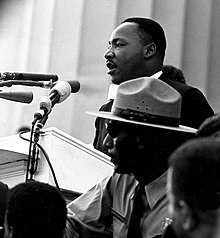
I Have a Dream by Martin Luther King -Tôi có một giấc mơ


I Have a Dream Tôi có một giấc mơ
Delivered on the steps at the Lincoln Memorial in Washington D.C. on August 28, 1963
Đọc trước đài tưởng niệm Tổng thống Lincoln, thủ đô Washington ngày 28 tháng 8 năm 1963
Bản dich gốc lấy từ wiki, với một số bổ sung và thay đổi của nguyenquangy@gmail.com. Vị khách nào không thích những thay đổi của tôi có thể xem nguyên bản tại đây

I am happy to join with you today in what will go down in history as the greatest demonstration for freedom in the history of our nation.
Ngày hôm nay, tôi vui mừng được tham gia cùng các bạn vào sự kiện mà sẽ đi vào lịch sử như là cuộc diễu hành vỹ đại nhất vì tự do trong lịch sử của đất nước chúng ta.
Five score years ago, a great American, in whose symbolic shadow we stand signed the Emancipation Proclamation. This momentous decree came as a great beacon light of hope to millions of Negro slaves who had been seared in the flames of withering injustice. It came as a joyous daybreak to end the long night of captivity.
Một trăm năm trước đây, một người Mỹ vỹ đại mà chúng ta giờ đây đứng dưới cái bóng biểu tượng của ông, đã ký bản Tuyên ngôn giải phóng. Tuyên ngôn lịch sử này đã trở thành ngọn đuốc hy vọng cho hàng triệu nô lệ da đen, những người đã bị thiêu đốt trong ngọn lửa của sự bất công. Tuyên ngôn đó đã xuất hiện đến như vầng dương hân hoan chấm dứt đêm dài tù hãm.

But one hundred years later, we must face the tragic fact that the Negro is still not free. One hundred years later, the life of the Negro is still sadly crippled by the manacles of segregation and the chains of discrimination. One hundred years later, the Negro lives on a lonely island of poverty in the midst of a vast ocean of material prosperity. One hundred years later, the Negro is still languishing in the corners of American society and finds himself an exile in his own land. So we have come here today to dramatize an appalling condition.
Nhưng một trăm năm sau, chúng ta lại đang phải đối mặt với một sự thật bi kịch khác, người da đen vẫn chưa được tự do.
Một trăm năm sau, cuộc sống của người da đen vẫn bị kéo lê bởi xiềng xích của sự cách ngăn và cùm gông của nạn kỳ thị. Một trăm năm sau, người da đen vẫn đang phải sống trên hoang đảo nghèo đói giữa biển cả phồn vinh. Một trăm năm sau, người da đen vẫn tiều tụy lang thang nơi góc phố tối tăm trên đất Mỹ, thấy rằng chính họ là kẻ bị lưu đày ngay trên mảnh đất quê hương mình.Bởi vậy, chúng ta cùng nhau có mặt tại đây hôm nay để cất cao tiếng nói về cảnh ngộ thương tâm của chúng ta.

In a sense we have come to our nation's capital to cash a check. When the architects of our republic wrote the magnificent words of the Constitution and the declaration of Independence, they were signing a promissory note to which every American was to fall heir. This note was a promise that all men would be guaranteed the inalienable rights of life, liberty, and the pursuit of happiness.
Theo một nghĩa nào đó, chúng ta đã tới thủ đô để đòi một khoản nợ. Khi các nhà kiến trúc của nền dân chủ Hoa Kỳ viết ra những lời tuyệt đẹp cho bản Hiến pháp và Tuyên ngôn Độc lập, họ đã ký nhận một tờ tín phiếu mà theo đó mọi công dân Mỹ đều có quyền thừa kế. Tờ tín phiếu này mang theo một lời hứa hẹn rằng mọi người dân đều được đảm bảo những quyền bất khả xâm phạm là quyền được sống, quyền được tự do và quyền mưu cầu hạnh phúc.

It is obvious today that America has defaulted on this promissory note insofar as her citizens of color are concerned. Instead of honoring this sacred obligation, America has given the Negro people a bad check which has come back marked "insufficient funds." But we refuse to believe that the bank of justice is bankrupt. We refuse to believe that there are insufficient funds in the great vaults of opportunity of this nation.
Nhưng hôm nay, thực tế hiển nhiên cho thấy nước Mỹ đã thất hứa vì rằng màu da của người dân Mỹ lại bị xem là rào cản trong việc sử dụng tờ tín phiếu này. Thay vì trân trọng thực hiện trách nhiệm thiêng liêng ấy, nước Mỹ đã trao cho người dân da đen một tờ séc khống không có giá trị thanh toán. Nhưng chúng ta không tin rằng ngân hàng công lý đã bị phá sản. Chúng ta không tin rằng quốc gia không có đủ ngân quỹ trong hầm dự trữ chứa đầy những cơ hội của đất nước này.

So we have come to cash this check -- a check that will give us upon demand the riches of freedom and the security of justice. We have also come to this hallowed spot to remind America of the fierce urgency of now. This is no time to engage in the luxury of cooling off or to take the tranquilizing drug of gradualism. Now is the time to rise from the dark and desolate valley of segregation to the sunlit path of racial justice. Now is the time to open the doors of opportunity to all of God's children. Now is the time to lift our nation from the quicksands of racial injustice to the solid rock of brotherhood.

Bởi vậy, chúng ta đến đây để đòi nợ, một khoản nợ về quyền tự do và sự đảm bảo về công lý. Chúng ta có mặt tại nơi linh thiêng này để nhắc nhở nước Mỹ về sự cấp thiết trong thời điểm hiện nay. Lúc này không phải là thời điểm của sự nhượng bộ, thỏa hiệp hay xoa dịu bằng những viên thuốc an thần. Giờ là thời điểm mở tung cánh cửa cơ hội cho tất cả những người con của Chúa. Giờ là thời khắc đưa dân tộc ta từ vũng lầy của bất công kỳ thị tới một nền tảng vững chắc của tình đoàn kết anh em.
It would be fatal for the nation to overlook the urgency of the moment and to underestimate the determination of the Negro. This sweltering summer of the Negro's legitimate discontent will not pass until there is an invigorating autumn of freedom and equality. Nineteen sixty-three is not an end, but a beginning. Those who hope that the Negro needed to blow off steam and will now be content will have a rude awakening if the nation returns to business as usual. There will be neither rest nor tranquility in America until the Negro is granted his citizenship rights. The whirlwinds of revolt will continue to shake the foundations of our nation until the bright day of justice emerges.
Sẽ là tai họa cho cả dân tộc nếu lờ đi tính cấp bách của thời cuộc hiện nay và đánh giá thấp lòng quyết tâm của người da đen. Không khí ngột ngạt oi bức chứa đầy sự bất bình trong mùa hè này chưa thể qua đi tới khi có được làn gió thu mát mẻ của tự do và công bằng tiếp cho sinh lực. Những ai có hy vọng rằng người da đen cần phải xả bớt sự căng thẳng và hài lòng với những gì đã có sẽ bị vỡ mộng nếu như đất nước này trở lại với công việc như thường ngày. Nước Mỹ sẽ chưa thể bình yên, chừng nào người da đen chưa giành được quyền công dân của mình. Cơn lốc của cuộc nổi dậy sẽ tiếp tục làm lung lay nền móng của quốc gia này cho tới ngày ánh sáng của công lý chiếu rọi.

But there is something that I must say to my people who stand on the warm threshold which leads into the palace of justice. In the process of gaining our rightful place we must not be guilty of wrongful deeds. Let us not seek to satisfy our thirst for freedom by drinking from the cup of bitterness and hatred.

Nhưng trong quá trình đấu tranh giành lại vị trí xứng đáng cho mình, chúng ta không cho phép mình mắc phải những hành động sai lầm. Hãy đừng thỏa mãn cơn khát bằng bát nước hận thù và hiềm khích.
We must forever conduct our struggle on the high plane of dignity and discipline. We must not allow our creative protest to degenerate into physical violence. Again and again we must rise to the majestic heights of meeting physical force with soul force. The marvelous new militancy which has engulfed the Negro community must not lead us to distrust of all white people, for many of our white brothers, as evidenced by their presence here today, have come to realize that their destiny is tied up with our destiny and their freedom is inextricably bound to our freedom. We cannot walk alone.
Chúng ta phải tiến hành những cuộc tranh đấu của mình cao quý của phẩm giá và kỷ luật. Chúng ta không cho phép những phản đối xây dựng biến tướng thành những cuộc xung đột bạo lực. Mãi mãi, chúng ta phải đứng trên tầm cao uy nghi của sự hòa trộn sức mạnh thể lực và tâm lực. Tính chiến đấu mới mẻ tuyệt vời mà vốn đã thấm nhuần trong đông đảo người dân da đen không được đưa chúng ta đến chỗ mất lòng tin vào tất cả những người da trắng, bởi vì rất nhiều những người anh em da trắng của chúng ta, bằng chứng là sự có mặt của họ ở đây hôm nay, đã cho thấy vận mệnh của họ cũng cột chặt với vận mệnh của chúng ta và tự do của họ gắn bó không thể tách rời với tự do của chúng ta. Chúng ta không thể bước đi đơn độc.

And as we walk, we must make the pledge that we shall march ahead. We cannot turn back. There are those who are asking the devotees of civil rights, "When will you be satisfied?" We can never be satisfied as long as our bodies, heavy with the fatigue of travel, cannot gain lodging in the motels of the highways and the hotels of the cities. We cannot be satisfied as long as the Negro's basic mobility is from a smaller ghetto to a larger one. We can never be satisfied as long as a Negro in Mississippi cannot vote and a Negro in New York believes he has nothing for which to vote. No, no, we are not satisfied, and we will not be satisfied until justice rolls down like waters and righteousness like a mighty stream.
Khi chúng ta dấn bước, chúng ta phải cam kết tiến lên phía trước. Chúng ta không thể quay trở lại. Có những kể đi hỏi những người đi đòi quyền công dân: “Chừng nào thì các bạn mới thỏa mãn?” Chúng ta sẽ không bao giờ thấy hài lòng khi mà ta không thể tìm được một nơi trú thân tại một nhà nghỉ bên đường hay một khách sạn trong thành phố sau chuyến đi mỏi mệt. Chúng ta chưa thể thỏa mãn chừng nào sự chuyển dịch của một người da đen vẫn chỉ đơn giản là từ một khu ghetto nhỏ sang một khu ghetto lớn hơn. Chúng ta chưa thể yên lòng chừng nào một người da đen ở Mississipi còn chưa được quyền đi bầu cử, khi một người da đen ở New York còn tin rằng anh ta chẳng có gì để đi bầu. Không, không, chúng ta không bằng lòng, và chúng ta sẽ không thỏa lòng cho tới ngày công lý cuộn trào như dòng thác, và công bằng sẽ như một dòng nước hùng vỹ.

I am not unmindful that some of you have come here out of great trials and tribulations. Some of you have come fresh from narrow cells. Some of you have come from areas where your quest for freedom left you battered by the storms of persecution and staggered by the winds of police brutality. You have been the veterans of creative suffering. Continue to work with the faith that unearned suffering is redemptive.
Tôi thấu hiểu rằng có những bạn tới đây phải vượt qua gian khổ, và thử thách lớn lao. Có những bạn mới vừa từ xà lim bước ra với cuộc đời. Có những bạn đến từ những nơi mà việc tìm kiếm tự do khiến bạn bị chà đạp bởi những trận khủng bố và bị chao đảo bởi những ngón đòn tàn bạo của cảnh sát. Các bạn đã trở thành những bậc kỳ cựu về chịu đựng khổ đau. Hãy tiếp tục tiến lên với niềm tin rằng sự thống khổ oan ức sẽ được cứu chuộc.

Go back to Mississippi, go back to Alabama, go back to Georgia, go back to Louisiana, go back to the slums and ghettos of our northern cities, knowing that somehow this situation can and will be changed. Let us not wallow in the valley of despair.I say to you today, my friends, that in spite of the difficulties and frustrations of the moment, I still have a dream. It is a dream deeply rooted in the American dream.

Trở lại với Mississippi, với Alabama, với Georgia, với Louisiana, trở lại với những khu nhà ổ chuột ở các thành phố phía bắc của chúng ta, chúng ta tin rằng bằng cách nào đó tình trạng này có thể và sẽ đươc thay đổi. Chớ trầm mình trong hố sâu tuyệt vọng. Hôm nay, tôi muốn nói với các bạn rằng, dù hiện tại có muôn vàn khó khăn và nỗi bức xúc, tôi vẫn luôn mang trong mình một giấc mơ. Đó là một giấc mơ có gốc rễ từ giấc mơ nước Mỹ.
I have a dream that one day this nation will rise up and live out the true meaning of its creed: "We hold these truths to be self-evident: that all men are created equal."

I have a dream that one day on the red hills of Georgia the sons of former slaves and the sons of former slaveowners will be able to sit down together at a table of brotherhood.
I have a dream that one day even the state of Mississippi, a desert state, sweltering with the heat of injustice and oppression, will be transformed into an oasis of freedom and justice.
I have a dream that my four children will one day live in a nation where they will not be judged by the color of their skin but by the content of their character.
Tôi có một giấc mơ, tới một ngày đất nước này sẽ trổi dậy và sống với ý nghĩa đích thực của niềm tin này “Chúng ta coi đây là sự thực hiển nhiên: con mọi người đều sinh ra bình đẳng”.
Tôi có một giấc mơ, một ngày kia, trên những ngọn đồi đất đỏ ở Georgia, những con cái của những người nô lệ và của những người chủ nô cũ sẽ cùng ngồi chung chiếc bàn thân thiện của tình huynh đệ. Tôi có một giấc mơ, thậm chí một ngày kia, bang Mississippi, một bang hoang mạc, vốn ngột ngạt với cái nóng của bất công và áp bức, sẽ biến thành một ốc đảo của tự do và công bằng.
Tôi có một giấc mơ, bốn đứa con tôi tới một ngày nào đó sẽ được sống trong một đất nước mà ở đó giá trị của chúng được đánh giá không phải bằng màu da mà bởi chính phẩm cách của chúng.

I have a dream today.
I have a dream that one day the state of Alabama, whose governor's lips are presently dripping with the words of interposition and nullification, will be transformed into a situation where little black boys and black girls will be able to join hands with little white boys and white girls and walk together as sisters and brothers.

Ngày hôm nay, tôi có một giấc mơ.
Tôi mơ một ngày kia bang Alabama, nơi vị thống đốc hiện thời đang luôn mồm tuôn ra những từ ngữ như quyền điều chỉnh và vô hiệu hóa, sẽ trở thành nơi các trẻ trai và bé gái da đen cùng nắm tay các trẻ trai và bé gái da trắng như anh em ruột rà.
I have a dream today.
I have a dream that one day every valley shall be exalted, every hill and mountain shall be made low, the rough places will be made plain, and the crooked places will be made straight, and the glory of the Lord shall be revealed, and all flesh shall see it together.

This is our hope. This is the faith that I go back to the South with. With this faith we will be able to hew out of the mountain of despair a stone of hope. With this faith we will be able to transform the jangling discords of our nation into a beautiful symphony of brotherhood. With this faith we will be able to work together, to pray together, to struggle together, to go to jail together, to stand up for freedom together, knowing that we will be free one day.
Hôm nay, tôi có một giấc mơ. 
Tôi mơ một ngày kia các vực sâu rồi sẽ được lấp đầy, những quả đồi, ngọn núi sẽ được san bằng, mặt đất gồ ghề sẽ trở nên phẳng phiu, những khúc quanh co sẽ được uốn thẳng, và ánh huy hoàng của Thiên Chúa sẽ phát lộ và mọi người sẽ cùng nhau chiêm ngưỡng.

Đó là hy vọng của chúng ta. Đó là niềm tin tôi sẽ mang theo về miền Nam. Với niềm tin ấy, chúng ta sẽ có thể đẽo gọt ngọn núi tuyệt vọng thành tảng đá hy vọng. Với niềm tin ấy, chúng ta sẽ biến những tiếng thét bất hòa trong lòng dân tộc thành bản giao hưởng êm ái của tình đoàn kết anh em. Với niềm tin ấy, chúng ta sẽ cùng sát cánh bên nhau, cùng nguyện cầu, cùng chiến đấu, cùng vào lao tù, cùng đứng lên vì tự do, vì chúng ta biết rõ một ngày kia chúng ta sẽ tự do.
This will be the day when all of God's children will be able to sing with a new meaning, "My country, 'tis of thee, sweet land of liberty, of thee I sing. Land where my fathers died, land of the pilgrim's pride, from every mountainside, let freedom ring."
And if America is to be a great nation this must become true. So let freedom ring from the prodigious hilltops of New Hampshire. Let freedom ring from the mighty mountains of New York. Let freedom ring from the heightening Alleghenies of Pennsylvania!
Đó sẽ là ngày tất cả những người con Chúa cùng hòa chung một bài ca: “Quê hương tôi ơi, tôi hát về người, về miền đất ngọt ngào của tự do. Miền đất nơi cha tôi đã ngã xuống, miền đất tự hào của những người hành hương, từ khắp mọi triền núi, hãy để tự do ngân vang.” Và nếu nước Mỹ là một đất nước vĩ đại, điều đó nhất định phải trở thành sự thực. Hãy để tự do ngân lên từ những ngọn đồi to lớn ở New Hampshire. Hãy để tự do ngân vang lên trên những đỉnh núi nguy nga của vùng New York. Hãy để tự do ngân lên từ vùng Alleghenies khí thế dâng cao của miền Pennsylvania!


Let freedom ring from the snowcapped Rockies of Colorado!
Let freedom ring from the curvaceous peaks of California!
But not only that; let freedom ring from Stone Mountain of Georgia!
Let freedom ring from Lookout Mountain of Tennessee!
Let freedom ring from every hill and every molehill of Mississippi. From every mountainside, let freedom ring.

When we let freedom ring, when we let it ring from every village and every hamlet, from every state and every city, we will be able to speed up that day when all of God's children, black men and white men, Jews and Gentiles, Protestants and Catholics, will be able to join hands and sing in the words of the old Negro spiritual, "Free at last! free at last! thank God Almighty, we are free at last!"
Hãy để tự do ngân lên từ những đỉnh núi Rockies tuyết phủ của Colorado!
Hãy để tự do ngân lên từ những ngọn đồi tròn trịa của California!
Không chỉ thế, Hãy để tự do ngân từ từ những đỉnh núi Đá của Georgia!
Hãy để tự do ngân lên từ ngọn Lookout của Tennessee!
Hãy để tự do ngân lên từ mọi triền núi và gò đồi Mississippi. Từ mọi triền núi, hãy để tự do ngân vang.

Khi chúng ta đã có tiếng hát tự do ngân vang, khi nó đã ngân vang từ mỗi làng quê và thôn xóm, từ mỗi tiểu bang và thành phố, chúng ta sẽ có thể tiến nhanh đến ngày đó, khi tất cả con cái Chúa, da đen cũng như da trắng, Do Thái cũng như dân ngoại, Tinh Lành cũng như Công Giáo có thể cùng nắm tay và hát những lời hát của tinh thần da đen năm xưa: “Cuối con đã tự do! Cám ơn Chúa Toàn Năng, Cuối cùng con đã tự do!


Bill Clinton speaks at Harvard's 2007 Class Day - Tổng thống Clinton nói chuyện tại Đại học Harvard 2007


Bill Clinton speaks at Harvard's 2007 Class Day (1/3) - Tổng thống Clinton nói chuyện tại Đại học Harvard 2007


Thank you very much, Samantha, Stephanie, Chris, all the marshals, all the student speakers. Thanks for the gags and the jokes, and you know, when I got invited to do this, it was humbling in some ways. They asked Bill Gates to be the Commencement speaker. He’s got more money than I do [LAUGHTER] and he went to Harvard. And I brought my friend Glenn Hutchins here with me, who’s at his 30th reunion and he had something to do with overseeing the endowment and he explained that Gates was really, really, really rich and I was just rich [LAUGHTER]. And then I thought, well, the students asked me and that’s good and besides, I don’t have to wear a robe.
But I couldn’t figure out why on what is supposed to be a festive and informal day, you would pick a gray-haired 60-year-old to speak.
Following the great tradition of Al Franken, Will Ferrell [LAUGHTER], Borat or Ali G or whoever he was that day [LAUGHTER]. Conan O’Brien, that Family Guy person. What a tradition. So I did like Talladega Nights, however. Then I was reading all I could find out about the class and I thought well, they don’t have any fun today. They already had fun. They had this class-wide Risk tournament around exam time [LAUGHTER]. And I understood when I heard the followership speech, I understood why you had that. Now you can all run for president. You played Risk. It’s an eight-year Risk tournament. Then I thought well, maybe it’s because you’re about to name Drew Faust your next president, and I think women should run everything now [LAUGHTER]. And then I figure maybe it’s just because Robin Williams and Billy Crystal turned you down [LAUGHTER]. But for whatever reason, we’re here and I have had a really good time [LAUGHTER].
You’ve already heard most of what you need to hear today, I think. But I want to focus for a minute on the fact that these graduating classes since 1968 have invited a few non-comedians. First was Martin Luther King [APPLAUSE], who was killed in April before. I remember that very well because it was my senior year at Georgetown. He was killed in April, before he could come and give the speech. And Coretta came and gave the speech for him here. And you’ve had Mother Teresa and you’ve had Bono. What do they all have in common? They are symbols of our common humanity and a rebuke even to humorists’ cynicism. Martin Luther King basically said he lived the way he did because we were all caught in what he called an inescapable web of mutuality. Nelson Mandela, the world’s greatest living example of that, I believe, comes from a tribe in South Africa, the Xhosa, who call it ubuntu. In English, I am because you are. That led Mother Teresa from Albania to spend her life with the poorest people on earth in Calcutta. It led Bono from his rock stage to worry about innocent babies dying of AIDS, and poor people with good minds who never got a chance to follow their dreams. This is a really fascinating time to be a college senior. I was looking at all of you, wishing I could start over again and thinking I’d let you be president if you let me be 21 [LAUGHTER].
I’d take a chance on making it all over again if I could do it again. But I think, just think what an exciting time it is. All this explosion of knowledge. Just in the last couple of weeks before I came here, I read that thanks to the sequencing of the human genome, the ongoing research has identified two markers which seem to be high predictors of diabetes, which, as you heard, is a very important thing to me because it’s now predicted that one in three children born in the United States in this decade will develop diabetes. We run the risk that we could be raising a first generation of kids to live shorter lives than their parents. Not because we’re hungry, but because we don’t eat the right things and we don’t exercise. But this is a big deal. Then right after that, I saw that through our powerful telescopes we have identified a planet orbiting one of the hundred stars closest to our solar system, that appears to have the atmospheric conditions so similar to ours that life could actually be possible there. Alas, even though it’s close to us in terms of the great universe, it’s still 20 million light-years away. Unreachable in the lifetime of any young person. So unless there’s a budding astrophysicist in the class that wants to get married in a hurry and then commit three generations and take another couple with him, we’ll have to wait for them to come to us. It’s an exciting time.
It’s also exciting because of all the diversity. If you look around this audience, I was thinking, I wonder how different this crowd would have looked if someone like me had been giving this speech 30 years ago. And how much more interesting it is for all of us.
It’s a frustrating time, because for all the opportunity, there’s a lot of inequality. There’s a lot of insecurity and there’s a lot of instability and unsustainability. Half the world’s people still live on less than two bucks a day. A billion on less than a dollar a day. A billion people go to bed hungry tonight. A billion people won’t get a clean glass of water today or any day in their lives. One in four of all the people who die this year will die from AIDS, TB, malaria and infections related to dirty water. Nobody in America dies of any of that except people whose AIDS medicine doesn’t work anymore, or people who decline to follow the prescribed regime.
In the United States in the last decade, we have had six years of economic growth, an all-time high in the stock market, a 40-year high in corporate profits. Workers are doing better every year with productivity, but median wages are stagnant. And there’s actually been in all this so-called recovery a 4 percent increase in the percentage of people working full-time falling below the poverty line, and a 4 percent increase in the percentage of people working, who with their families, have lost their health insurance. It’s an unequal time. It’s an uncertain, insecure time because we’re all vulnerable to terror, to weapons of mass destruction, to global pandemics like avian influenza. We all make fun of the modern media and culture all the time, but I thought it was interesting in my little house in Chappaqua, where I stay home alone rooting for the candidate [LAUGHTER], I watch the evening news in the last few months, and it’s interesting. Somehow, clawing its way through the stories of the latest crime endeavor in our neighborhood and whether Britney Spears’ hair has grown out or not, I have learned that there were chickens in Romania, India and Indonesia identified with avian influenza and that every chicken within three square miles, those unfortunate ones, was eradicated. On the evening news, competing with Britney Spears and crime. Why? That’s a good thing because of the shared insecurity we feel. You all saw it this week in all of the stories about the terrorist attack being thwarted in Kennedy airport.
Now remember a few months ago, everybody I knew was shaking their head when we found out that there was a plot in London to put explosive chemicals in a baby bottle to make it look like formula to evade the airport inspection. And every time I ask somebody, I said did you feel a chill go up and down your spine, they said yeah, they did. Because they can imagine being on the airplane, or in my case, I could imagine my daughter, who has to travel a lot on her job, being on the airplane. But here’s what I want to tell you about that. The inequality is fixable and the insecurity is manageable. We’re going to really have to go some in the 21st century to see political violence claim as many innocent lives as it did in the 20th century. Keep in mind you had what, 12 million people killed in World War I, somewhere between 15 and 20 million in World War II, six million in the Holocaust, six million Jews, three million others. Twenty million in the political purges in the former Soviet Union between the two world wars and one afterward. Two million in Cambodia alone. Millions in tribal wars in Africa. An untold but large number in the Chinese Cultural Revolution. I mean, we’re going to have to really get after it, if you expect your generation to claim as many innocents from political violence as was claimed in the 20th century. The difference is you think it could be you this time. Because of the interdependence of the world. So yes, it’s insecure but it’s manageable.
It’s also an unsustainable world because of climate change, resource depletion, and the fact that between now and 2050, the world’s supposed to grow from six and a half to nine billion people, with most of the growth in the countries least able to handle it, under today’s conditions, never mind those. That’s all fixable, too. So is climate change a problem? Is resource depletion a problem? Is poverty and the fact that 130 million kids never go to school and all this disease that I work on a problem? You bet it is. But I believe the most important problem is the way people think about it and each other, and themselves. The world is awash today in political, religious, almost psychological conflicts, which require us to divide up and demonize people who aren’t us. And every one of them in one way or the other is premised on a very simple idea. That our differences are more important than our common humanity. I would argue that Mother Teresa was asked here, Bono was asked here, and Martin Luther King was asked here because this class believed that they were people who thought our common humanity was more important than our differences [APPLAUSE].
So with this Harvard degree and your incredible minds and your spirits that I’ve gotten a little sense of today, this gives you virtually limitless possibilities. But you have to decide how to think about all this and what to do with your own life in terms of what you really think. I hope that you will share Martin Luther King’s dream, embrace Mandela’s spirit of reconciliation, support Bono’s concern for the poor and follow Mother Teresa’s life into some active service. Ordinary people have more power to do public good than ever before because of the rise of non-governmental organizations, because of the global media culture, because of the Internet, which gives people of modest means the power, if they all agree, to change the world. When former President Bush and I were asked to work on the tsunami, before we did the Katrina work, Americans, many of whom could not find the Maldives or Sri Lanka on a map, gave $1.2 billion to tsunami aid. Thirty percent of our households gave. Half of them gave over the Internet, which means you don’t even have to be rich to change the world if enough people agree with you. But we have to do this. Citizen service is a tradition in our country about as old as Harvard, and certainly older than the government.
Benjamin Franklin organized the first volunteer fire department in Philadelphia 40 years before the Constitution was ratified. When de Tocqueville came here in 1835, he talked among other things about how he was amazed that Americans just were always willing to step up and do something, not wait for someone else to do it. Now we have in America a 1,010,000 non-governmental groups. Not counting 355,000 religious groups, most of whom are involved in some sort of work to help other people. India has a million registered, over a half a million active. China has 280,000 registered and twice that many not registered because they don’t want to be confined. Russia has 400,000, so many that President Putin is trying to restrict them. I wish he wouldn’t do that, but it’s a high-class problem. There were no NGOs in Russia or China when I became president in 1993. All over the world we have people who know that they can do things to change, but again, I will say to all of you, there is no challenge we face, no barrier to having your grandchildren here on this beautiful site 50 years from now, more profound than the ideological and emotional divide which continues to demean our common life and undermine our ability to solve our common problems. The simple idea that our differences are more important than our common humanity.
When the human genome was sequenced, and the most interesting thing to me as a non-scientist – we finished it in my last year I was president, I really rode herd on this thing and kept throwing more money at it – the most interesting thing to me was the discovery that human beings with their three billion genomes are 99.9 percent identical genetically. So if you look around this vast crowd today, at the military caps and the baseball caps and the cowboy hats and the turbans, if you look at all the different colors of skin, all the heights, all the widths, all the everything, it’s all rooted in one-tenth of one percent of our genetic make-up. Don’t you think it’s interesting that not just people you find appalling, but all the rest of us, spend 90 percent of our lives thinking about that one-tenth of one percent? I mean, don’t we all? How much of the laugh lines in the speeches were about that? At least I didn’t go to Yale, right? [LAUGHTER] That Brown gag was hilarious. [LAUGHTER]
But it’s all the same deal, isn’t it? I mean, the intellectual premise is that the only thing that really matters about our lives are the distinctions we can draw. Indeed, one of the crassest elements of modern culture, all these sort of talk shows, and even a lot of political journalism that’s sort of focused on this shallow judgmentalism. They try to define everybody down by the worst moment in their lives, and it all is about well, no matter whatever’s wrong with me, I’m not that. And yet, you ask Martin Luther King, Mother Teresa and Bono to come here. Nelson Mandela’s the most admired person in the world. I got tickled the other night. I wound up in a restaurant in New York with a bunch of friends of mine. And I looked over and two tables away, and there was Rush Limbaugh [LAUGHTER], who’s said a few mad things about me. So I went up and shook hands with him and said hello and met his dinner guest. And I came just that close to telling him we were 99.9 percent the same. [LAUGHTER] But I didn’t want to ruin the poor man’s dessert, so I let it go. [LAUGHTER]
Now we’re laughing about this but next month, I’m making my annual trek to Africa to see the work of my AIDS and development project, and to celebrate with Nelson Mandela his birthday. He’s 89. Don’t know how many more he’ll have. And when I think that I might be 99.9 percent the same as him, I can’t even fathom it. So I say that to you, do we have all these other problems? Is Darfur a tragedy? Do I wish America would adopt sensible climate change regulation? Do I hate the fact that ideologues in the government doctored scientific reports? Do I disagree with a thousand things that are going on? Absolutely. But it all flows from the idea that we can violate elemental standards of learning and knowledge and reason and even the humanity of our fellow human beings because our differences matter more. That’s what makes you worship power over purpose. Our differences matter more. One of the greatest things that’s happened in the last few years is doing all this work with former President Bush. You know, I ought to be doing this. I’m healthy and not totally antiquated. He’s 82 years old, still jumping out of airplanes and still doing stuff like this. And I love the guy. I’m sorry for all the diehard Democrats in the audience. I just do. [LAUGHTER] And life is all about seeing things new every day. And I’ll just close with two stories, one from Asia, one from Africa. And I’m telling you all the details don’t matter as much as this.
After George Bush and I did the tsunami, we got so into this disaster work that Kofi Annan asked him to oversee the UN’s efforts in Pakistan after the earthquake, which you acknowledged today, and asked me to stay on as the tsunami coordinator for two years. So on my next to last trip to Aceh in Indonesia, the by far the hardest hit place, a quarter of a million people killed. I went to one of these refugee camps where in the sweltering heat, several thousand people were still living in tents. Highly uncomfortable. And my job was to go there and basically listen to them complain and figure out what to do about it, and how to get them out of there more quickly. So every one of these camps elected a camp leader and when I appeared, I was introduced to my young interpreter, a young Indonesian woman, and to the guy who was the camp leader, and his wife and his son. And they smiled, said hello, and then I looked down at this little boy, and I literally could not breathe. I think he’s the most beautiful child I ever saw. And I said to my young interpreter, I said, I believe that’s the most beautiful boy I ever saw in my life. She said, yes, he’s very beautiful and before the tsunami he had nine brothers and sisters. And now they’re all gone.
So the wife and the son excused themselves. And the father who had lost his nine children proceeded to take me on a two-hour tour of this camp. He had a smile on his face. He never talked about anything but what the people in that camp needed. He gave no hint of what had happened to him and the grief that he bore. We get to the end of the tour. It’s the health clinic in the camp. I look up and there is his wife, a mother who had lost nine of her 10 children, holding a little bitty baby less than a week old, the newest born baby in the camp. And she told me, I’m going to get in trouble for telling this. She told me that in Indonesian culture, when a woman has a baby, she gets to go to bed for 40 days and everyone waits on her hand and foot. [LAUGHTER] She doesn’t get up, nothing happens. And then on the 40th day, the mother gets up out of bed, goes back to work doing her life and they name the baby. So this child was less than a week old. So this mother who had lost her nine children is here holding this baby. And she says to me, this is our newest born baby. And we want you to name him. Little boy. So I looked at her and I said through my interpreter, I said, do you have a name for new beginning? And she explained and the woman said something back and the interpreter said yes, luckily for you, in Indonesian the word for dawn is a boy’s name. And the mother just said to me, we will call this child Dawn and he will symbolize our new beginning. You shouldn’t have to meet people that lose nine of their 10 children, cherish the one they got left, and name a newborn baby Dawn to realize that what we have in common is more important than what divides us.
[APPLAUSE]
And I leave you with this thought. When Martin Luther King was invited here in 1968, the country was still awash in racism. The next decade it was awash in sexism, and after that in homophobia. And occasionally those things rear their ugly head along the way, but by and large, nobody in this class is going to carry those chains around through life. But nobody gets out for free, and everyone has temptations. The great temptation for all of you is to believe that the one-tenth of one percent of you which is different and which brought you here and which can bring you great riches or whatever else you want, is really the sum of who you are and that you deserve your good fate, and others deserve their bad one. That is the trap into which you must not fall. Warren Buffett’s just about to give away 99 percent of his money because he said most of it he made because of where he was born and when he was born. It was a lucky accident. And his work was rewarded in this time and place more richly than the work of teachers and police officers and nurses and doctors and people who cared for those who deserve to be cared for. So he’s just going to give it away. And still with less than one percent left, have more than he could ever spend. Because he realizes that it wasn’t all due to the one-tenth of one percent, and that his common humanity requires him to give money to those for whom it will mean much more.
In the central highlands in Africa where I work, when people meet each other walking, nearly nobody rides, and people meet each other walking on the trails, and one person says hello, how are you, good morning, the answer is not I’m fine, how are you. The answer translated into English is this: I see you. Think of that. I see you. How many people do all of us pass every day that we never see? You know, we all haul out of here, somebody’s going to come in here and fold up 20-something thousand chairs. And clean off whatever mess we leave here. And get ready for tomorrow and then after tomorrow, someone will have to fix that. Many of those people feel that no one ever sees them. I would never have seen the people in Aceh in Indonesia if a terrible misfortune had not struck. And so, I leave you with that thought. Be true to the tradition of the great people who have come here. Spend as much of your time and your heart and your spirit as you possibly can thinking about the 99.9 percent. See everyone and realize that everyone needs new beginnings. Enjoy your good fortune. Enjoy your differences, but realize that our common humanity matters much, much more. God bless you and good luck.


Thursday, February 3, 2011

Escorting a Cat - Hộ tống Mèo


“Escorting a Cat”

By Peter Wood

I looked down at her and she looked up at me. “Do you want to go for a walk?” I asked.

"Meow."

It was a cute, furry face -- black, white and yellow -- and her tail was switching back and forth.

“Just don’t run away, okay?” I said.

I opened the front door and she slid out, brushing against my leg. I set the timer on my wristwatch and I followed her. I was hoping for a pleasant thirty minute walk.

"Hộ tống Mèo"

Peter Wood

Tôi nhìn xuống nó và nó nhìn lên tôi. "Này có muốn đi dạo không?" Tôi hỏi.

"Meo."
Nó có một khuôn mặt dễ thương - lông đen, trắng và vàng - và đuôi nó ve vẩy qua lại.
"Có điều không được bỏ chạy, được không?" Tôi nói.
Tôi mở cửa trước và nó lẹ làng ra ngoài, cọ người vào chân tôi. Tôi chỉnh giờ trên đồng hồ đeo tay của tôi và tôi theo nó. Tôi hy vọng được đi bộ ba mươi phút dễ chịu.

She stepped off the porch, hopped down the rock ledge, trotted along the side of our house and ran across the backyard. Then she ran up the hill toward the cypress bush and crept inside. She sat on a soft bed of leaves and calmly peeked out through the branches into the nearby woods.

Nó bước ra khỏi cổng, nhảy xuống mỏm đá, chạy lúp xúp dọc theo bên hông nhà của chúng tôi rồi băng qua vườn sau. Sau đó nó chạy lên ngọn đồi về phía bụi cây bách và lén bò vào bên trong. Nó ngồi im trên một chiếc giường lá mềm mại và bình tĩnh nhìn qua qua cành lá vào khu rừng gần đó.

When I was younger, I never would have had the patience to walk a cat, or wait for it to emerge from under a bush. But now I enjoy the solitude it brings. I enjoy being alone with my cat.

Khi tôi còn nhỏ, tôi không bao giờ có cái kiên nhẫn đi dạo với một con mèo, hoặc chờ cho nó đi ra từ dưới một bụi cây. Nhưng bây giờ tôi thích thú sự cô đơn nó mang lại. Tôi thích ở một mình với con mèo của tôi.

My wife wants to keep our cat safe inside the house, with soft pillows and plush carpeting. But I think that’s cruel. I say, a cat should be a cat. A cat should sniff, explore and experience the world.

Vợ tôi muốn giữ con mèo của chúng tôi an toàn trong nhà, với cái gối mềm mại và thảm sang trọng. Nhưng tôi nghĩ việc đó là độc ác. Tôi nói, một con mèo nên được làm mèo. Một con mèo nên đánh hơi, khám phá và trải nghiệm thế giới.

My wife insists I walk our cat on a leash. But me walking a cat on a leash is not going to happen.

Our compromise is this: I escort the cat. Wherever the cat goes, I go. So, essentially, the cat walks me.

Vợ tôi đòi tôi đưa mèo đi dạo cột vào một dây xích. Nhưng việc tôi đi dạo với con mèo cột dây xích là điều không bao giờ xảy ra.

Chúng tôi thỏa hiệp như sau: Tôi đi hộ tống con mèo. Bất cứ nơi nào nó đi, tôi đều đi theo. Vì vậy, về cơ bản, mèo đưa tôi đi dạo.

I’ve been escorting Kiwi each day after work and, recently, have realized I am bonding more with my cat than with my wife. I am learning so much about this beautiful little creature. She loves climbing high into trees, eating insects, and sniffing deer poop in the grass. This summer she was stung on her pink nose by an angry yellow jacket while sniffing a poisonous mushroom. If my wife knew any of this, she’d have a coronary.

Tôi đã hộ tống Kiwi mỗi ngày sau giờ làm việc và, gần đây, tôi nhận ra rằng tôi đang liên hệ với con mèo nhiều hơn cả với vợ tôi. Tôi học được nhiều điều về sinh vật nhỏ bé xinh đẹp này. Cô ta thích trèo cây cao, ăn côn trùng, và đánh hơi phân hươu trong cỏ. Mùa hè này, cô nàng bị một con ong nghệ tức tối cắn vào cái mũi màu hồng của mình trong khi ngửi một cái nấm độc. Nếu vợ tôi biết bất cứ chút gì về việc này, cô hẳn sẽ bị một cơn đau tim (mạch vành).

Honestly, I enjoy getting out of the house to walk the cat. I enjoy watching Kiwi crouch down and wiggle her little butt before she attacks a tree. I enjoy watching her tentatively paw green grass, spiders and soft moss. I laugh at her wide-eyed, befuddled expression when she contemplates the acrobatic squirrels jumping from tree to tree, or the birds pirouetting in the blue sky.

Nói trung thực, tôi thích đi ra khỏi nhà để đi dạo với mèo. Tôi thích xem Kiwi cúi mình xuống và đung đưa cái mông nhỏ của mình trước khi tấn công vòa một cái cây. Tôi thích xem nó nhẹ nhàng đi trên cỏ xanh, bắt nhện và rêu mềm. Tôi cười rộng nhìn nét mặt hoang mang với đôi mắt mở to của nó, khi nó dự tính theo những con sóc nhào lộn nhảy từ cây này sang cây khác, hoặc những con chim cho liệng trên bầu trời xanh.

Someone once said, “A dog is prose; a cat is a poem.” I agree. Our cat is a poem with fur. My wife and I picked her out of a cage from the animal shelter about a year ago.

It’s peaceful walking my cat. A cat does not argue with me or yell. It simply goes about its own business. I merely follow. There is no friction or difference of opinion with my cat.

Ai đó từng nói, "Con chó là văn xuôi, con mèo là một bài thơ." Tôi đồng ý. con mèo của chúng tôi là một bài thơ có bộ lông. Vợ tôi và tôi đã chọn nó ra khỏi lồng từ các nuôi giữ động vật một năm trước đây.

Đưa mèo đi dạo thì thật thanh bình. Một con mèo không tranh luận hay la hét với tôi. Nó chỉ đơn giản lo việc riêng của nó. Tôi chỉ đơn đi theo bên cạnh. Không có đụng chạm hay sự khác biệt ý kiến giữa con mèo và tôi.

Sometimes I step out of myself and watch myself watching Kiwi. My neighbors must think me eccentric—an odd middle-aged man, always alone, wearing a red hat, smiling at something in a bush or a tree.

Watching my cat, I’ve discovered she’s a graceful and agile hunter who thinks falling leaves are animals. She enjoys rubbing against thorny pricker bushes. I’ve also noticed she’s becoming more confident and, with a rolling gait, is venturing deeper into the woods behind our home.

Đôi khi tôi bước ra khỏi bản thân mình và xem bản thân mình trong lúc xem xét Kiwi. Hàng xóm của tôi hẳn nghĩ rằng tôi lập dị, một người đàn ông trung niên kỳ lạ, luôn luôn một mình, đội một chiếc mũ màu đỏ, mỉm cười với một cái gì đó trong một bụi cây hoặc gốc cây.

Nhìn con mèo của tôi, tôi đã phát hiện ra nó là một thợ săn duyên dáng và nhanh nhẹn mà nghĩ rằng những chiếc lá rơi là những con vật. Cô rất thích cọ mình vào những bụi cây có gai nhọn. Tôi cũng nhận thấy cô ấy trở nên tự tin hơn và, với một dáng đi lanh lẹ, nó mạo hiểm sâu hơn vào khu rừng phía sau nhà của chúng tôi.

As a younger man, I didn’t observe things much, or appreciate simple pleasures, like walking a cat. But I do now. Consequently, I’m happier. I’m content being alone with my thoughts and my funny pet. Sometimes I bring along the word jumble from the local newspaper, or an unread section from the Sunday news. I sit on a tree stump, or lean against a tree and periodically look up, not wanting to miss anything special, like Kiwi pawing at a worm or chasing a chipmunk.

Khi còn trẻ, tôi đã không quan sát được điều nhiều, hay đánh giá cao những thú vui đơn giản, như đi dạo với một con con mèo. Nhưng bây giờ tôi đã có. Do đó, tôi hạnh phúc hơn. Tôi thấy hài long khi đang được một mình với suy nghĩ của tôi và với con vật cưng vui vẻ của tôi. Đôi khi tôi mang theo một mớ lộn xộn từ các tờ báo địa phương, hoặc một phần chưa đọc từ tờ tin tức Chủ Nhật. Tôi ngồi trên một gốc cây, hoặc dựa vào một thân cây và chốc chốc nhìn lên, không muốn bỏ lỡ bất cứ điều gì đặc biệt, như Kiwi tóm một con sâu hoặc đuổi theo một con sóc chuột.

Our young daughter adores our cat, too. Since she is our only child, my wife and I figured a cat could be an excellent companion—like the little sister she never had.

After school, our daughter enjoys putting Kiwi in grocery bags, playing fetch with her, or dressing her up in dainty outfits. A cat isn’t a sister, but it’s better than nothing.

Cô con gái nhỏ của chúng tôi cũng rất yêu con mèo. Vì nó là đứa con duy nhất của chúng tôi, vợ tôi và tôi nhận ra một con mèo có thể là một bạn đồng hành tuyệt vời - như cô em gái nhỏ mà nó không bao giờ có.

Sau khi tan trường, con gái chúng tôi thích đặt Kiwi trong túi hàng tạp hóa, chơi lấy hang với nó, hoặc diện cho nó những trang phục thanh nhã. Một con mèo không phải là một cô em gái, nhưng điều đó tốt hơn là không có gì.

“Zoe,” I sometimes ask, “do you want to come with me to walk Kiwi?”

“No, Dad,” she usually says. Zoe’s just turned thirteen, and prefers the computer, texting, or going to the mall with friends. I guess a teenager needs to be a teenager, just like a cat needs to be a cat.

But a father needs to be a father, so I end up walking her little sister alone. The other day I was looking down at the word jumble, trying to unscramble the letters—hitbr. When I looked up, Kiwi was gone.

"Zoe," đôi khi tôi hỏi, "con có muốn theo bố đi dạo với Kiwi không?"

"Không, bố ạ," nó thường nói. Zoe chỉ mới sang tuổi mười ba, và thích máy tính, nhắn tin, hoặc đi đến các mua sắm với bạn bè. Tôi nghĩ một thiếu niên phải là một thiếu niên, giống như một con mèo phải là một con mèo.

Nhưng một người cha cần phải làm một người cha, vì vậy rốt cuộc tôi sẽ chỉ đi bộ một mình em gái nhỏ của con mình mà thôi. Một hôm nọ, tôi mải mê xem mục ô chữ, cố gắng suy đoán từ cái mớ hỗn độn các chữ cái - hitbr. Khi tôi nhìn lên, Kiwi đã đi mất.

“Kiwi?” I called.

I looked everywhere, but a camouflaged cat blends into nature. I couldn’t find her anywhere. She had vanished.

I searched around our home a third time. “Why weren’t you more careful?” cried my wife, in my mind.

I searched for Kiwi in all of her favorite spots—under the porch, under our car, behind flower pots, and up the hill, under the cypress bush. But the only thing I saw was my wife’s worried face. I began to think about “Lost Cat” posters stapled onto telephone poles. I thought of Zoe, and “Lost Child” photos on milk cartons.

"Kiwi?" Tôi gọi.

Tôi nhìn khắp mọi nơi, nhưng con mèo ngụy trang đã hòa lẫn vào thiên nhiên. Tôi không thể tìm thấy nó ở bất cứ nơi nào. Nó đã biến mất.
Tôi tìm kiếm xung quanh nhà của chúng tôi lần thứ ba. "Tại sao không anh chẳng cẩn thận hơn?" Vợ tôi khóc to, tôi mường tương ra trong tâm trí của tôi.

Tôi tìm kiếm cho Kiwi trong tất cả các chỗ yêu thích của nó - dưới hiên nhà, dưới xe hơi, phía sau chậu hoa, và lên ngọn đồi, dưới rừng cây bách. Nhưng điều duy nhất mà tôi thấy được là khuôn mặt lo lắng của vợ tôi. Tôi bắt đầu suy nghĩ về tấm áp phích "Mèo đi lạc" ghim vào cột điện thoại. Tôi nghĩ đến Zoe, và hình ảnh "Trẻ đi lạc" in trên các thùng sữa.

I kept searching. “Kiwi?”

Where was she? It was getting dark.

“A cat has to be a cat,” I said to my wife in my mind.

“We lost her!” she sobbed.

I zipped up my jacket and kept searching, but my heart was beginning to sink.

“Kiwi!”

Tôi tiếp tục tìm kiếm. "Kiwi?"

Nó đã ở đau nhỉ? Trời đang tối dần.

"Một con mèo phải là một con mèo," Tôi nói với vợ tôi trong tâm trí của tôi.

"Chúng ta đã mất nó rồi!", Vợ tôi nức nở.

Tôi kéo áo khoác và tiếp tục tìm kiếm, nhưng lòng tôi đã bắt đầu hết hy vọng.

"Kiwi!"

It was getting darker and colder. I thought about the dogs in the area. Dogs eat cats. I thought about the stray cats in the neighborhood. Strays are filthy. Would Kiwi, our little poem with fur, become pals with them? Would she pick up bad habits, and go wild? Would Zoe’s little sister prefer independence and freedom instead of our soft pillows and plush carpeting?

Trời tối dần và lạnh hơn. Tôi nghĩ về những con chó trong vùng. Chó ăn mèo. Tôi nghĩ về những con mèo đi lạc trong khu phố. Lang thang và bẩn thỉu. Liệu Kiwi, bài thơ nhỏ có lông của chúng tôi, có trở thành bạn thân với chúng? Liệu nó scó tập những thói quen xấu, và đi hoang? Liệu em gái của Zoe có thích độc lập và tự do thay cho những chiếc gối mềm và những tấm thảm sang trọng của chúng tôi?

Kiwi was an important part of our family. Did she know we loved her? Did she love us?

“Kiwi?” I called.

I looked at my watch. Our quick thirty minute walk was turning into a horrible nightmare. I walked up the hill to the cypress bush and peered into the woods. “Kiwi?”

I stepped into the woods. Dead brown leaves crunched under foot. “We lost her!” my wife repeated. As I walked deeper into the woods, I remembered an event eleven years earlier. My wife was sitting in a white hospital room and a kind, sympathetic doctor was sitting beside her. He told us that the child growing within her wasn’t viable. I looked up into the trees blowing in the cold night breeze and I began to understand her better.

Kiwi là một phần quan trọng của gia đình chúng tôi. Có phải nó biết chúng tôi yêu nó?

Nó có yêu thương chúng tôi không?

"Kiwi?" Tôi gọi.

Tôi nhìn đồng hồ. Ba mươi phút đi bộ nhanh chóng của chúng tôi là trở thành một cơn ác mộng khủng khiếp. Tôi đi lên núi tới các bụi cây bách và nhìn vào rừng. "Kiwi?"

Tôi bước vào rừng. Những chiếc lá nâu chết lạo xạo dưới chân. "Chúng ta đã mất con mèo rồi!" Vợ tôi lặp lại. Khi tôi đi sâu vào rừng, tôi nhớ một sự kiện mười một năm trước đó. Vợ tôi đang ngồi trong một căn phòng bệnh viện sơn trắng và một bác sĩ người tử tế, biết cảm thông đang ngồi bên cạnh cô ấy. Ông nói với chúng tôi rằng đứa con đang phát triển trong người vợ tôi không mấy hy vọng. Tôi ngước lên nhìn những cái xuôi theo cơn gió đêm lạnh và tôi bắt đầu hiểu cô ấy hơn.

I continued to search the woods and suddenly felt a sob coming on. It came out long and hard, but it was dark and I was alone, so it was okay. All I could see was my wife’s sad face as the doctor consoled her. Her sadness was rubbing off on me because, I realized, her sadness was my sadness.

Then I thought of Zoe, our other piece of poetry, arguing with her mother about going to the mall with her friends. A teenager, I guess, has to be a teenager. Each day, she’s growing more confident and independent.

Tôi tiếp tục tìm kiếm trong rừng và đột nhiên cảm thấy một tiếng nấc xuất hiện. Nó kéo dài và khó nhọc, nhưng chỉ có bóng tối và một mình tôi, do đó, không sao. Tất cả những gì tôi có thể thấy được là khuôn mặt buồn của vợ tôi khi vị bác sĩ an ủi cô. Nỗi buồn của cô ấy là động chạm tới tâm hồn tôi bởi vì, tôi nhận ra, nỗi buồn của vợ tôi chính là nỗi buồn của tôi.

Sau đó, tôi nghĩ đến Zoe, một phần thi ca khác của chúng tôi, đang cãi nhau với mẹ về việc đi mua sắm với bạn bè. Một thiếu niên, tôi nghĩ, phải là một thiếu niên. Mỗi ngày, nó mỗi lớn lên, tự tin hơn và độc lập hơn.

That’s when I heard something rustle in the leaves, and I felt something rub against my ankle. I looked down and staring up at me were green eyes glowing in the dark. It was Kiwi.

I bent down, picked her up, and cradled her in my arms. I held her against my leather jacket and kissed the back of her head. Then we started walking home. A cat has to be a cat, I guess.

But sometimes it’s a baby.

Đó là khi tôi nghe thấy tiếng sột soạt của một cái gì đó trong lá, và tôi cảm thấy một cái gì đó cọ vào mắt cá chân của tôi. Tôi nhìn xuống thấy đang ngước nhìn lên tôi là đôi mắt màu xanh lá cây sáng lên trong bóng tối. Đó là Kiwi.

Tôi cúi xuống, bế nó lên, và lắc lư nó trong vòng tay. Tôi ôm nó sát vào áo da của tôi và hôn lên phía sau đầu. Sau đó, chúng tôi bắt đầu đi bộ về nhà. Một con mèo phải là một con mèo, tôi nghĩ.

Nhưng đôi khi nó lại là một em bé.

(Peter Wood lives in Mt. Kisco. He is the author of “Confessions of a Fighter” and “A Clenched Fist”.)

(Peter Wood sống tại Mt. Kisco. Ông là tác giả của "Lời thú tội của một Đấu thủ" và "Nắm đấm siết chặt"..)