MENU

BILINGUAL BLOG – BLOG SONG NGỮ ANH VIỆT SHARE KNOWLEGE AND IMPROVE LANGUAGE

--------------------------- TÌM KIẾM TRÊN BLOG NÀY BẰNG GOOGLE SEARCH ----------------------------

TXT-TO-SPEECH – PHẦN MỀM ĐỌC VĂN BẢN

Click phải, chọn open link in New tab, chọn ngôn ngữ trên giao diện mới, dán văn bản vào và Click SAY – văn bản sẽ được đọc với các thứ tiếng theo hai giọng nam và nữ (chọn male/female)

- HOME - VỀ TRANG ĐẦU

CONN'S CURENT THERAPY 2016 - ANH-VIỆT

150 ECG - 150 ĐTĐ - HAMPTON - 4th ED.

VISUAL DIAGNOSIS IN THE NEWBORN

Wednesday, April 6, 2011

Дорогой длинною - Those were the days - Tình ca du mục


Дорогой длинною

Борис фомин

Endless Road
Boris Fomin

Con đường vô tận

Bôris Fomin


RUSIAN - By Manca Izmajlova


Ехали на тройке с бубенцами,
А вдали мелькали огоньки.
Мне б мне, соколики, за Вами,
Душу бы развеять от тоски.

Дорогой длинною, да ночью лунною,
Да с песней той, что вдаль летит звеня,
И с той старинною с той семиструнною,
Что по ночам так мучала меня...

Так живя без радости, без муки,
Помню я ушедшие года,
И твои серебряные руки
В тройке, улетевшей навсегда...

Да, выходит, пели мы за даром
Понапрасну ночь за ночью жгли
Если б мы покончили со старым
Так и ночи эти отошли

Дни бегут, печали умножая,
Мне так трудно прошлое забыть.
Как-нибудь однажды, дорогая,
Вы меня свезете хоронить.

В даль родную новыми путями
Нам отныне ехать суждено
Ехали на тройке с бубенцами
Да теперь проехали давно

(We) Used to ride in a three-horse carriage with bells (tinkling)
And lights were blinking in the distance
I wish I could go with you (again), falcons
To clear my soul off all my grief

(Going down) that long road on a moonlight night with that
song that is flying away, ringing
And with that old seven-string one (guitar)
That troubled me so much at nights

Living such life without joy and torture,
I recollect the years that passed by
And your silver hands
in that three-horse carriage which went away for good...

Days are passing by, multiplying my sorrows,
It's so hard for me to forget the past
And one day the day will come, my dear,
When you are going to bury me...

Out into our native land, and by new paths,

We have been fated to go now!

...You rode on a troika with sleigh bells,

[But] you've long since passed by!

Anh cưỡi xe tam mã với những chiếc chuông
Những tia sáng lấp lánh trên đường
Nếu như giờ đây em có thể đi theo anh
Em sẽ giã biệt nỗi đau đớn trong hồn

Trên con đường vô tận, dưới ánh trăng ngà

Với bài hát này bay xa, vang vọng
Cùng cây đàn thất huyền cổ xưa
Vẫn khiến em đau đớn hàng đêm

Nhưng bài hát của chúng ta vô nghĩa

Chúng ta đốt cháy những đêm trong vô vọng
Nếu chúng ta vĩnh biệt những ngày xưa cũ
Những đêm này hẳn cũng sẽ lìa xa!

Sống không hạnh phúc cũng chẳng quá khổ đau

Em nhớ mãi những ngày đã mất
Với bàn tay anh lấp lánh
Trên chiếc xe tam mã, bay đến vô tận

Tháng năm trôi qua, chồng thêm những nỗi buồn

Sao em có thể quên những ngày quá khứ
Có lẽ, anh yêu, tới một ngày nào đó
Khi anh sẽ chôn em...

Trên mảnh đất quê hương, trên những con đường

Định mệnh khiến chúng ta cất bước
Anh cưỡi xe tam mã với những quả chuông
Nhưng đã lâu rồi từ lúc anh đi qua em.


ENGLISH - By Mary Hopkin


Those were the days
Words by Gene Raskin

Đó là những ngày xưa

Gene Raskin

Once upon a time there was a tavern,
Where we used to raise a glass or two.
Remember how we laughed away the hours,
think of all the great things we would do.

Those were the days my friend,
We thought they'd never end,
We'd sing and dance for-ever and a day,
We'd live the life we choose,
We'd fight and never lose,

For we were young and sure to have our way.
Lalala lah lala, lalala lah lala
Those were the days, oh yes, those were the days.

Then the busy years went rushing by us.
We lost our starry notions on the way.
If by chance I'd see you in the tavern,
We'd smile at one another and we'd say:

Those were the days my friend,
We thought they'd never end,
We'd sing and dance for-ever and a day,
We'd live the life we choose,
We'd fight and never lose,
For we were young and sure to have our way.
Lalala lah lala, lalala lah lala
Those were the days, oh yes, those were the days.

Just tonight I stood before the tavern,
Nothing seemed the way it used to be.
In the glass I saw a strange reflection,
Was that lonely woman really me.

Through the door there came familiar laughter.
I saw your face and heard you call my name.
Oh, my friend, we're older but no wiser,
For in our hearts the dreams are still the same.


Có một thời, có một quán rượu
Nơi chúng ta vẫn nâng cốc bên nhau
Có nhớ chăng những trận cười bất tận
Có nhớ chăng những mơ ước lớn lao.

Đó là những ngày xưa cũ, bạn tôi ơi.
Chúng ta từng nghĩ không bao giờ kết thúc
Chúng ta hát và nhảy- mỗi ngày và mãi mãi
Chúng ta sống cuộc đời mình chọn
Chúng ta chiến đấu và không bao giờ thất bại,
Bởi chúng ta trẻ trung và sẽ luôn có đường đi
Đó là những ngày xưa, những ngày xưa

Rồi tháng năm bận rộn lướt qua ta
Chúng ta đánh mất những niềm mong ước.
Nếu tình cờ, gặp lại anh trong quán,
Chúng ta sẽ mỉm cười và chúng ta sẽ nói:

Có một thời, có một quán rượu
Nơi chúng ta vẫn nâng cốc bên nhau
Có nhớ chăng những trận cười bất tận
Có nhớ chăng những mơ ước lớn lao.

Đêm nay em đứng trước quán rượu quen
Chẳng còn gì như những ngày xưa cũ
Trong cửa kính, em thấy cảnh lạ lùng
Người đàn bà cô đơn đấy thực phải em?

Bên trong cửa có tiếng cười thân quen
Em nhìn thấy anh, nghe anh gọi tên em.
Chúng ta đã già đi, nhưng chẳng khôn hơn
Bởi trong tim mình, những giấc mơ còn mãi


FRENCH


Le Temps Des Fleurs.

1. Dans une taverne du vieux Londres
Où se retrouvaient des étrangers
Nos voix criblées de joie montaient de l'ombre
Et nous écoutions nos cœurs chanter

C'était le temps des fleurs
On ignorait la peur
Les lendemains avaient un goût de miel
Ton bras prenait mon bras
Ta voix suivait ma voix
On était jeunes et l'on croyait au ciel
La, la, la...
{On était jeunes et l'on croyait au ciel}

2 . Et puis sont venus les jours de brume
Avec des bruits étranges et des pleurs
Combien j'ai passé de nuits sans lune
A chercher la taverne dans mon cœur

Tout comme au temps des fleurs
Où l'on vivait sans peur
Où chaque jour avait un goût de miel
Ton bras prenait mon bras
Ta voix suivait ma voix
On était jeunes et l'on croyait au ciel
La, la, la ......

{On était jeunes et l'on croyait au ciel}

3. Je m'imaginais chassant la brume
Je croyais pouvoir remonter le temps
Et je m'inventais des clairs de lune
Où tous deux nous chantions comme avant

4. Et ce soir je suis devant la porte
De la taverne où tu ne viendras plus
Et la chanson que la nuit m'apporte
Mon cœur déjà ne la reconnaît plus

Tình ca du mục

1
Thảo nguyên bát ngát mênh mông tận chân trời
Cỏ cây hoa lá hương thơm tỏa ngát đồng
Tìm em năm tháng thấy đâu hình bóng người
Em thân yêu ơi, biết em giờ này nơi đâu

Nhắn giúp cho ta chim ơi

Nhắn giúp cho ta mây ơi
Thảo nguyên bát ngát đem giấu em ta nơi nao
Lần theo dấu vết em đi
Tìm đâu cho thấy em yêu
Tình yêu bốc cháy, trong tim phút giây nào nguôi

Tháng tháng năm năm trôi qua

Bão tuyết mưa rơi sương sa
Tình anh vẫn xanh như lá cây trong mùa xuân

La la la la...


2


Dù cho năm tháng phôi phai hình bóng nàng

Dù thời gian có xóa tan bao ước vọng
Hàng mi đen láy như nhung vì nắng chiều
Trên vai em tôi, vẫn buông dài đôi bím tóc ...

Nhắn giúp cho ta chim ơi

Nhắn giúp cho ta mây ơi
Thảo nguyên bát ngát đem giấu em ta nơi nao
Lần theo dấu vết em đi
Tìm đâu cho thấy em yêu
Tình yêu bốc cháy, trong tim phút giây nào nguôi


By Ngọc Hạ


PIANO

VIOLIN


Tuesday, April 5, 2011

AZIZ NESIN’S POEMS THƠ A-ZIT NÊ-XIN


AZIZ NESIN’S POEMS THƠ A-ZIT NÊ-XIN


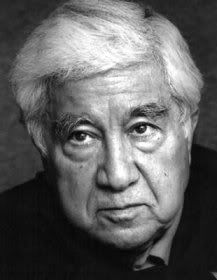
My father, an Anatolian village boy, came to Istanbul at the age of thirteen. My mother, from another Anatolian village, also came to Istanbul as a very small child. They had to make this long journey, meet in Istanbul and get married so that I could come into the world.

The choice was not left to me, so I was born at a very unsuitable time--the bloodiest and most fiery days of World War I, in 1915. Again, the choice not being in my hands, my birth occurred not only at an unseemly time but also in an unfavorable place, on Heybeli Island. Heybeli lies offshore of Istanbul and was the summer residence of Turkey's richest people. And since the rich couldn't live without the poor--they had such a great need for them-- we, too, lived on the island.

I don't mean to imply with these remarks that I was unlucky. On the contrary, I consider myself as being quite fortunate in not coming from a rich, noble and famous family.

They named me "Nusret." In Turkish, this Arabic word means "God's Help." It was a name entirely fitting to us because my family, destitute of any other hope, bound all their hope in God.

Ancient Spartans killed, with their own hands, offspring who were born weak and puny, raising only the strong and healthy. This process of selection for us Turks is performed by nature and society. When I disclose that my four brothers died in infancy, unable to endure their hostile environment, you will easily understand how stubborn I was in surviving. And my mother, unable to endure beyond her twenty-sixth year, died, leaving this beautiful world, so worth living in, to those who were strong.

In capitalist countries the milieu is excellent for merchants, in socialist countries, most favorable for writers. That is, a man who knows his business must become a writer if he's in a socialist state, or a merchant if he's in a capitalist one. How contrary a man I was going to be was already evident in my childhood, for even at the age of ten, in a country like Turkey--a capitalist scrap pile--I'd determined to become a writer though no one in my family could read or write.

My father, like every good father who gives thought to his son's future, advised, "Forget this silly idea of writing and take a good honest job, one you can make a living at!" I was beyond listening to him.

My obstinacy didn't stop there. Although I wished to be a writer, yearned to take pen in hand, I entered a school where they would thrust a rifle in my hand.

During my early years I couldn't do what I liked, and didn't like what I did do. I wanted to become a writer, but became a soldier. At that time, the only schools where poor, penniless children could study free were military schools; therefore I was forced to enter a military boarding school.

In 1933 when the surname law was passed which directed every Turk to select a last name, people's secret feelings of inferiority surfaced: Some of the world's stingiest became known as "Eliachik" (Openhanded), the greatest cowards named themselves "Yurekli" (Stoutheart), and many of the laziest took the name ''Chalishkan" (Industrious ) . One of our teachers chose the surname of "Cheviker" (Dextrous) when he could barely sign his name to a letter. The rampant racism present caused people with mixed blood to grab for surnames which signified they were Turks.

Invariably I came last in any kind of scramble; I was no different in this one for nice surnames. No surname remained that I could take pride in, so I assumed the name of "Nesin" (What-are-you?). I wanted to think of what I was and pull myself together whenever anyone called "What-are-you? "In 1937 I became an officer, you know, a Napoleon. Well really, I was merely one of the Napoleons. Every new officer thinks himself Napoleon. Some of them never recover from this sickness; it lasts a whole lifetime. Others are cured after awhile. ''Napoleonitis'' is a dangerous and contagious disease. The symptoms are these: The victims think only of Napoleon's victories, never of his defeats; they are prone to tuck a right hand between jacket buttons; they stand before a map of the world, drawing arrows with a red crayon and, after subjugating and occupying the entire world in five minutes, regret that the world is so small. Victims of this disease rave as in a high fever. There are other dangers. In later stages, they may fancy themselves Tamerlane, Ghengis Khan, Attila, Hannibal, Moltke, even Hitler or others such as these.

As a fresh young officer, twenty-two or twenty-three, I conquered the world a few times on the map with a red crayon. My Napoleon complex lasted only a year or two. However, even during this malady, I never leaned toward fascism.

From childhood on, I desired to be a playwright. In the army were infantry, cavalry, artillery and tank corps, but no military playwright branch, so I looked for a way out and was discharged in 1944.

Even after becoming generals, some officers still had an ache in their craws to be poets or writers and wrote poems or novels, much to the amazement of everyone but themselves. Yet how nonsensical and comical it would seem to them if a fifty-year-old poet should want to become an army commander.

I began storywriting during my military service. Since in those times a soldier who wrote for the newspapers was looked upon with disfavor by his superiors, I didn't write in my own name but under my father's, Aziz Nesin. My real name, Nusret Nesin, was obscured by this first pseudonym and forgotten.

In those times they referred to me as the young writer. My father was a graybearded old man. When this graybearded old man had business in a government office and introduced himself as Aziz Nesin, nobody believed it and they gave him a hard time. My father persisted in trying to prove his identity as Aziz Nesin in various official bureaus until he died.

Years later, when my books were translated into foreign tongues, in order to collect my copyright royalties which had come to the bank in the name of Aziz Nesin, I fought to prove that I was Aziz Nesin although "Nusret Nesin" was written on my identity papers.

Like many others, I started my writing by composing poetry. Nazim Hikmet, while staging his hunger strike, advised me to give up poetry, that I wrote it badly, and that I should confine my writing to stories and novels. From these remarks I concluded that Nazim was jealous (!) of me. To those who've asked why I gave up poetry, I've replied that I abandoned it because one doesn't make money in Turkey as a poet. The truth of the matter is that, due to my great respect for poetry, I dropped it.

These days, many of those who claim the title of poet continue to think that what they produce is poetry, because they have no respect for poetry. I believe that poetry is a great art because many writers, being unsuccessful as poets, are pushed into becoming successful, famous writers. I'm not saying this about myself, for I won great popularity by showing just how badly poetry could be written. The large amount of interest shown in my published poems was not due to their beauty; it was because a woman's signature appeared at the bottom. My poems were published under a female pseudonym and stacks of love letters poured in addressed to that name.

From childhood on, it's been my ambition to set down words that would make people weep. I took a story, written with this intent, to a magazine. The editor-in-chief, who should have been sobbing as he read my story, showed such a lack of understanding that he laughed long and loud, then, wiping the tears of laughter from his eyes, said "Bravo! Very good. Write more stories like this and bring them to us."

This, my first disillusionment in writing, continues: My readers laugh at most of the things I've written to make them cry. Even when I became known as a writer of humor, I didn't know what humor was. I can't say that I really know now, but I can tell you as much as I do know. I learned humor by doing it. Often I'm asked what humor is made of, as if it were a recipe or formula. In summation of what I've learned about the subject, I'll give such a formula: Humor is a very serious business.

In 1945, when those in power incited several thousand reactionaries to demonstrate and demolish the Tan Newspaper, where I worked, I was left unemployed and could find no work with any paper. They would not accept any writing under my name. Thus it was that I commenced writing for newspapers and magazines under more than two hundred assumed names. These were writings of all types including editorials, anecdotes, reports, interviews, police novels and stories. Upon a newspaper owner's discovery that a pseudonym was mine, I invented a new one.

Many many mix-ups occurred because of these assumed names. For example, I published a monologue children's book under the name "Oya Atesh," a combination of my daughter's and son's names. Those in power were unaware I'd penned these monologues, and they were used in almost every elementary school in addition to being recited at evening entertainments. "Oya Atesh" was listed as a woman author in the "Bibliographie of Turkish Women Writers'' which was published later on.

Another story I wrote, which was published in a magazine under a French pseudonym, was accepted in an anthology of world humor as an example of French humor.

Still another of my stories, which I published under an invented Chinese name, later appeared in a second magazine as a translation from Chinese.

During the times I couldn't work as a writer, though I tried many jobs like grocer, salesman, accountant, newspaper peddler and photographer, I was a failure at all of them.

As a result of my writing I've been imprisoned five and a half years. Six months of those years were caused by King Farouk of Egypt and the Iranian Shah, Riza. King Farouk and Shah Riza claimed that I insulted them in my articles and through their ambassadors in Ankara had me brought into court, the end result being a six-month's jail sentence for me.

From my first wife I have two children, and two from my second--altogether, four children.

At my first arrest (1946), the question the police asked me continually for six days was this:

''Who is the real writer of these articles that came out under your name?"

They wouldn't believe that I wrote them.

Not long after this event--two years--the opposite occurred. This time the police claimed I wrote articles with other signatures. The first time I'd tried to prove I wrote, the second, that I didn't write. On one such occasion an expert witness testified that I'd written an article under another name, so I was imprisoned sixteen months for an article I didn't write.

My first wife and I were married and walked under the sabers of my officer friends as the orchestra played the tango, "Comparasita." I exchanged wedding rings with my second wife through the bars of the prison. You see that this was not a shining beginning.

I was thin. Languishing again and again in prison, I put on weight.

In 1956 I took first place at the International Humor Contest and won the Golden Palm. Newspapers and magazines which would not publish my writings with my own signature before my winning of the Golden Palm, hastened to do so afterwards. But this didn't last long.

Then once more writings under my own name were banned from the newspapers and I was forced to enter the contest again in 1957 to win another Golden Palm. After this, my name reappeared in newspapers and magazines. In 1966, at the International Humor Contest, held in Bulgaria, I took first place and won the Golden Hedgehog.

Upon the political revolution in Turkey on 27 May 1960, in my joy I donated one of the Golden Palms to the State Treasury. A few months after this event I was again thrown into jail. I'm saving the second Golden Palm and the Golden Hedgehog for future joyful days, saying to myself that they'll be needed.

People are amazed that to this date I've written more than two thousand stories. Really there is nothing surprising in this. If my family, whom I'm obliged to support, numbered twenty instead of only ten, I should have had to write more than four thousand stories.

I am fifty-three years old, have fifty-three books, forty thousand lira in debts, four children and one grandchild. I live alone. My writings have been translated into twenty-three languages, my books into seventeen; my plays have been performed in seven countries.

Only two things can I hide from others: one my fatigue, the other my age. Excepting these two, all of me is exposed and open. It's said that I look young for my age. It must be that I am so busy working I don't have time to age.

I'm not one who says, "Had I the chance to come to this world again, I would do the same things all over again." On my second coming I would want to do more than on my first, much much more and much much better.

If in the entire history of mankind had just one immortal been found, I would have looked to him for guidance and tried to achieve immortality too; but what am I to do without a model? It's not my fault--I'll die like everyone else.

I love humanity so much, so excessively, that I can even be angry with them.

This is my as yet unfinished story. I realize that readers are generally bored with long articles so I think the conclusion won't take long. The thing I am most curious about is the end of this story which I will never be able to learn.

(1968)

Notes:

In 1972 the Aziz Nesin Foundation was brought into being by Aziz Nesin in order to enable children in need of to get a proper personal and professional education.

Nesin's outspoken atheism often made him a target of Islamic extremists. He most recently made international news by translating and publishing in a newspaper parts of Salman Rushdie's Satanic Verses. Muslim fundamentalists tried to kill him in an arson attack at a hotel in the Turkish town of Sivas in 1993. Nesin escaped the fire, which killed 37 writers, poets and intellectuals who had gathered to commemorate the death of a 16th-century poet hanged for his opposition to religious oppression.


AZIZ NESIN’S POEMS

THƠ E-ZIT NÊ-XIN

Forgive Me

Sometimes I come too soon

Like I came to this world

Or sometimes too late

Like I loved you at this age

I am always late for happiness

I always go to misery too soon

Either everything has already come to an end

Or nothing has started yet

I am at a step of life that is

Too soon to die, too late to love

I am late again, forgive me my love

I am on the verge of love, but death is closer.

Tha thứ cho anh

Có lúc anh đến quá sớm

Như khi anh đến với thế giới

Đôi khi anh đến quá muộn

Như anh yêu em ở tuổi này

Anh luôn muộn màng với những điều hạnh phúc

Anh luôn đến sớm trước những nỗi khổ đau

Có phải tất cả đã kết thúc

Hay chưa có gì được bắt đầu?

Anh ở ngưỡng cửa cuộc đời

Chết thì sớm mà yêu đương thành muộn

Anh muộn mất rồi, tha thứ cho anh, em nhé

Anh đứng ở ngưỡng yêu, nhưng cái chết lại quá gần


Cartoon: Aziz Nesin Turkish Humour Writer (medium) by halisdokgoz tagged aziz,nesin,turkish,humour,writer


I Know Before You Tell

I perceive that you will run away..

I can't beg, I can't run

But leave your voice with me

I know you'll break off

I can't hold your hair

But leave your smell with me

I understand that you'll leave

I am already ruined, I can't collapse

But leave your color with me

I feel that you'll get lost

That will be my greatest pain

But leave your heat with me

I distinguish that you'll forget

Pain is a vast grey ocean

But leave your taste with me

You'll leave anyway

I have no right to stop you

But leave yourself with me

Anh biết trước khi em nói

Anh biết em sẽ bỏ đi

Anh không thể cầu xin, anh không thể chạy theo

Nhưng hãy để lại giọng nói em bên anh

Anh biết em sẽ chia tay

Anh không thể giữ chặt tóc em

Nhưng hãy để lại mùi hương em bên anh

Anh hiểu em sẽ ra đi

Anh đã tàn úa, anh không thể gục ngã

Những hãy để lại màu sắc em bên anh

Anh cảm thấy em sẽ biến mất

Đó là nỗi đau của anh, nỗi đau lớn nhất

Những hãy để lại trái tim em cho anh

Anh hiểu rồi em sẽ quên

Nỗi đau là đại dương mênh mông xám ngắt

Nhưng hãy để lại vị em trong môi anh

Dù sao thì em vẫn ra đi

Anh chẳng có quyền gì ngăn em

Nhưng hãy để lại bản thân em bên anh


The Most Beautiful

This museum,

It is beautiful only when I go there with you.

When there is no one else in the hall,

Kissing you is the most beautiful thing.

This raki,

It is beautiful only when I'm drinking it with you.

Whoever is around,

The most beautiful thing is to kiss your mouth with raki.

This world, you see,

It is beautiful only if I'm living with you

And you,

You are beautiful only if you are with me

Tuyệt vời nhất

Bảo tàng này,

Chỉ tuyệt vời khi anh đến cùng em

Khi không có ai trong sảnh

Và anh hôn em

Đó là điều tuyệt nhất.

Rượu này

Chỉ tuyệt vời khi anh uống với em.

Dù ai ở chung quanh.

Hôn lên môi em với rượu nồng

Đó là điều tuyệt nhất.

Thế giới này, em biết đấy,

Chỉ tuyệt vời khi anh sống với em.

Và em,

Em chỉ tuyệt vời khi em ở cùng anh.


Longing

You made me wait so long, so long that

I got used to missing you

You came back after a long time

I now love longing for you more than I love you

Mong đợi

Em bắt anh chờ lâu

Chờ em lâu quá

Anh đã quen với nỗi nhớ em

Em trở lại sau thật lâu

Giờ đây, anh yêu nỗi mong em

Nhiều hơn anh yêu em.


Sounds

If you hear the sound of the key in the lock

When you come home at night

Know that you are alone

If you hear a small cracking sound

When you push the light switch

Know that you are alone

If the sound of your heart doesn't let you sleep

When you go to bed

Know that you are alone

If you hear that time is nibbling

The books and papers in your room

Know that you are alone

If a voice from the past

Is calling you to the old days

Know that you are alone

If you want to escape from loneliness

Without appreciating it

You are totally alone even if you can escape

Âm thanh

Nếu bạn nghe tiếng chìa trong ổ khóa

Trong đêm bạn trở về nhà

Bạn chỉ có riêng mình

Nếu bạn nghe tiếng cạch nhẹ

Khi bạn bật công tắc

Bạn chỉ có riêng mình

Nếu tiếng trái tim không cho bạn ngủ

Khi bạn ở trên giường

Bạn chỉ có riêng mình

Nếu bạn nghe thời gian gặm nhấm

Sách và giấy trong phòng

Bạn chỉ có riêng mình

Nếu tiếng gọi đến từ quá khứ

Nhắc bạn nhớ những ngày xưa

Bạn chỉ có riêng mình

Nếu bạn muốn trốn chạy nỗi cô đơn

Và không coi trọng nó

Cả khi bạn chạy trốn được

Bạn hoàn toàn cô độc


You at Your Absence

I am not alone again, as always

I am with your absence at this far-eastern night

Twenty five thousand kilometers between us

You live winter, I live summer

You are in one half of the world,

I am in the other half

Still, your absence does not leave my hand

You are even more 'for me'

That burning nakedness of you, in flames

Is a thousand times more beautiful than your presence

And as your hands talk about the deepest secrets

I don't want to write to you without saying that

We love each other across twenty five thousand kilometers

Xa em

Anh không còn cô độc

Anh ở bên nỗi vắng em

Đêm miền đông xa xôi

Giữa chúng ta là hai nhăm ngàn cây số

Em sống trong mùa đông, anh ở với mùa hè

Em ở nửa bên kia thế giới

Anh nửa bên này.

Dẫu vậy, em chẳng rời tay anh

Em còn là của anh hơn nữa.

Bóng hình em trần truồng bốc cháy

Đẹp đẽ nghìn lần hơn khi em ở cạnh anh.

Và đôi tay em kể anh nghe những bí mật thẳm sâu

Anh không muốn viết cho em mà không nhắc tới

Chúng ta yêu nhau cách hai nhăm ngàn cây số


Remaining Silent

There is no word unsaid under this sun.

That is why I say at nights that I love.

There is no word unsaid either at night or during the day.

And I say what has already been said in new forms.

There is no form in the world not tried.

And I remain silent, hiding my love inside.

You hear how my silence screams, don't you.

There are many declaring their love with silence, my love.

But there is no one who loves like I remain silent...

Im lặng

Dưới ánh mặt trời, không điều gì chưa nói

Cho nên anh nói lời yêu trong đêm tối

Trong đêm và trong ngày, không điều gì chưa nói

Cho nên anh nói những lời cũ kỹ bằng những cách mới

Không có cách nói nào chưa từng thử trên thế giới

Cho nên anh im lặng, để che giấu tình yêu

Em có nghe tiếng lặng im anh vang vọng?

Có những kẻ nói tiếng yêu bằng cách lặng im

Nhưng chẳng tình yêu nào giống anh lại chịu lặng im như thế.


In Vain

You are not here

It's raining in vain,

We won't be able to soak together...

This river is in vain,

Its struggle and flutter...

We won't be able to sit by it and watch together...

The roads go on and on

They get tired in vain

We won't be able to walk together...

Yearning and separation are in vain

We are far from each other

We won't be able to cry together...

I love you in vain

I live in vain

We won't be able to share life together...

Vô vọng

Em không ở đây

Trời mưa vô vọng

Chúng ta chẳng thể cùng nhau rũ ướt

Dòng sông vô vọng

Trồi dạt nước trôi

Chúng ta chẳng thể ngồi bên, để cùng ngắm dòng sông

Những con đường trải dài vô tận

Những con đường mệt mỏi vô vọng

Chúng ta chẳng thể dạo bước bên nhau

Mong ước và cách trở vô vọng

Mình ở quá xa nhau

Không thể cùng nhau khóc

Anh yêu em vô vọng

Anh sống vô vọng

Chúng ta không thể sẻ chia cuộc sống với nhau.


Insufficient World

My heart doesn't fit into my body

My body into my room

My room doesn't fit into my house

My house into the world

My world doesn't fit into the universe

I will explode

The pain of my grief made me silent

My silence doesn't fit into the skies

How can I tell such a pain to anyone

My love doesn't fit into my heart

My brain into my head

Ah, my temples

I am about to crack

I understand now, I understand

I won't be able to tell anyone

Thế giới không đủ

Trái tim tôi không hợp cùng thân thể

Thân thể tôi không phù hợp căn phòng

Căn phòng tôi lạc lõng với ngôi nhà

Và ngôi nhà xa xôi cùng thế giới

Thế giới của tôi lạc loài trong vũ trụ

Tôi sẽ nổ tung.

Cơn đau đớn khiến tôi câm lặng

Nỗi câm lặng chẳng hợp với trời xanh

Làm sao tôi có thể kể nỗi đau này với ai?

Tình yêu tôi không hợp với trái tim

Trí óc tôi không hợp với mái đầu

Ôi, thái dương tôi nhức nhối

Tôi sắp đứt vỡ.

Tôi đã hiểu, phải, tôi hiểu

Tôi chẳng thể kể với một ai.

Translated by Vũ Hoàng Linh


Monday, April 4, 2011

Anna Akhmatova's poems - Thơ Anna Akhmatova


Anna Akhmatova (Russian and Ukrainian: А́нна Ахма́това; June 23rd 1889 -- March 5, 1966) was the pen name of the modernist poet Anna Andreyevna Gorenko (Russian: А́нна Андре́евна Горе́нко; Ukrainian: А́нна Андрі́ївна Горе́нко), one of the most acclaimed female writers in the Russian canon.

Akhmatova's work ranges from short lyric poems to intricately structured ones. Her style, characterised by its economy and emotional restraint, was strikingly original and distinctive to her contemporaries.

Anna Akhmatova (tiếng Nga tiếng Ukraina: Ахматова Анна; (23-6-18895-3-1966) bút danh của nhà thơ hiện đại Anna Andreyevna Gorenko (tiếng Nga: Анна Андреевна Горенко), một trong những nhà văn nữ nổi tiếng nhất trên văn đàn Nga.

Phạm vi sáng tác của Akhmatova từ thơ trữ tình ngắn tới những bài thơ có cấu trúc phức tạp. Phong cách của bà, mà đặc trưng bởi sự kiệm lời kiềm chế cảm xúc, đã nổi bật với tính sáng tạo mạnh mẽ khác biệt với những người cùng thời với bà.


I would like you to help me by offering any Vietnamese translation for these poems by Anna Akhmatova. Thank you very much. Các bạn có thể giúp sức bằng cách gởi bản dịch cho các bài thơ sau đây của Anna Akhmatova. Cám ơn nhiều.

nguyenquangy@gmail.com


Anna Akhmatova

Forty-Five Poems

Anna Akhmatova

Bốn mươi lăm thi khúc

‘Now the pillow’s,’

Now the pillow’s,

hot on both sides.

A second candle

dies, the ravens cry

there, endlessly.

No sleep all night,

too late to think of sleep…

How unbearably white

the blind’s white deep.

Hello, Morning!


Reading Hamlet

To the right, wasteland by the cemetery,

beyond it the river’s dull blue.

You said: ‘Go, get thee, to a nunnery

or get a fool to marry you…’

Though that’s always how Princes speak,

still, I’ve remembered the words.

As an ermine mantle let them stream,

behind him, through endless years.


‘Hands clasped under the dark veil.’

Hands clasped, under the dark veil.

‘Today, why are you so pale?’

- Because I’ve made him drink his fill

of sorrow’s bitter tale.

How could I forget? He staggered,

his mouth twisted with pain…

I ran down not touching the rail,

I ran all the way to the gate.

‘I was joking,’ I cried, breathlessly.

‘If you go away, I am dead.’

Smiling strangely, calmly,

‘Don’t stand in the wind,’ he said.


‘Memory of sun ebbs from the heart.’

Memory of sun ebbs from the heart.

Grass fades early.

Wind blows the first snowflakes

barely, barely.

Freezing water can’t flow

along these narrow channels.

Nothing happens here, oh

nothing can happen.

A willow against the sky

spreads its transparent fan.

Perhaps its better, if I

don’t accept your hand.

Memory of sunlight ebbs from the heart.

What’s this? Darkness?

Perhaps!...In the night

winter has overcome us.


‘A grey cloud in the sky overhead,’

A grey cloud, in the sky overhead,

like a squirrel skin uncurled.

‘I’m not sorry your body,’ he said,

‘will melt in March, frail snow-girl!’

In the fluffy muff my hands grew cold.

I felt afraid, somehow confused.

How to recall the swift weeks’ flow,

his short-lived insubstantial love!

I don’t want bitterness or revenge,

let me die with the last snow-storm.

My fortune told of him at year’s end.

I was his before February was born.

Song of the Last Meeting

My heart was chilled and numb,

but my feet were light.

I fumbled the glove for my left hand

onto my right.

It seemed there were many steps,

I knew – there were only three.

Autumn, whispering in the maples,

kept urging: ‘Die with me!

I’m cheated by joylessness,

changed by a destiny untrue.’

I answered: ‘My dear, my dear!

I too: I’ll die with you.’

The song of the last meeting.

I see that dark house again.

Only bedroom candles burning,

the yellow, indifferent, flame.


‘I’ve written down the words’

I’ve written down the words

that I’ve not dared to speak.

My body’s strangely dumb.

Dully my head beats.

The horn cries have died.

The heart’s still confused.

On the croquet lawn, light

autumn snowflakes fused.

Let the last leaves rustle!

Let last thoughts torment!

I don’t wish to trouble

those used to happiness.

I forgive those lips, eyes

of yours, their cruel jest…

oh, tomorrow we’ll ride

that first wintry sledge.

Drawing-room candles will glow

more tenderly in the day.

Of conservatory roses

I’ll bring a whole bouquet.


‘I came here, in idleness.’

I came here, in idleness.

Where I’m bored: all the same to me!

A sleepy hilltop mill, yes,

here years pass silently.

Over convolvulus gone dry

the bee swims past, ahead,

I call to that mermaid by

the pond: the mermaid’s dead.

Thick with mud, and rusted,

the wide pond’s shallows:

over the trembling aspen

a weightless moon glows.

I see everything freshly.

The poplars smell moist.

I’m silent. Silent, ready

to be yours again, earth.


White Night

Oh, I’ve not locked the door,

I’ve not lit the candles,

you know I’m too tired

to think of sleep.

See, how the fields die down,

in the sunset gloom of firs,

and I’m drunk on the sound

of your voice, echoing here.

It’s fine, that all’s black,

that life’s – a cursed hell.

O, that you’d come back –

I was so sure, as well.


Evening Room

I speak those words, today, that come

only once, born in the spirit.

Bees hum on white chrysanthemum:

there’s the must of an old sachet.

And the room, with its thin windows,

preserves love, remembers the past.

Over the bed a French script flows:

it reads: ‘Lord, have mercy on us.’

Those saddened marks of so ancient a tale,

you mustn’t touch, my heart, or seek to…

I see bright Sèvres statuettes grow pale:

even as their lustre grows duller too.

A last ray, yellow, heavy,

sets on the dahlias’ bright bouquet,

and I can hear viols playing,

a clavichord’s rare display.


Legend on An Unfinished Portrait

Oh, there’s no reason for sighs,

sadness is pointless, a crime,

here, from grey canvas, I rise,

vaguely, strangely through time.

Arms lifted, freely broken off,

a tormented smile on my face,

I was forced to become like this

through hours of mutual grace.

He wished it so, he willed it so,

with words, spiteful and dead.

Anxiety clotted my mouth, oh

my cheeks with snow were wed.

It’s no sin of his, it seems,

other eyes, he left to see,

no matter these empty dreams

of my mortal lethargy.


‘He loved three things, alive:’

He loved three things, alive:

white peacocks, songs at eve,

and antique maps of America.

Hated when children cried,

and raspberry jam with tea,

and feminine hysteria.

…and he had married me.


A Ride

My feather brushed the carriage roof.

I was gazing into his eyes.

A pain, in my heart I failed to know,

caused by my own sighs.

The evening breathless, heavily-chained

under a heavenly cloud-bank,

as if the Bois de Boulogne were stained,

in some old album, with Indian ink.

Scent of lilac and benzene,

and a quiet, guarded waiting…

with his hand he touched my knees

again, and without trembling.


‘I won’t beg for your love.’

I won’t beg for your love.

It’s safely laid aside….

I won’t be penning jealous

letters to your bride.

But be wise, take my advice:

give her my poems to read,

give her my photos beside –

be kind to the newly-wed!

Oh, knowledge is better for geese,

feeling they’ve won completely,

than sweet companionable speech,

or a tender first-night memory…

and when you’ve spent all your

kopecks of joy with your dear friend,

and your spirit’s sated with it all,

and suddenly you’re ashamed –

don’t come – I’ll fail to know you –

to me, night’s crestfallen guest.

For how could I help you?

I’m not cured of happiness.


Evening

In the garden strains of music,

full of inexpressible sadness.

Scent of the sea, pungent, fresh,

on an ice bed, a dish of oysters.

He said to me: ‘I’m a true friend!’

and then touched my dress.

How unlike an embrace

the closeness of his caress.

Thus, you stroke birds or cats, yes,

thus you view shapely performers…

in his calm eyes only laughter,

beneath pale-gold eyelashes.

And the voices of sad viols

sang behind drifting vapour:

‘Give thanks to heaven, then –

you’re alone at last with your lover.’


‘Here we’re all drunkards and whores,

Here we’re all drunkards and whores,

joylessly stuck together!

On the walls, birds and flowers

pine for the clouds and air.

The smoke from your black pipe

makes strange vapours rise.

The skirt I wear is tight,

revealing my slim thighs.

Windows tightly closed:

who’s there, frost or thunder?

Your eyes, are they those

of some cautious cat, I wonder?

O, my heart how you yearn!

Is it for death you wait?

Or that girl, dancing there,

for hell to be her sure fate?


And no-one came to meet me

…And no-one came to meet me

carrying a lantern.

The house quiet: my entry

by moonlight uncertain.

Under the green lamp,

his smile was lifeless,

whispering: ‘Cinderella,

how strange your voice…’

Flames of the fire dying:

wearily, cricket chirping.

Ah! Someone’s taken my

white shoe into their keeping.

Given me three carnations

without raising their eyes.

O, dear tokens,

where can you hide?

My heart’s bitter too

knowing soon, soon,

my little white shoe

will be tried by everyone.


‘Always so many pleas from a lover!’

Always so many pleas from a lover!

None when they fall out of love.

I’m so glad it plunges, the river,

beneath colourless ice above.

And I’m to stand – God help me! –

on the surface, fissured, gleaming,

with my letters, for posterity

to judge, in your safe keeping,

so that clearly, and distinctly,

they can see you, brave and wise,

in your glorious biography,

no gaps revealed to the eye?

To drink of Earth’s too sweet,

and Love’s nets are too fine.

But may my name be seen

in the students’ books in time,

and, let them smile, secretly,

on reading my sad story…

if I can’t have love, if I can’t have peace,

grant me a bitter glory.


The high vault’s bluer

The high vault’s bluer

than the sky’s solid blue…

forgive me, happy boy,

the death I brought you –

for the roses from every place,

for your foolish words,

that your bold dark face

pale with love, stirred.

I thought: your purpose –

to show an adult’s pride.

I thought it’s not possible:

love, as one loves a bride.

I was wrong in every way.

When the weather grew icy,

everywhere, and always,

you followed, impassively,

as if you wanted to show

I’d no love for you. Forgive!

Why did you take that vow

on the path to suffering?

And death held out its hand…oh,

speak, why then, what for?

I didn’t know how frail your throat

was, under the blue collar.

Happy boy, my tormented

owlet, oh, forgive me!

Today, I find it hard

to leave this sanctuary.


For M. Lozinsky

It’s endless – the heavy, amber day!

Impossible grief, pointless waiting!

And the silver-voiced deer, again,

in the Northern Lights’ park, belling.

And I think there’s cold snow

a blue font for the poor and ill,

and a little sledge’s headlong flow,

to the ancient chime of far-off bells.


Memory’s Voice

For O. A. Glebova-Sudeikina

‘What do you see, on the wall, dimly alive,

at the hour when the sunset eats the sky?

A seagull, on a blue cloth of waters,

or perhaps it’s those Florentine gardens?

Or is it Tsarskoye Seloe’s vast view,

where terror stepped out before you?

Or that one who left your captivity,

and walked into white death, freely?’

No, I see only the wall – that shows

reflections of heaven’s dying glow.


8th November 1913

Sunlight fills my room

with hot dust, lucent, grey.

I wake, and I remember:

today is your saint’s day.

That’s why even the snow

is warm beyond the window,

that’s why, sleeplessly,

like a communicant, I slept.


The Guest

All’s as it was: the snowstorm’s

fine flakes wet the window pane,

and I myself am not new-born,

but a man came to me today.

I asked: ‘What do you seek?’

He said: ‘To be with you in hell’.

I laughed: ‘Ah, unfortunately,

no: perhaps you wish me ill.’

But, his dry hand touched

a petal with a light caress:

‘Tell me, how they kiss you,

Tell me, how you kiss.’

And his eyes, dully gazing,

never lifted from my ring.

not a single muscle shifting

beneath that evil-glistening.

O, I know: to know passionately

and intensely is his delight

there’s nothing that he needs,

nothing I can deny.


For Alexander Blok

I came to the poet as a guest.

Exactly at noon. On Sunday.

Beyond the window, frost,

quiet in the room’s space.

And a raspberry tinted sun

above tangles of blue smoke…

How clearly the taciturn

master turns, on me, his look!

His eyes are of that kind

remembered by one and all:

Better take care, mind:

don’t gaze at them at all.

But I remember our words,

smoky noon, of a Sunday,

in that high grey house

by the Neva’s sea-way.


Solitude

So many stones are thrown at me

that I no longer cower,

the turret’s cage is shapely,

high among high towers.

My thanks, to its builders,

may they escape pain and woe,

here, I see suns rise earlier,

here, their last splendours glow.

And often winds from northern seas

fill the windows of my sanctuary,

and a dove eats corn from my palm…

and divinely light and calm,

the Muse’s sunburnt hand’s at play,

finishing my unfinished page.


There’s a secret border in human closeness,

There’s a secret border in human closeness,

that love’s being, love’s passion, cannot pass –

though lips are sealed together in sacred silence,

though hearts break in two with love’s distress.

And friendship too is powerless, and years

of sublime flame-filled ecstasy

when the soul itself is free, fights clear,

of the slow languor of sensuality.

Those who try to reach that boundary are mad,

and those who have – are filled with anguish.

Now you know, now you understand,

why my heart won’t beat at your caress.


Like one betrothed I receive

Like one betrothed I receive

a letter at each day’s end,

and late at night conceive

an answer for my friend.

‘On my journey to the dark,

I’m staying with white death.

Do no harm, my gentle one,

to anyone on earth.’

Brighter, a star is shining

between that pair of trees,

so calmly promising

that what I dream will be.


Flight

For O. A. Kuzmin-Karavaev

‘If we can only reach the shore,

my dear!’ – ‘Silently…’

And so we slipped down the stair,

not breathing, searching for keys.

Past the place where we once

danced, and drank the wine,

past the Senate’s white columns,

to where it was dark as a mine.

‘What are you doing, you’re crazy!’ –

‘No, just in love with you!

This breeze – wide and windy,

will delight a boat or two!’

Throat constrained with horror,

the skiff carried us in darkness…

a sea-cable’s strong odour

burnt my quivering nostrils.

‘Tell me, you surely must know:

am I sleeping? So like a dream…’

Only the oars measured blows,

on the Neva’s heavy stream.

But the black sky lightened,

someone called from a bridge,

with both hands I grasped

the cross’s chain at my breast.

Powerless, I was lifted, like

a young girl, in your arms,

onto the white yacht’s deck,

to meet day’s incorruptible charms.


I don’t know if you’re alive or dead

I don’t know if you’re alive or dead –

Can you be found on earth, though,

or only in twilit thoughts instead

be mourned for, in that peaceful glow.

All for you: the prayer daily,

the hot sleeplessness at night,

the white flock of poetry,

and the blue fire of my eyes.

No one was cherished more,

or tormented me so, no not

him, who betrayed me to torture,

nor him, who caressed and forgot.


Like a white stone in a well’s depths

Like a white stone in a well’s depths,

a single memory remains to me,

that I can’t, won’t fight against:

It’s happiness – and misery.

I think someone who gazed full

in my eyes, would see it straight.

They’d be sad, be thoughtful,

as if hearing a mournful tale.

I know the gods changed people

to things, yet left consciousness free,

to keep suffering’s wonder alive still.

In memory, you changed into me.


From: Anno Domini

‘Everything’s looted, betrayed and traded,’

Everything’s looted, betrayed and traded,

black death’s wing’s overhead.

Everything’s eaten by hunger, unsated,

so why does a light shine ahead?

By day, a mysterious wood, near the town,

breathes out cherry, a cherry perfume.

By night, on July’s sky, deep, and transparent,

new constellations are thrown.

And something miraculous will come

close to the darkness and ruin,

something no-one, no-one, has known,

though we’ve longed for it since we were children.


Bezhetsk

White churches there, and bright crackling ice,

there my son’s cornflower-blue eyes blossom.

Above the old town, nights are diamond-bright, Russian:

more yellow than lime-flower honey, the moon’s slice.

Dry snow-storms blow from the plains beyond the river,

and, like angels, men are glad on God’s Holy Day.

They’ve cleared the best room, icon lamps play,

on the oak table you’ll see the Good Book’s cover.

There, ungenerous to me now, Memory so severe,

bowed low, opened her tower rooms as well;

but I slammed the fearful door, did not enter:

while the town rang with cheerful Christmas bells.

Note: Bezhetsk is about 140 miles north of Moscow in the Tverskaya Oblast Region.

The poem is dated 26th December 1921.


Lot’s Wife

The just man followed God’s messenger,

vast and bright against the black hill,

but care spoke in the woman’s ear:

‘There’s time, you can look back still,

at Sodom’s red towers where you were born,

the square where you sang, where you’d spin,

the high windows of your dark home,

where your children’s life entered in.

She looked, and was transfixed by pain,

uncertain whether she could still see,

her body had turned to translucent salt,

her quick feet rooted there, like a tree.

A loss, but who still mourns the breath

of one woman, or laments one wife?

Though my heart never can forget,

how, for one look, she gave up her life.

Note: The reference is to Lot’s wife in the Bible, Genesis 19:26


Muse

When I wait, at night, for her to come,

life, it seems, hangs by a strand.

What are honour, youth, freedom,

next to the dear guest, flute in hand?

And now she enters. Throws aside

her veil, gazing deep in my eyes.

I ask her: ‘Was that you, Dante’s guide

Dictating, in Hell?’ She answers: ‘I’


To An Artist

In every work of yours I find,

fruit of your twice-blessed labours,

gold of ever-autumnal limes,

blue of fresh-created waters.

Think of them, and the lightest slumber

leads me into your park, already,

where each turning seems fearful,

seeking your tracks, unconsciously.

Shall I walk beneath this arch, transmuted by

the movement of your hand, into the sky,

in order to cool my shameful heat?...

There I’ll be forever blessed

and my burning eyes find rest,

there I’ll regain the gift, I’ll weep.


The Last Toast

I drink to our ruined house,

to all of life’s evils too,

to our mutual loneliness,

and I, I drink to you –

to eyes, dead and cold,

to lips, lying and treacherous,

to the age, coarse, and cruel,

to the fact no god has saved us.


Voronezh

For Osip Mandelshtam

And the town is frozen solid in a vice,

Trees, walls, snow, beneath the glass.

Over crystal, on slippery tracks of ice,

painted sleighs and I, together, pass.

And over St Peter’s poplars, crows

a pale green dome there that glows,

dim in sun-shrouded dust.

The field of heroes lingers in my thought,

Kulikovo’s barbarian battleground caught.

Frozen poplars, like glasses for a toast,

clash now, more noisily, overhead.

As though at our wedding, and the crowd

drinking our health and happiness.

But Fear and the Muse take turns to guard

the room where the exiled poet is banished,

and the night, marching at full pace,

of approaching dawn, has no knowledge.

Note: The field of Kulikovo was the scene of a famous battle against the Tartar Horde in 1378. Mandelshtam was exiled for a time to Voronezh, south of Moscow on the River Don.


Cleopatra

She has already kissed Antony’s dead lips,

already wept on her knees before Augustus…

and her servants have betrayed her. Trumpets

cry below Roman eagles, the gloom of dusk.

Noble and stately, stammering with confusion

now enters the last prisoner of her beauty,

‘You – like a slave…

he’ll lead me in triumph before him…’

but her swanlike neck still bends peacefully.

Tomorrow her children. O, what littleness

is left to do on earth – only toy with this fool,

and, indifferently, like a parting kindness

lay the black snake to her dark breast too.


Shade

‘What does a certain woman know

of the hour of her death?’ - Mandelshtam

Tallest, most suave of us, why Memory,

forcing you to appear from the past, pass

down a train, swaying, to find me

clear profiled through the window-glass?

Angel or bird? How we debated!

The poet thought you translucent straw.

Through dark lashes, your eyes, Georgian,

looked out, with gentleness, on it all.

Shade, forgive. Blue skies, Flaubert,

insomnia, late-blooming lilac flower,

bring you, and the magnificence of the year,

nineteen-thirteen, to mind, and your

unclouded temperate afternoon, memory

difficult for me now – Oh, shade!


The souls of those I love are on high stars

The souls of those I love are on high stars.

How good that there’s no-one left to lose

and one can weep. All created in order

to sing songs, this air of Tsarskoye Selo’s.

The river bank’s silver willow

touches the bright September stream.

Rising from the past, my shadow

is running in silence to meet me.

So many lyres hung on branches here,

but it seems there’s room for mine too.

And this shower, sun-drenched, rare,

brings me consolation, good news.


Two Poems

Desolate the victories

of mysterious non-meeting,

phrases unspoken,

voiceless words.

Un-meeting glances

not knowing where to rest:

and tears alone are glad

to go on flowing.

Wild roses, ah, near Moscow

are in it! Who knows why…

and all this will be called

immortal passion.

II

‘You are with me again, Autumn, my friend!’

Annensky

Others in the south may still linger,

basking in the paradise garden.

Here it’s northerly, and this year

for my friend I’ve chosen autumn.

I’ve brought here the blessed memory

of my last non-meeting with you –

the pure flame of my victory

over fate, so cold, and pure, too.


Thunder

There will be thunder then. Remember me.

Say: ‘She asked for storms.’ This entire

world will be the colour of crimson stone,

and your heart, as then, will turn to fire.

That day, in Moscow, a true prophecy,

when for the last time I say goodbye,

soaring to the heavens I longed to see,

leaving my shadow here in the sky.


Requiem

No, not under a foreign sky,

no not cradled by foreign wings –

Then, I was with my people, I,

with my people, there, sorrowing.

1961