Click phải, chọn open link in New tab, chọn ngôn ngữ trên giao diện mới, dán văn bản vào và Click SAY – văn bản sẽ được đọc với các thứ tiếng theo hai giọng nam và nữ (chọn male/female)
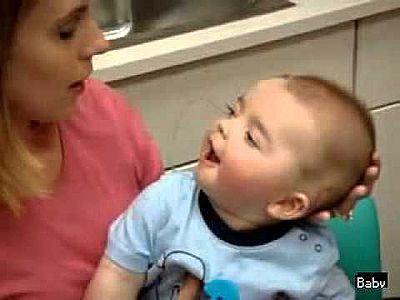
8 Month Old Deaf Baby’s Reaction To Cochlear Implant Being Activated - Bé 8 tháng tuổi bị điếc nghe được khi đeo trợ tính Cochlear Implant
This 8 month old baby was born deaf, watch the moment as his cochlear implant is activated and he hears sound for the first time, and his mother’s voice.
Top 10 Military Powers in the World - Mười Quân đội hàng đầu thế giới
According to one source, there has been peace on our earth for only 300 years out of thousands. Conflicts on some scale have been going on, for almost, forever, whether it is on religious basis, ethnic issues or resources. Simply put, were there is man, there is bound to be war. Although wars have been avoided pretty effectively in the modern world, a country still cannot do without a military force. Today we take a look at the 10 most potent military powers in the world.
No 1. USA
Annual Defense Budget $515,000,000,000
Military Personnel 1,385,000
Population reaching military age annually 4,266,128
Fighter Jets 22,700
Navy Ships 1,600
Purchasing power $13,780,000,000,000
No 2. China
Annual Defense Budget $59,000,000,000
Military Personnel 2,255,000
Population reaching military age annually 20,470,412
Fighter Jets 2,400
Navy Ships 760
Purchasing power $7,099,000,000,000
No 3. Russia
Annual Defense Budget $43,000,000,000
Military Personnel 1,245,000
Population reaching military age annually 1,602,673
Fighter Jets 6,500
Navy Ships 525
Purchasing power $2,097,000,000,000
No 4. India
Annual Defense Budget $33,000,000,000
Military Personnel 1,325,000
Population reaching military age annually 22,229,373
Fighter Jets 1,250
Navy Ships 145
Purchasing power $2,966,000,000,000
No 5. UK
Annual Defense Budget $53,000,000,000
Military Personnel 195,000
Population reaching military age annually 784,520
Fighter Jets 2,670
Navy Ships 140
Purchasing power $2,130,000,000,000
No 6. France
Annual Defense Budget $62,000,000,000
Military Personnel 225,000
Population reaching military age annually 783,788
Fighter Jets 1,900
Navy Ships 135
Purchasing power $2,075,000,000,000
No 7. Germany
Annual Defense Budget $46,000,000,000
Military Personnel 250,000
Population reaching military age annually 863,773
Fighter Jets 1,100
Navy Ships 130
Purchasing power $2,807,000,000,000
No 8. Brazil
Annual Defense Budget $24,000,000,000
Military Personnel 287,000
Population reaching military age annually 3,275,154
Fighter Jets 1,650
Navy Ships 90
Purchasing power $1,849,000,000,000
No 9. Japan
Annual Defense Budget $44,300,000,000
Military Personnel 378,000
Population reaching military age annually 1,212,321
Fighter Jets 2,700
Navy Ships 150
Purchasing power $4,272,000,000,000
No 10. Turkey
Annual Defense Budget $30,936,000,000
Military Personnel 514,000
Population reaching military age annually 1,298,979
Fighter Jets 1,530
Navy Ships 180
Purchasing power $853,900,000,000
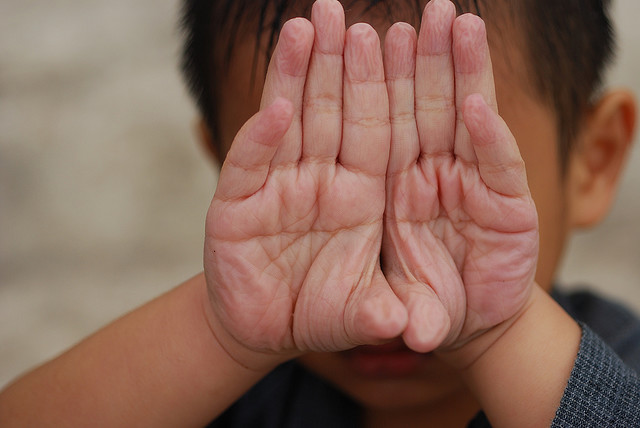
Today I found out why fingers wrinkle in water. For the quick answer, water washes away an oily substance that protects your skin. When that happens, a certain type of dead cell on your skin will absorb the water causing the cells to swell up, but the layer underneath does not. So the swelling, combined with the places the skin is connected underneath to the non-swelled layer, causes your finger tips to look all wrinkly.
Hôm nay tôi đã phát hiện ra lý do tại sao các ngón tay bị nhăn khi ngâm nước. Câu trả lời nhanh chóng cho điều đó là nước đã rửa sạch chất nhờn bảo vệ da của bạn. Khi điều đó xảy ra, một loại tế bào chết trên da của bạn sẽ hấp thụ nước khiến cho các tế bào đó phồng lên, nhưng các lớp bên dưới thì không hấp thụ nước. Do đó, sự phồng lên kết hợp các vị trí với da nối kết ở bên dưới với các lớp không thấm nước khiến các ngón tay của bạn trông có vẻ nhăn nheo.
So that’s the quick, generic answer. More technically, there is a waxy/oily substance your skin secretes from the sebaceous glands called “sebum”. In these glands, sebum is produced within special cells and is then secreted when these cells burst. This substance, among other benefits, has the dual effect of helping your skin and hair stay hydrated underneath, so it doesn’t get dry and cracked, while also helping to protect your skin from excess moisture from the outside. You will have probably noticed sebum at some point in your hair if you go a couple days without washing it. Your hair will start to feel very oily when you run your hands through it. When you are in water for extended periods, this sebum gets washed away from your skin and hair, removing this protective layer.
Như vậy đó là câu trả lời nhanh, tổng quát. Xét sâu về mặt kỹ thuật, thì có một chất sáp/dầu được tuyến bã của da tiết ra được gọi là “bã nhờn”. Trong các tuyến, bã nhờn được tạo ra bên trong các tế bào đặc biệt và nó được tiết ra khi các tế bào này bị vỡ. Ngoài những lợi ích khác, chất này có tác dụng đôi giúp cho da và tóc của bạn ngậm nước bên dưới, vì vậy da và tóc sẽ không bị khô và nứt, đồng thời cũng giúp bảo vệ da bạn khỏi độ ẩm cao qua mức từ bên ngoài. Bạn có thể nhận thấy bã nhờn tại một vài nơi trên tóc nếu bạn để vài ngày không gội đầu. Bạn sẽ cảm thấy tóc rất nhờn khi bạn lấy tay vuốt tóc. Khi bạn ở trong nước thời gian dài, bã nhờn này bị cuốn trôi khỏi da và tóc của bạn, lớp bảo vệ này sẽ bị loại bỏ.
Now you might be wondering why only your finger tips and toes get wrinkly and not the rest of your body (or at least not nearly as fast). The reason why is not 100% understood, but we do have a pretty good idea of what is going on here. The skin’s outermost layer, the epidermis, contains a protein called keratin. This protein helps strengthen your skin. Dead keratin cells also make up the epidermis’ surface layer, called the stratum corneum (Latin for ‘horny layer’, funny enough). So once all the protective sebum is washed away, these dead keratin cells absorb the water like a sponge and swell. This is why your skin is much easier to cut or break when it is waterlogged. The strong outer layer of dead keratin cells loses some of its toughness when waterlogged. The reason then that your toes and fingers get more wrinkly is that they contain a thicker layer of both living and dead keratin cells than the rest of your body. This causes them to swell more noticeably then the rest of your skin as the dead keratin cells absorb water.
Bây giờ có thể bạn đang tự hỏi tại sao chỉ có các ngón tay và ngón chân là bị nhăn mà không phải phần còn lại của cơ thể bạn (hoặc ít nhất là gần như không nhanh như thế). Lý do tại sao không được hiểu hết 100%, chúng tôi có một ý tưởng khá tốt cho những điều đang xảy ra ở đây. Lớp ngoài cùng của da hay lớp biểu bì có chứa một protein gọi là keratin. Protein này giúp da của bạn được khỏe mạnh. Các tế bảo biểu bì chứa keratin này chết tạo ra một lớp mặt được gọi là corneum (tiếng Lantinh có nghĩ là “lớp sừng”, ngộ chưa). Vì vậy một khi tất cả bã nhờn bảo vệ bị rửa trôi, tế bào keratin chết hấp thụ nước giống như một vật xốp và phồng lên. Điều này lý giải tại sao da của bạn dễ bị cắt hoặc rách khi nó ngấm nước. Các lớp sừng bên ngoài tế bào keratin chết bị mất đi sự dẻo dai khi bị ngấm nước. Lý do mà các ngón tay và ngón chân bị nhăn nheo nhiều hơn là do chúng nó chứa một lớp tế bào keratin chết và sống dày hơn các phần còn lại của cơ thể. Điều này làm cho chúng phồng lên rõ hơn so với phần còn lại của da bạn bởi vì các tế bào keratin chết hấp thụ nước.
The wrinkle effect occurs, rather than just general swelling, because the inner layer of living keratin cells stays more or less the same as it was before you were in the water, while the outer layer swells; the connections between these two layers stay closely bonded while the places not connected are free to swell, hence, the pruney fingers and toes.
Kết quả có các nếp nhăn thay vì chỉ có phồng lên là vì các lớp tế bào keratin sống ở lớp bên trong gần như giữ nguyên trạng như trước khi bạn ngâm nước, trong khi các tế bào bên ngoài thì lại phồng lên; những nối kết giữa hai lớp này vẫn còn gắn bó chặt chẽ trong khi những chỗ khác không có kết nối thì tự do phồng/trương lên, do đó được gọi là ngón tay/chân nhăn nước.
Translated by HỒ KIÊN PHÁT.Class Y2E Gr2
Prune fingers give us better grip in slippery situations
Long thought to be the effect of osmosis, scientists now think fingers wrinkle in the wet to give us better grip.
Human fingers go wrinkly in the bath to give us better grip in the wet, scientists have discovered, contradicting a widely held belief that osmosis is the cause.
Wet fingers and toes wrinkle after about five minutes in water but surgeons discovered nearly a century ago that cutting a certain finger nerve prevents wrinkling, suggesting that something other than osmosis was at work.
In a paper published in the journal Brain, Behaviour and Evolution, U.S. scientists report that “rather than being an accidental side effect of wetness, wet-induced wrinkles have been selected to enhance grip in wet conditions.”
The wrinkling creates a ‘tread’ similar to the tread on tyres designed for better road-grip under wet conditions, the paper said.
“We show that their morphology has the signature properties of drainage networks, enabling efficient removal of water from the gripped surface.”
In other words, the wrinkle patterns are designed to draw water away from the surface and improve grip.
“Moreover, of course, the fact that wet wrinkles happen nowhere else on the body except on the fingers and feet is consistent with this rain tread hypothesis,” the paper said.
Professor Maciej Henneberg, an expert in anthropological and comparative anatomy from the University of Adelaide and editor-in-chief of the Journal of Comparative Human Biology said wrinkling of fingers and toes is a human adaptation to life in water.
“Recently, various hypotheses relating human evolution to the life in water, mostly as wading or "grazing” in littoral areas, have been advanced by German, Belgian and Australian scholars,“ said Professor Henneberg, who was not involved in the finger wrinkle study.
“According to those hypotheses, our ancestors were what I call peri-aquatic — that is, spent a lot of time collecting foods along shores of seas, lakes and along riverbanks, often wading or immersing themselves partially in water. Littoral areas are rich in foods digestible for humans.”
Prune fingers give us better grip in slippery situations
Long thought to be the effect of osmosis, scientists now think fingers wrinkle in the wet to give us better grip.
Human fingers go wrinkly in the bath to give us better grip in the wet, scientists have discovered, contradicting a widely held belief that osmosis is the cause.
Wet fingers and toes wrinkle after about five minutes in water but surgeons discovered nearly a century ago that cutting a certain finger nerve prevents wrinkling, suggesting that something other than osmosis was at work.
In a paper published in the journal Brain, Behaviour and Evolution, U.S. scientists report that “rather than being an accidental side effect of wetness, wet-induced wrinkles have been selected to enhance grip in wet conditions.”
The wrinkling creates a ‘tread’ similar to the tread on tyres designed for better road-grip under wet conditions, the paper said.
“We show that their morphology has the signature properties of drainage networks, enabling efficient removal of water from the gripped surface.”
In other words, the wrinkle patterns are designed to draw water away from the surface and improve grip.
“Moreover, of course, the fact that wet wrinkles happen nowhere else on the body except on the fingers and feet is consistent with this rain tread hypothesis,” the paper said.
Professor Maciej Henneberg, an expert in anthropological and comparative anatomy from the University of Adelaide and editor-in-chief of the Journal of Comparative Human Biology said wrinkling of fingers and toes is a human adaptation to life in water.
“Recently, various hypotheses relating human evolution to the life in water, mostly as wading or "grazing” in littoral areas, have been advanced by German, Belgian and Australian scholars,“ said Professor Henneberg, who was not involved in the finger wrinkle study.
“According to those hypotheses, our ancestors were what I call peri-aquatic — that is, spent a lot of time collecting foods along shores of seas, lakes and along riverbanks, often wading or immersing themselves partially in water. Littoral areas are rich in foods digestible for humans.”
Why do we capitalize the word “I”? There’s no grammatical reason for doing so, and oddly enough, the majuscule “I” appears only in English.
Consider other languages: some, like Hebrew, Arabic and Devanagari-Hindi, have no capitalized letters, and others, like Japanese, make it possible to drop pronouns altogether. The supposedly snobbish French leave all personal pronouns in the unassuming lowercase, and Germans respectfully capitalize the formal form of “you” and even, occasionally, the informal form of “you,” but would never capitalize “I.” Yet in English, the solitary “I” towers above “he,” “she,” “it” and the royal “we.” Even a gathering that includes God might not be addressed with a capitalized “you.”
The word “capitalize” comes from “capital,” meaning “head,” and is associated with importance, material wealth, assets and advantages. We have capital cities and capital ideas. We give capital punishment and accrue political, social and financial capital. And then there is capitalism, which is linked to private ownership, markets and investments. These words shore up the towering single letter that signifies us as discrete beings and connote confidence, dominance and the ambition to pull ourselves up by our own bootstraps.
England is where the capital “I” first reared its dotless head. In Old and Middle English, when “I” was still “ic,” “ich” or some variation thereof — before phonetic changes in the spoken language led to a stripped-down written form — the first-person pronoun was not majuscule in most cases. The generally accepted linguistic explanation for the capital “I” is that it could not stand alone, uncapitalized, as a single letter, which allows for the possibility that early manuscripts and typography played a major role in shaping the national character of English-speaking countries.
“Graphically, single letters are a problem,” says Charles Bigelow, a type historian and a designer of the Lucida and Wingdings font families. “They look like they broke off from a word or got lost or had some other accident.” When “I” shrunk to a single letter, Bigelow explains, “one little letter had to represent an important word, but it was too wimpy, graphically speaking, to carry the semantic burden, so the scribes made it bigger, which means taller, which means equivalent to a capital.”
The growing “I” became prevalent in the 13th and 14th centuries, with a Geoffrey Chaucer manuscript of “The Canterbury Tales” among the first evidence of this grammatical shift. Initially, distinctions were made between graphic marks denoting an “I” at the beginning of a sentence versus a midphrase first-person pronoun. Yet these variations eventually fell by the wayside, leaving us with our all-purpose capital “I,” a potent change apparently made for simplicity’s sake.
In following centuries, Britain and the United States thrived as world powers, and English became the second-most-common language in the world, following Mandarin. Meanwhile, the origin, meaning and consequences of our capitalized “I” went largely unchanged, with few exceptions.
One divergence stems from the Rastafarians, who intentionally developed a dialect of Jamaican Creole in order to break culturally from the English-speaking imperialists who once enslaved them. Their phrase “I and I” can be used in place of “I,” “we” or Rastafarians as a group, but generally expresses the oneness of the speaker with God and all people. “I and I” is thus, in some ways, a conscious deviation — really the exact opposite of the English ego-centered capital “I.”
Not long ago, certain presidential candidates could have used a bit of the “I and I” spirit. At the close of the primary season, the news media scrutinized Hillary Rodham Clinton, John McCain and Barack Obama’s use of the first-person pronoun, the implication being that a string of “I” ’s signifies ungracious self-inflation. On the last day of voting, Clinton led the pack with 64 “I” ’s and McCain followed with 60. Obama’s “I” count lagged at 30, and he was the only candidate whose combined “we” ’s (37) and “you” ’s (16) outnumbered his “I” ’s. These were spoken pronouns, but, of course, our understanding and use of language is informed by the printed word.
So what effect has capitalizing “I” but not “you” — or any other pronoun — had on English speakers? It’s impossible to know, but perhaps our individualistic, workaholic society would be more rooted in community and quality and less focused on money and success if we each thought of ourselves as a small “i” with a sweet little dot. There have, of course, been plenty of rich and dominant cultures throughout history that have gotten by just fine without capitalizing the first-person pronoun or ever writing it down at all. There have also been cultures that committed atrocities even while capitalizing “you.”
Still, there seems to be something to it all. Modern e-mail culture has shown that many English speakers feel perfectly comfortable dismissing all uses of capitalization — and even correct spelling, for that matter. But take this a step further: i suggest that You try, as an experiment, to capitalize those whom You address while leaving yourselves in the lowercase. It may be a humbling experience. It was for me.
Bắc bảo kỳ, Nam kêu cọ ( gọi là kỳ cọ) Bắc gọi lọ , nam kêu chai Bắc mang thai , Nam có chửa Nam xé nửa, Bắc bổ đôi Ôi ! Bắc quở gầy , Nam than ốm Bắc cáo ốm , Nam khai bịnh
Bắc định đến muộn , Nam liền kêu trễ Nam mần sơ sợ Bắc nàm lấy nệ Bắc lệ luôn trào , Nam chảy nước mắt Nam bắc vạc tre , Bắc kê lều chõng Bắc nói trổng thế thôi , Nam buâng quơ vậy đó
Bắc đan cái rọ , Nam làm giỏ tre Nam không thích nói dai, bắc chẳng mê lải nhải Nam cãi bai bải, Bắc lý sự ào ào Bắc vào ô tô , Nam vào xế hộp Hồi hộp Bắc hãm phanh, trợn tròng Nam đạp thắng
Khi nắng Nam mở dù , Bắc lại xoè ô Điên rồ Nam đi trốn , nguy khốn Bắc lánh mặt Chưa chắc Nam nhắc từ từ, Bắc khuyên gượm lại Bắc là quá dại , Nam thì ngu ghê Bắc sợ ghê , Nam hãi quá
Nam thưa tía má , Bắc bẩm thầy u Nam nhủ ưng ghê , bắc mê hài lòng Nam chối lòng vòng , Bắc bảo chối quanh
Nhanh nhanh Nam bẻ bắp , hấp tấp Bắc vặt ngô Bắc thích cứ vồ, Nam ưng là chụp Nam rờ bông bụp , Bắc vuốt tường vi Nam nói : vọt đi , Bắc hô : cút xéo
Bắc bảo : cứ véo , Nam : ngắt nó đi Bắc gởi phong bì , bao thơ Nam dán Nam kêu : muốn ói , Bắc bảo : buồn nôn Bắc gọi tiền đồn , Nam kêu chòi gác
Bắc hay khoác lác , Nam bảo xạo ke Mưa đến Nam che , gió ngang Bắc chắn Nam khen giỏi mắng , Bắc nói chửi hay Bắc nấu thịt cầy , Nam thui thịt chó
Bắc vén búi tó , Nam búi tóc lên Anh cả Bắc quên , anh Hai Nam lú Nam : ăn đi chú , Bắc : mời anh xơi Bắc mới tập bơi , Nam thời đi lội