MENU

BILINGUAL BLOG – BLOG SONG NGỮ ANH VIỆT SHARE KNOWLEGE AND IMPROVE LANGUAGE

--------------------------- TÌM KIẾM TRÊN BLOG NÀY BẰNG GOOGLE SEARCH ----------------------------

TXT-TO-SPEECH – PHẦN MỀM ĐỌC VĂN BẢN

Click phải, chọn open link in New tab, chọn ngôn ngữ trên giao diện mới, dán văn bản vào và Click SAY – văn bản sẽ được đọc với các thứ tiếng theo hai giọng nam và nữ (chọn male/female)

- HOME - VỀ TRANG ĐẦU

CONN'S CURENT THERAPY 2016 - ANH-VIỆT

150 ECG - 150 ĐTĐ - HAMPTON - 4th ED.

VISUAL DIAGNOSIS IN THE NEWBORN

Monday, September 12, 2011

Hot scenes on the Vietnamese screen - Cảnh nóng trên màn ảnh Việt

Hot scenes on the Vietnamese screen - Cảnh nóng trên màn ảnh Việt

Recently, Vietnamese movie has found its position in the domestic movie market. As an essential additive, hot scene makes romantic love stories more attractive, realer and smoother. Along with good content and perfect performance of actor and actress, hot scene also contributes to the attraction of a film. This is really true to the following movies.

Clash (Bay rong)

Trinh (Ngo Thanh Van), a mercenary, must complete a series of organized crime jobs for her boss in order to win the release of her kidnapped daughter. She hires several mercenaries to help, including Quan (Johnny Tri Nguyen), who she becomes attracted to. Trinh and Quan's relationship becomes complicated as it becomes evident that their motivations are not the same.

The sensitive scene of Trinh and Quan makes "Clash" smoother and realer

The sensitive scene of Trinh and Quan makes "Clash" smoother and realer


Ha dong silk dress (Ao lua Ha dong)

The love story of Dan (a beautiful young woman) and Gu (a humpback), servants from two separate households in Ha Dong, Vietnam who have suffered most of their lives at the hands of their cruel masters. The couple flee south soon after Gu presents Dan with a wedding gift - the precious white silk dress his mother had owned (his one valuable possession), while he promises her a proper marriage someday in the future. The couple arrive in the seaside town of Hoi An and build a new life, with Dan ultimately giving birth to 4 daughters. Despite struggling through immense poverty and hardships, the family is happy and fulfilled as long as they have each other, but the horrors of the encroaching war brings tragedy and threatens to tear them apart.

The hot scene between Dan and her husband, Gu is high appreciated thanks to its art

The hot scene between Dan and her husband, Gu is high appreciated thanks to its art

Gu promises Dan a proper marriage someday in the future

Gu promises Dan a proper marriage someday in the future


Giving hired birth (De muon)

"Giving hired birth" is a new and strange view about family relationship and infertile people's sadness. Inspire of marrying for a long time, couple Bao and Van has still not have child. Van hires her employee, Mai give birth with VND 50 million. Because this amount of money can save her mother, Mai accept to give hired birth.

The hot scene in "Giving hired birth" shows hopeless effort of Bao and Van to have a baby

The hot scene in "Giving hired birth" shows hopeless effort of Bao and Van to have a baby

Is there any magic comes to this couple?

Is there any magic comes to this couple?


Beautiful in every Centimeter (Dep tung centimet)

This is romantic love story of Miss Beauty Ngo Dong (Tang Thanh Ha) and photographer Quang Hy (Luong Manh Hai). Quang Hy promises that Ngo Dong will be main actress in next his film as long as she lets him take photograph her in bikini. Later, she discovers that Quang Hy is not a director as he said and she decided to end their love.

It could be said that this is the first film in which actress Tang Thanh Ha shows off her body in bikini

It could be said that this is the first film in which actress Tang Thanh Ha shows off her body in bikini


Living in fear (Song trong so hai)

Set in the aftermath of Saigon's fall, circa 1975, this quirky, tense farce tells of Tai (Tran Huu Phuc), a bigamist who witnesses the victory of Ho Chi Minh's forces and wrongly anticipates the sudden, murderous arrival of the North Vietnamese Communists. Though this fails to materialize, and the green-shirted soldiers merely reparcel the South Vietnamese land sans punishing the denizens of the region, Tai's deep-seated fear lingers, and he takes a job as an unauthorized "sapper," defusing the mines and selling both those artifacts and pieces of the barbed wire on the black market. Meanwhile, as Tai undertakes this potentially lethal job, he struggles with a complex domestic situation that finds both of his wives pregnant and going into labor at the same time.

The hot scene in this film expresses Tai's strong aspiration in his difficult life

The hot scene in this film expresses Tai's strong aspiration in his difficult life

The kiss of death (Nu hon than chet)

This film is about the task of Death Angle Prince Du. To become official death angle, Du has to take An's soul, a wine marketer at dance hall. Because of his honesty, Du has saved An many times. After all, An falls in love with Du who has ever wanted to kill her. However, the Death angle king always finds the ways to kill An and save Du from the vow. But with the power of love, Du and An becomes angles together.

The hot scene of supermodel Thanh Hang and stunt actor Johnny Tri Nguyen brings laughters to audiences.

The hot scene of supermodel Thanh Hang and stunt actor Johnny Tri Nguyen brings laughters to audiences.


Sunday, September 4, 2011

AUDIO-B1

GUY CRYING ĐÀN ÔNG KHÓC


GUY CRYING

ĐÀN ÔNG KHÓC

Writer Joel Stein wonders what's up with all the man tears! Here, he implores emotional men to locate their balls and curb the blubbering

Joel Stein

Nhà văn Joel Stein tự hỏi chuyện gì khiến nam giới phải nhỏ những giọt nước mắt! Ở đây, ông xin những người đàn ông giàu cảm xúc điếu chỉnh lại đôi mắt mình và chớ có khóc sưng vù mắt nữa.

Joel Stein

When it comes to crying, women can squish up their cheeks and make weird, shrieking, catlike noises. But a "real" man could see his entire family eaten by aliens and if you Photoshopped the water from his otherwise still face, it would look as if he were watching a particularly riveting Super Bowl play.

Khi phải khóc, phụ nữ có thể phùng mang phụng má và phát ra những tiếng rít, lạ lùng như tiếng mè̀o kêu. Tuy nhiên, một người đàn ông "đích thực" có thể chứng kiến toàn bộ gia đình mình bị những kẻ ngoài hành tinh ăn thịt và nếu bạn Photoshopped những giọt nước mắt ràn rụa trên khuôn mặt mà lẽ ra sẽ bất động của y, thì sẽ thấy giống hệt như gã ấy đang xem một trò Super Bowl đặc biệt cuốn hút.

I am an expert manly crier. When done right, a lone tear displays no weakness yet manages to say, "Baby, I care about you deeply, even if it's only in two very small ducts of my body." Man tears are powerful things.

Tôi là một chuyên gia khóc theo kiểu đàn ông. Khi khóc đúng cách, thì chỉ một giọt nước mắt duy nhất cũng có thể biểu thị không phải sự yếu đuối mà là lới âu yếm, "Em yêu, anh quan tâm em sâu sắc, thậm chí nếu nó chỉ nằm trong hai ống lệ nhỏ trên cơ thể anh." Nước mắt của người đàn ông là những vũ khí mạnh mẽ.

And they should be used rarely. Because while women say they want an emotional dude, a man who displays his feelings too readily will turn off many women because he appears feeble. The trick is to show just a little vulnerability now and then to reassure women we're not robots. Too much crying and we lose the only clear-cut role we have left (now that females are more educated and often more highly paid than we are): being the protector.

Và họ nên sử dụng nó trong những trường hợp hiếm hoi. Bởi vì trong khi phụ nữ nói rằng họ muốn một anh chàng giàu tình cảm, thì một người đàn ông biểu lộ cảm xúc của mình quá dễ dàng sẽ làm cụt hứng nhiều phụ nữ bởi vì anh ta tỏ ra quá yếu đuối. Bí quyết là chỉ nên thỉnh thoảng biểu lộ một chút tổn thương để trấn an phụ nữ rằng chúng ta không phải là robot. Khóc quá nhiều khiến chúng ta đánh mất cái vai trò đã được xác định rõ ràng mà chúng ta còn giữ lại được đó là làm người bảo bọc phụ nữ (bây giờ phụ nữ được giáo dục tốt hơn và thường được trả lương cao hơn chúng ta).

But lately the brotherhood has been shedding tears too easily, too publicly, and too lame-reason-y. Conan O'Brien supposedly cried when he announced to his staff that he was going to give up hosting The Tonight Show. Wyclef Jean cried after his charity, Yele Haiti, was accused of wrongdoing. Then earlier this year, Evan Lysacek of the U.S. men's Olympic figure-skating team cried while awaiting his scores in Vancouver. Every man knows the only sport you should cry over is T-ball.

Nhưng gần đây những người anh em đã khóc quá dễ dàng, quá công khai, và vì những lý do quá vô lối. Conan O'Brien được cho là đã khóc khi ông thông báo cho nhân viên của mình rằng ông sẽ nghỉ làm người dẫn chương trình cho The Tonight Show. Wyclef Jean đã khóc sau khi làm từ thiện, Yele Haiti khóc khi bị buộc tội có hành vi sai trái. Còn đầu năm nay, Evan Lysacek của đội vận động viên trượt băng tạo hình Olympic Mỹ đã khóc trong khi chờ đợi điểm số của mình ở Vancouver. Mọi người đều biết môn thể thao duy nhất bạn nên khóc là T-ball.

These guys are driving down the price of my precious man tears, and it must stop. "Today's man is different from men 20 years ago," says clinical psychologist Michael Diamond, Ph.D., author of My Father Before Me, whom I called to find out why men are dissolving like this. "Part of it stems from gender roles not being as stringent as they were in the past, and the economy has contributed to that. This has made some men drop the macho act. But society hasn't really accepted this yet, which is why men don't get sympathy when they cry."

Những gã này đang phá giá những giọt nước mắt quý giá của đàn ông chúng ta, và phải dừng việc này lại thôi. "Nam giới ngày nay đã khác xa nam giới 20 năm về trước," nhà tâm lý học lâm sàng, Tiến sĩ Michael Diamond, tác giả của Cha tôi trước mặt tôi, người mà tôi đã gọi điện thoại là để tìm hiểu lý do tại sao đàn ông là lại đổ đốn như thế này. "Một phần điều đó bắt nguồn từ vai trò giới không còn nghiêm ngặt như trong quá khứ, và nền kinh tế đã góp phần vào đó. Điều này đã làm một số người đàn ông đánh mất tính cách trượng phu của mình. Tuy nhiên, xã hội lại chưa sẵn sàng chấp nhận điều này, và đó là lý do tại sao người đàn ông không nhận được sự cảm thông khi họ khóc. "

A tendency to tear up will only get worse as your guy gets older. "As men age, they become more comfortable with their nurturing, more relationship-oriented side," says Diamond. "And although it's not clear why, a decline in testosterone may play a part in it." For all these reasons, the faucet turns on more easily with each passing year.

Việc hay rơi lệ sẽ trở nên tồi tệ hơn chỉ khi chàng trai của bạn lớn lên. "Đàn ông càng lớn tuổi, càng trở nên thích được nuông chìu, và lập trường của họ được định hướng bởi các mối quan hệ", ông Diamond cho biết. "Và mặc dù vẫn chưa rõ lý do tại sao, nhưng một sự suy giảm testosterone có thể đóng vai trò trong việc này." Vì tất cả những lý do này, dòng nước mắt dễ dàng tuôn trào hơn khi mỗi năm trôi qua chúng ta già thêm một tuổi.


At the very least, we need women to stop giving us mixed messages. "Women say they want a sensitive man, but they still want him to be strong," says Diamond. "Perhaps a strong man is one who feels so comfortable with his sexuality that he can cry without caring what others think."

Ít nhất, chúng ta cần phụ nữ thôi cung cấp cho chúng ta những thông điệp lẫn lộn. "Phụ nữ nói rằng họ muốn có một người đàn ông nhạy cảm, nhưng họ vẫn muốn y phải mạnh mẽ," Diamond nói. "Có lẽ một người đàn ông mạnh mẽ là một trong những người cảm thấy rất thoải mái với giới tính của mình rằng y có thể khóc mà không thèm quan tâm tới việc người khác nghĩ gì."

Behind the Tears

Đằng sau những giọt nước mắt

Nonverbal expert Joe Navarro, author of Louder Than Words, weighs in on the legitimacy of some high-profile waterworks.

Chuyên gia về các hiện tượng không lời, Joe Navarro, tác giả của To tiếng hơn cả lời nói, cân nhắc tính hợp của một số trường hợp khóc nổi tiếng sau.

1) Wyclef Jean, reacting to accusations against his charity, Yele Haiti: "This is a look of extreme pain. It's tough to do--actors often can't do it well. His eyes are clearly showing that he's fighting the pain."

1) Wyclef Jean, khóc khi phản ứng với các cáo buộc chống lại tổ chức từ thiện của mình, Yele Haiti: "Đây là một cái nhìn đau đớn vô cùng. Thật khó khăn để làm điều đó - diễn viên thường không thể làm điều đó tốt như thế. Đôi mắt của ông thể hiện rõ rằng ông đang chống lại nỗi đau... "

2) Brett Favre, talking about his decision to retire from the Green Bay Packers in 2008: "He's trying to appear stoic and controlled. His compressed lips and forehead show that he's suppressing a lot of emotion and tension."

2) Brett Favre, khóc khi nói về quyết định nghỉ hưu tại Green Bay Packers năm 2008: "Ông ấy cố gắng để tỏ ra chịu đựng tự chủ. Môi của ông mím chặt, trán nhíu lại, chứng tỏ ông kiềm chế rất nhiều cảm xúc và căng thẳng"

3) Roger Federer, after losing his final match at the 2009 Australian Open: "His chin is down, which indicates a deep negative emotion. He has redness around his eyes and nose--this happens with real tears."

3) Roger Federer, khóc sau khi thua trận cuối cùng của mình tại Úc mở rộng năm 2009: "Cằm của ông gục xuống, cho thấy một cảm xúc chua xót sâu sắc. Quanh mắt và mũi ửng đỏ - điều này xảy ra với những giọt nước mắt thành thực"


4) President Barack Obama, the day after his grandmother passed away: "The crinkle of skin above his nose and the furrowing and stitching of the brow are things people do only when they are in deep emotional pain."

4) Tổng thống Barack Obama, khóc một ngày sau khi bà ngoại của ông qua đời: "nhăn da phía trên mũi và nhíu lông mày là những điều người ta chỉ có khi họ đang trong tình cảm đau đớn sâu sắc."

5) South Carolina Governor Mark Sanford, after admitting to an extramarital affair: "There are emotions when we are caught, and emotions when we feel bad. It's hard to differentiate between the two here."

5) Thống đốc Nam Carolina Mark Sanford, khóc sau khi thừa nhận một vụ ngoại tình: "Có những cảm xúc khi chúng ta bị bắt, và cảm xúc khi chúng ta cảm thấy xấu hổ. Thật khó mà phân biệt được cả hai thứ ở đây."

6) Jake Pavelka, after being eliminated on season 10 of Dancing with the Stars: "The blank, distant look in his watery eyes is a sign of genuine grief. His pinched eyebrows also indicate deep discomfort and pain."

6) Jake Pavelka, khóc sau khi bị loại bỏ khi vào vòng 10 của cuộc thi Khiêu vũ với các Ngôi sao", Cái nhìn xa xăm, trống rỗng trong đôi mắt đẫm lệ là dấu hiệu của đau khổ thực sự. Lông mày nhúm lại cũng cho thấy sự bất an và đau đớn sâu sắc."

What Men Say Makes Them Weep

Source: MensHealth.com

Death of a pet 33%

Crying is for girls! 20%

Birth of a child 16%

Being dumped 15%

Sad movies 8%

Physical pain 6%

Weddings 2%

Đàn ông nói cái gì khiến họ khóc

Nguồn: MensHealth.com

Vật nuôi chết 33%

Khóc vì người tình! 20%

Sinh con 16%

Bị bồ bỏ 15%

Chuyện phim buồn 8%

Đau đớn thể xác 6%

Cưới vợ 2%

http://www.womenshealthmag.com/sex-and-relationships/guy-crying


In North Carolina, Barack Obama speaks about his grandmother, Madeyln Dunham or "Toot," who passed away just this morning, one day before the election.

"She was a quiet hero," Obama said.

Toot, short for Tutu (grandmother in Hawaiian) died from cancer at 86 years old.

Obama stated, "She's gone home."

Obama and his sister, Maya Soetoro-Ng, issued the following statement:

"It is with great sadness that we announce that our grandmother, Madelyn Dunham, has died peacefully after a battle with cancer. She was the cornerstone of our family, and a woman of extraordinary accomplishment, strength, and humility. She was the person who encouraged and allowed us to take chances. She was proud of her grandchildren and great-grandchildren and left this world with the knowledge that her impact on all of us was meaningful and enduring. Our debt to her is beyond measure.

Our family wants to thank all of those who sent flowers, cards, well-wishes, and prayers during this difficult time. It brought our grandmother and us great comfort. Our grandmother was a private woman, and we will respect her wish for a small private ceremony to be held at a later date. In lieu of flowers, we ask that you make a donation to any worthy organization in search of a cure for cancer."

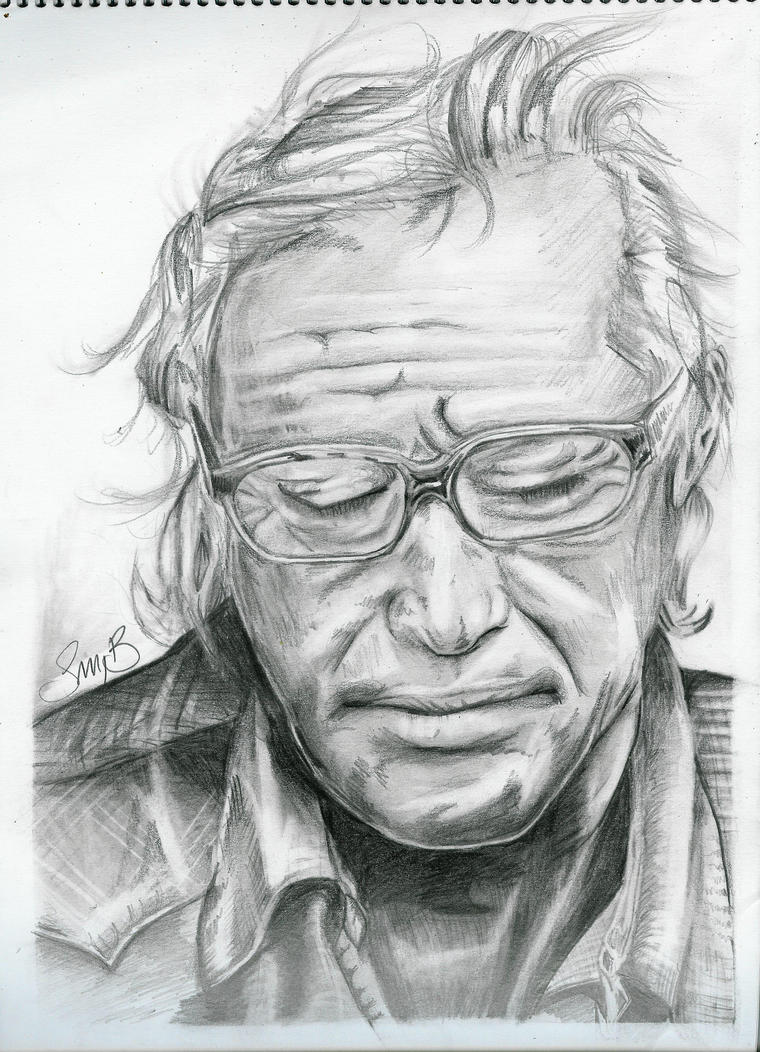
Lucian Freud, painter, died on July 20th, aged 88 - Danh họa Lucian Freud qua đời ở tuổi 88


Lucian Freud, painter, died on July 20th, aged 88

ASTONISHMENT, even disgust, often greeted Lucian Freud’s paintings when they first appeared. In “Benefits Supervisor Sleeping” a mountainous friend lay snoozing on a sofa, one blubbery breast cupped in a hand, revelling in rolls of fat like a beached whale. In “Naked Man with Rat” a surprised fellow fondled a rodent perilously near his engorged genitalia. Female nudes—sometimes the artist’s own grown-up daughters—lay rudely splayed, or tangled up in sheets. Bare flesh, vulnerable, cushiony, shiny, lumpish pink-white thickly shadowed in grey and blue, was everywhere. The best painter in the world, as he was often said to be, seemed intent on rubbing the world’s nose in human ugliness. His candour was shocking.

What viewers did not always realise was that Mr Freud wanted to shock himself. Each portrait was a risk. Every time he approached a sitter—thrusting a piece of torn sheet into his belt as an apron, scraping a clean space on his heavily encrusted palette, knocking the dried paint off the tube-ends in a swipe across the wall—he felt, he said, like a diver on the edge of the board. He had no idea what would happen. As he loaded the brush with paint and made for the canvas, nervous and lithe, he was dicing with extraordinary danger, just as when, in younger days, he would shut his eyes and dash out into traffic to see if he could make it, or when in poorer times he had hazarded all his money in gambling dens, deliberately staking every last penny and then walking home, springing with happiness, everything lost.

Each portrait had to depart utterly from the last, a surprise even to him. Each painting had to be better. Not necessarily “like” the subject—he did not set much store by likeness, just as he hated commissions and hackwork—but somehow being the person, alive in the paint. Sittings for him took months and years, interspersed with witty conversations and dinners at the Wolseley in which he would keep on observing, translating each tic and expression into a single muttering brush-stroke—“Yes, a little,” “Slightly,” “More yellow,” until, in laboriously fastidious layers, the person appeared. He was a beady-eyed prober, like the foxes he loved or his favourite whippet, Pluto, whose long-legged grace often appeared in his paintings as counterpoint to some fatter, redder human shape.

Queen and gangsters

His method reflected the draughtsman in him. The boy, transplanted at ten from Berlin to England, drew all the time; the young artist, defying the 1940s scorn for figurative art, did work that was linear, flat and infinitely detailed, with cross-hatched tailoring on his portraits and painstaking attention, worthy of Dürer, to the fur of dead monkeys and the tangled hair of his girlfriends. It all changed, suddenly, in 1959, with “Woman Smiling”. From sitting down, he now leapt to his feet; swapped thin sable brushes for hog-hair and fine canvases for rough; stopped drawing, went straight to paint, and overturned everything that had seemed to be Lucian Freud before. He refused to be predictable, just as he refused to be influenced—for more than a painting or two, at least—by any other artist. He knew what he liked: Constable for his bold, thick paint, Courbet and Ingres for their pinkly voluptuous nudes. But his school was always his own.

It was a school of interiors, centred on his studios in Paddington and Holland Park: bare floors, old rags in piles, worn armchairs and cast-iron beds. The only landscapes he noticed were window-views of houses and his own squalid gardens, full of buddleia, which he also painted. Through his door came an extraordinary mixture of people: drunks and gamblers from his underworld life, Kate Moss and Jerry Hall, Francis Bacon and David Hockney (both friends), the Duchess of Devonshire and Lord Goodman, performance artists and men with razor scars on their faces. The queen, on a velvet chair, perched among the rags for a grim, blue-chinned portrait. Not everyone took their clothes off, but he wished they would. Even make-up, even earrings spoiled that “Oh!” of the completely bare. He liked human beings to be as naked as the horses he also painted, animals like them. He thought he painted them considerately, lovingly exploring the tones and the textures, whatever his detractors said. After all, they were mostly family or friends.

He himself remained intensely private. His studio numbers were unlisted and he moved around between them, refusing to be tied to one place. There were many women, a couple of wives, myriad children, acknowledged in his paintings far more than in his life. He moved in a fashionable set and danced at the best clubs well into old age; the gossip-sheets chased him, but he refused to talk to them.

Every so often, though, he tried to confront himself. It was usually as a blurred face at the back of a painting, behind a huge plant, or casually in a hand mirror. He found mirror-light odd and flat; he would squint in the paint, as if it hurt him. Only in 1993, in “Painter Working, Reflection”, did he try something full-length and comprehensive. At 71 he faced the canvas, scrawny, grey-naked, palette and brush in hand, with just a pair of unlaced hobnail boots on his feet. To guard against splinters, he explained. But also, most probably, to try to shock himself with the truth.

Saturday, September 3, 2011

Anti-corruption official found dead with 11 knife wounds, police declare it a suicide-cái chết mờ ám của một viên chức chống tham nhũng

An announcement on the Gong'an County government website, claiming Xie Yexin committed suicide on August 27th. The announcement was posted online on the 29th, less than 48 hours after Xie's death.

Một thông báo trên trang web chính quyền tỉnh Gong'an, tuyên bố Xie Yexin tự tử vào ngày 27 tháng 8. Thông báo này được đăng trực tuyến ngày 29 chưa đầy 48 giờ sau cái chết của Xie.

The body of an anti-corruption official in Hubei was found with 11 stab wounds at 6:40pm on August 27th, and was promptly declared to be a case of suicide by local authorities. Xie Yexin (谢业新), an official with the Commission for Disciplinary Inspection in Jingzhou City's Gong'an County (荆州市公安县), was found dead in his office chair on Saturday, having suffered a total of 11 knife wounds to the neck, chest, abdomen and wrists.

Cơ thể của một quan chức chống tham nhũng này ở Hồ Bắc đã được tìm thấy với 11 vết đâm lúc 6:40 chiều ngày 27 tháng 8, và đã kịp thời được chính quyền địa phương tuyên bố là một trường hợp tự tử. Xie Yexin ( ), một viên chức của Ủy ban Kiểm tra kỷ luật thành phố Kinh Châu thuộc tỉnhGong'an (荆州 公安 ), được phát hiện đã chết trên ghế trong văn phòng của ông vào ngày thứ Bảy, bị đâm tổng cộng 11 vết thương ở cổ, ngực, bụng và cổ tay.

At an 8am Monday morning press conference in Gong'an County's main government building, it was announced that police considered Xie's death to be a suicide, which meant the conclusion came less than forty-eight hours after Xie's body was discovered. It was suggested that Xie's suicide was possibly related to work issues, stemming from his failure to be promoted to the standing committee at his office.

Tại một cuộc họp báo lúc 8:00 sáng thứ hai tại tỉnh đường xây tỉnh Gong'an, người ta đã thông báo rằng cảnh sát coi cái chết của Xie là một tự tử, có nghĩa là kết luận đưa ra chưa đầy 48 giờ sau khi thi thể của Xie được phát hiện. Có gợi ý rằng việc Xie tự tử có thể liên quan các các vấn đề công tác, bắt nguồn từ viieecj không được đề bạt vào ủy ban thường trực tại nhiệm sở của ông.

Xie's relatives then disrupted the press conference by harassing the local deputy secretary of Public Security Management Hao Xiang (浩祥). Incredulous over the investigation's findings, Xie's family asked why Xie would choose to severely mutilate so much of his body in a suicide attempt. Lingering questions also surround the fact that a conspicuous lack of blood was found on Xie's desk, which should be present due to the nature of his specific neck wounds.

Người thân của Xie sau đó bị phá vỡ cuộc họp báo bằng cách quấy rối Phó Giám đốc Công an địa phương Hao Xiang ( ). Hoài nghi kết quả điều tra, gia đình Tạ hỏi lý do tại sao Xie sẽ chọn việc gây đa thương nghiêm trọng cơ thể mình để tự sát. Các câu hỏi kéo dài bao quanh một thực tế là rõ ràng không hề thấy có máu được trên bàn làm việc của Xie, mà lẽ ra phải có do tính chất của vết thương cổ đặc hiệu.

Family members dismissed the suicide claim, saying that Xie's daughter was soon going to graduate from college, and that the work concerns were "only a small problem."

Các thành viên trong gia đình bác bỏ tuyên bố tự sát, nói rằng con gái của Xie sắp tốt nghiệp đại học, và những bức xúc công tác "chỉ là một vấn đề nhỏ."

Photos and information from Tencent News and Caixin Online

Hình ảnh và thông tin từ Tencent và Caixin Online