|
| |
| All Quiet in the South China Sea Why China is Playing Nice (For Now)
| Biển Đông yên lắng Tại sao bây giờ Trung Hoa chơi đẹp |
| M. Taylor Fravel March 22, 2012
| M. Taylor Fravel 22/3/2012
|
| In recent years, China became increasingly ready to assert and defend its territorial and maritime claims in the South China Sea, where six other nations have competing claims. Beijing publicly challenged the legality of foreign oil companies' investments in Vietnam's offshore energy industry, emphasized its own rights over islands and waters far from the Chinese mainland, detained hundreds of Vietnamese fishermen near the Chinese-held Paracel Islands, and harassed Vietnamese and Philippine vessels conducting seismic surveys in waters that Beijing claims. Many East Asian countries saw China's behavior as a sign of the country's new willingness to adopt a more unilateral and confrontational posture in the region. Little noticed, however, has been China's recent adoption of a new -- and much more moderate -- approach. The primary goals of the friendlier policy are to restore China's tarnished image in East Asia and to reduce the rationale for a more active U.S. role there. Beijing is also unlikely to be more assertive if that sustains Southeast Asian countries' desires to further deepen ties with the United States.
| Trong những năm gần đây, Trung Quốc ngày càng trở nên quyết đoán và bảo vệ các yêu sách chủ quyền của mình ở biển Đông, nơi mà sáu quốc gia khác tranh chấp chủ quyền lãnh thổ và hàng hải. Bắc Kinh công khai thách thức các tính hợp pháp của việc các công ty dầu nước ngoài đầu tư vào 'ngành công nghiệp năng lượng ngoài khơi của Việt Nam, nhấn mạnh chủ quyền của mình trên các hòn đảo và vùng biển xa Trung Quốc đại lục, bắt giam giữ hàng trăm ngư dân Việt gần quần đảo Hoàng Sa do Trung Quốc chiếm giữ, và quấy nhiễu tàu Việt Nam và Phillippines tiến hành khảo sát địa chấn ở vùng biển mà Bắc Kinh yêu sách chủ quyền. Nhiều nước Đông Á nhìn thấy hành vi của Trung Quốc như là một dấu hiệu của việc đất nước này có một quyết tâm mới là chấp nhận một tư thế đối đầu đơn phương trong khu vực. Tuy ít được chú ý, nhưng đã được thông qua gần đây là một phương cách tiếp cận mới của Trung Quốc. Mục tiêu chính của chính sách thân thiện là khôi phục hình ảnh bị mờ nhạt của Trung Quốc ở Đông Á và giảm các lý do để Mỹ đóng một vai trò tích cực hơn ở đây. Bắc Kinh có lẽ không quyết đoán hơn bởi lẽ điều đó chỉ khiến các nước Đông Nam Á duy trì mong muốn thúc đẩy hơn nữa quan hệ với Hoa Kỳ.
|
| The first sign of China's new approach came last June, when Hanoi dispatched a special envoy to Beijing for talks about the countries' various maritime disputes. The visit paved the way for an agreement in July 2011 between China and the ten members of the Association of Southeast Asian Nations (ASEAN) to finally implement a declaration of a code of conduct they had originally drafted in 2002 after a series of incidents in the South China Sea. In that declaration, they agreed to "exercise self-restraint in the conduct of activities that would complicate or escalate disputes." Since the summer, senior Chinese officials, especially top political leaders such as President Hu Jintao and Premier Wen Jiabao, have repeatedly reaffirmed the late Deng Xiaoping's guidelines for dealing with China's maritime conflicts to focus on economic cooperation while delaying the final resolution of the underlying claims. In August 2011, for example, Hu echoed Deng's approach by stating that "the countries concerned may put aside the disputes and actively explore forms of common development in the relevant sea areas." Authoritative Chinese-language media, too, has begun to underscore the importance of cooperation.
| Dấu hiệu đầu tiên thể hiện cách tiếp cận mới của Trung Quốc diễn ra tháng 6/2011, khi Hà Nội phái một quan chức ngoại giao đặc biệt đến Bắc Kinh để thảo luận những bất đồng trên biển giữa hai nước. Chuyến thăm mở đường cho một thỏa thuận tháng 7/2011 giữa Trung Quốc và 10 nước thành viên ASEAN về việc thực hiện Tuyên bố về cách ứng xử của các bên trên Biển Đông năm 2002. Trong tuyên bố, các bên nhất trí “kiềm chế những hành động gây phức tạp hoặc leo thang các bất đồng”. Từ mùa Hè năm ngoái, các quan chức cấp cao Trung Quốc, đặc biệt các nhà lãnh đạo như Chủ tịch Hồ Cẩm Đào và Thủ tướng Ôn Gia Bảo, thường xuyên nhấn mạnh nguyên tắc chỉ đạo của Đặng Tiểu Bình khi giải quyết các xung đột trên biển của Trung Quốc là chú trọng hợp tác kinh tế đồng thời trì hoãn giải pháp cuối cùng của các tuyên bố quan trọng. Hồi tháng 8 năm 2011, chẳng hạn, Hồ Cẩm Đào lặp lại cách tiếp cận của Đặng Tiểu Bình nói rằng "các nước liên quan có thể đặt qua một bên những tranh chấp và chủ động tìm hiểu các hình thức phát triển chung trong vùng biển có liên quan." Các phương tiện truyền thông của Trung Quốc cũng bắt đầu nhấn mạnh vấn đề hợp tác.
|
| Since August, the international department of People's Daily (under the pen name Zhong Sheng) has published several columns stressing the need to be less confrontational in the South China Sea. In January 2012, for example, Zhong Sheng discussed the importance of "pragmatic cooperation" to achieve "concrete results." Since the People's Daily is the official paper of the Central Committee of the Chinese Communist Party, such articles should be interpreted as the party's attempts to explain its new policy to domestic readers, especially those working lower down in party and state bureaucracies.
| Từ tháng 8/2011 Ban Quốc tế của tờ Nhân dân Nhật báo, dưới bút danh Chung Thanh, đã công bố nhiều bài viết khẳng định Trung Quốc sẽ ít đối đầu trên Biển Đông. Tháng 1/2012, Chung Thanh thảo luận tầm quan trọng của hợp tác để đạt được các kết quả cụ thể. Do tờ Nhân dân Nhật báo là tờ báo chính thức của Ban Chấp hành TW Đảng Cộng sản Trung Quốc, những bài báo như vậy có thể được coi là chủ trương của Đảng Cộng sản Trung Quốc nhằm giải thích chính sách mới đối với độc giả trong nước, đặc biệt là cán bộ cấp thấp trong đảng và nhân viên nhà nước. |
| In terms of actually setting aside disputes, China has made progress. In addition to the July consensus with ASEAN, in October China reached an agreement with Vietnam on "basic principles guiding the settlement of maritime issues." The accord stressed following international law, especially the UN Convention on the Law of the Sea. Since then, China and Vietnam have begun to implement the agreement by establishing a working group to demarcate and develop the southern portion of the Gulf of Tonkin near the disputed Paracel Islands.
| Thực tế, Trung Quốc có nhiều tiến bộ trong việc gạt bỏ các bất đồng. Bên cạnh sự đồng thuận với ASEAN tháng 7/2011, tháng 10/2011 Trung Quốc đạt được một thỏa thuận với Việt Nam về “các nguyên tắc cơ bản chỉ đạo giải quyết các vấn đề trên biển”. Thỏa thuận nhấn mạnh tuân thủ luật pháp quốc tế, đặc biệt Công ước của Liên hợp quốc về Luật biển. Từ đó, hai nước thực hiện thoả thuận bằng cách thiết lập một nhóm công tác để phân chia ranh giới và phát triên khu vực phía Nam của Vịnh Bắc Bộ gần các Hoàng Sa tranh chấp.
|
| China has also initiated or participated in several working-level meetings to address regional concerns about Beijing's assertiveness. Just before the East Asian Summit last November, China announced that it would establish a three billion yuan ($476 million) fund for China-ASEAN maritime cooperation on scientific research, environmental protection, freedom of navigation, search and rescue, and combating transnational crimes at sea. The following month, China convened several workshops on oceanography and freedom of navigation in the South China Sea, and in January it hosted a meeting with senior ASEAN officials to discuss implementing the 2002 code of conduct declaration. The breadth of proposed cooperative activities indicates that China's new approach is probably more than just a mere stalling tactic.
| Trung Quốc cũng bất đầu hoặc đã tham dự một số hội nghị nhằm giải quyết các mối lo ngại của khu vực trước sự quyêt đoán của Bắc Kinh. Ngay trước khi Hội nghị cấp cao Đông Á tháng 11/2011, Bắc Kinh loan báo sẽ thiết lập quỹ 3 tỷ NDT (476 triệu USD) về hợp tác trên biển giữa Trung Quốc-ASEAN trong các lĩnh vực nghiên cứu khoa học, bảo vệ môi trường, tự do hàng hải, tìm kiếm vả cứu hộ, chống tội phạm xuyên quốc gia trên biển. Sau đó, Trung Quốc tổ chức một số cuộc hội thảo về hải dương học và tự do hàng hải ở Biển Đông và tháng 1/2012, Bắc Kinh chủ trì một hội nghị của các quan chức cấp cao ASEAN nhằm thảo luận việc thực hiện Tuyên bố ứng xử năm 2002. Phạm vi của các hoạt động hợp tác cho thấy cách tiếp cận mới của Trung Quốc vẫn chỉ là chiến thuật tạm thời.
|
| Beyond China's new efforts to demonstrate that it is ready to pursue a more cooperative approach, the country has also halted many of the more assertive behaviors that had attracted attention between 2009 and 2011. For example, patrol ships from the Bureau of Fisheries Administration have rarely detained and held any Vietnamese fishermen since 2010. (Between 2005 and 2010, China detained 63 fishing boats and their crews, many of which were not released until a hefty fine was paid.) And Vietnamese and Philippine vessels have been able to conduct hydrocarbon exploration without interference from China. (Just last May, Chinese patrol ships cut the towed sonar cable of a Vietnamese ship to prevent it from completing a seismic survey.) More generally, China has not obstructed any recent exploration-related activities, such as Exxon's drilling in October of an exploratory well in waters claimed by both Vietnam and China. Given that China retains the capability to interfere with such activities, its failure to do so suggests a conscious choice to be a friendlier neighbor.
| Ngoài các nỗ lực mới để thể hiện Trung Quốc sẵn sàng theo đuổi cách tiếp cận hợp tác hơn, Bắc Kinh cũng ngừng thái độ quyết đoán hơn so với giai đoạn từ năm 2009-2011. Ví dụ, từ năm 2010, các tàu tuần tiễu của Cục Quản lý Đánh bắt cá Trung Quốc ít khi bắt giữ các ngư dân Việt Nam hơn (Từ năm 2005-2010, Trung Quốc bắt giữ 63 tàu thuyền đánh cá và ngư dân Việt Nam cho đến khi họ nộp đủ tiền phạt mới trả tự do). Các tàu thuyền của Việt Nam và Philippin có thể tiến hành thăm dò dầu khí mà không bị Trung Quốc ngăn cản. (Mới tháng Năm năm ngoái, tàu tuần tra Trung Quốc cắt cáp sonar của một tàu Việt Nam nhằm ngăn chặn tàu này tiến hành một cuộc khảo sát địa chấn.) Nói chung, Trung Quốc đã không cản trở bất kỳ hoạt động liên quan đến thăm dò gần đây, như việc Exxon khoan một giếng thăm dò vào tháng Mười ở vùng biển mà cả Việt Nam và Trung Quốc tuyên bố chủ quyền. Thấy rằng Trung Quốc vẫn còn khả năng can thiệp với các hoạt động như vậy, thì việc họ không làm như vậy nữa cho thấy một sự lựa chọn có ý thức để làm một người hàng xóm thân thiện.
|
| The question, of course, is why did the Chinese shift to a more moderate approach? More than anything, Beijing has come to realize that its assertiveness was harming its broader foreign policy interests. One principle of China's current grand strategy is to maintain good ties with great powers, its immediate neighbors, and the developing world. Through its actions in the South China Sea, China had undermined this principle and tarnished the cordial image in Southeast Asia that it had worked to cultivate in the preceding decade. It had created a shared interest among countries there in countering China -- and an incentive for them to seek support from Washington. In so doing, China's actions provided a strong rationale for greater U.S. involvement in the region and inserted the South China Sea disputes into the U.S.-Chinese relationship.
| Nhưng tại sao Trung Quốc theo đuổi cách tiếp cận ôn hòa hơn như vậy? Hơn bao giờ hết, Bắc Kinh nhận ra rằng cách tiếp cận quyết đoán đang ảnh hướng không tốt đến các lợi ích chính sách đối ngoại lớn hơn của Trung Quốc. Một nguyên tắc trong chiến lược quan trọng hiện nay của Bắc Kinh là duy trì quan hệ thân thiện với các nước lớn, các nước láng giềng chung biên giới và thế giới đang phát triển. Thông qua những hành động trên Biển Đông, Trung Quốc đã phá huỷ nguyên tắc này và làm mất đi hình ảnh thân thiện ở Đông Nam Á mà Trung Quốc xây dựng được trong thập kỷ trước. Bắc Kinh đã tạo nên mối quan tâm chung giữa các nước khu vực trong việc chống Trung Quốc và khiến các nước này quay sang tìm kiếm sự ủng hộ của Oasinhtơn. Bằng cách làm đó, hành động của Trung Quốc đã tạo cơ hội cho Mỹ can dự lớn hơn trong khu vực và đưa các bất đồng Biển Đông vào mối quan hệ Mỹ-Trung. |
| By last summer, China had simply recognized that it had overreached. Now, Beijing wants to project a more benign image in the region to prevent the formation of a group of Asian states allied against China, reduce Southeast Asian states' desire to further improve ties with the United States, and weaken the rationale for a greater U.S. role in these disputes and in the region.
| Tới mùa hè năm ngoái, Trung Quốc nhận thấy họ đã đi quá xa. Hiện nay Bắc Kinh muốn tăng hình ảnh ôn hòa hơn trong khu vực để ngăn chặn khả năng hình thành một nhóm nước châu Á liên kết với nhau chống Trung Quốc, ngăn chặn ý đồ của các nước Đông Nam Á thúc đẩy hơn nữa quan hệ với Mỹ, đồng thời làm suy yếu vai trò lớn hơn của Mỹ trong các bất đồng và khu vực. |
| So far, Beijing's new approach seems to be working, especially with Vietnam. China and Vietnam have deepened their political relationship through frequent high-level exchanges. Visits by the Vietnamese Communist Party general secretary, Nguyen Phu Trong, to Beijing in October 2011 and by the Chinese heir apparent, Xi Jinping, to Hanoi in December 2011 were designed to soothe spirits and protect the broader bilateral relationship from the unresolved disputes over territory in the South China Sea. In October, the two also agreed to a five-year plan to increase their bilateral trade to $60 billion by 2015. And just last month, foreign ministers from both countries agreed to set up working groups on functional issues such as maritime search and rescue and establish a hotline between the two foreign ministries, in addition to starting talks over the demarcation of the Gulf of Tonkin.
| Đến nay, cách tiếp cận mới của Bắc Kinh dường như đang hiệu quả, đặc biệt với Việt Nam. Trung Quốc và Việt Nam đang tăng cường quan hệ thông qua các cuộc trao đổi cấp cao thường xuyên. Các chuyến thăm của Tổng Bí thư ĐCS Việt Nam Nguyễn Phú Trọng đến Bắc Kinh tháng 10/2011 và của Phó Chủ tịch Trung Quốc Tập Cận Bình đến Hà Nội tháng 12/2011 nhằm củng cố tinh thần và bảo vệ mối quan hệ song phương rộng lớn hơn không bị ảnh hưởng bởi các bất đồng lãnh thổ trên Biển Đông. Tháng 10/2011, hai nước cũng nhất trí kế hoạch 5 năm nhằm thúc đẩy thương mại song phương lên 60 tỷ USD vào năm 2015. Và tháng 2/2012, bộ trưởng ngoại giao hai nước nhất trí thành lập các nhóm công tác về các vấn đề như tìm kiếm và cứu hộ trên biển, thiết lập đường dây nóng giữa hai bộ ngoại giao, bắt đầu đàm phán việc phân chia ranh giới Vịnh Bắc Bộ.
|
| Even if it is smooth sailing now, there could be choppy waters ahead. Months of poor weather have held back fishermen and oil companies throughout the South China Sea. But when fishing and hydrocarbon exploration activities resume in the spring, incidents could increase. In addition, China's new approach has raised expectations that it must now meet -- for example, by negotiating a binding code of conduct to replace the 2002 declaration and continuing to refrain from unilateral actions.
| Mặc dù bầu không khí hiện nay trên Biển Đông có vẻ lắng xuống, nhưng Biển Đông có thể tiếp tục xảy ra những bất đồng trong thời gian tới. Bởi vì, thời tiết xấu đã hạn chế hoạt động của các tàu cá và các công ty dầu khí trên Biển Đông. Nhưng khi các hoạt động đánh bắt cá và thăm dò dầu khí trở lại trong mùa Xuân, các sự kiện có thể tăng lên. Nhưng cách tiếp cận mới của Trung Quốc khiến nhiều người hy vọng Trung Quốc sẽ tham gia các cuộc đàm phán về Bộ quy tắc ứng xử bắt buộc để thay thế Tuyên bố 2002 và tiếp tục hạn chế những hành động đơn phương.
|
| Nevertheless, because the new approach reflects a strategic logic, it might endure, signaling a more significant Chinese foreign policy shift. As the 18th Party Congress draws near, Chinese leaders want a stable external environment, lest an international crisis upset the arrangements for this year's leadership turnover. And even after new party heads are selected, they will likely try to avoid international crises while consolidating their power and focusing on China's domestic challenges.
| Nhưng do cách tiếp cận mới phản ánh lô gíc chiến lược, nó có thể kéo dài và cho thấy sự thay đổi chính sách đối ngoại quan trọng hơn của Bắc Kinh. Khi Đại hội Đảng lần thứ 18 đang đến gần, các nhà lãnh đạo Trung Quốc muốn một môi trường bên ngoài ổn định vì sợ rằng một cuộc khủng hoảng quốc tế sẽ làm đảo lộn các kế hoạch thay thế lãnh đạo cuối năm nay. Và mặc dù sau khi các nhà lãnh đạo Đảng mới được bầu chọn, họ cũng sẽ tìm cách tránh các cuộc khủng hoảng quốc tế đồng thời củng cố quyền lực và chú trọng các thách thức trong nước.
|
| China's more moderate approach in the South China Sea provides further evidence that China will seek to avoid the type of confrontational policies that it had adopted toward the United States in 2010. When coupled with Xi's visit to Washington last month, it also suggests that the United States need not fear Beijing's reaction to its strategic pivot to Asia, which entails enhancing U.S. security relationships throughout the region. Instead, China is more likely to rely on conventional diplomatic and economic tools of statecraft than attempt a direct military response. Beijing is also unlikely to be more assertive if that sustains Southeast Asian countries' desires to further deepen ties with the United States. Whether the new approach sticks in the long run, it at least demonstrates that China, when it wants to, can recalibrate its foreign policy. That is good news for stability in the region.
| Cách tiếp cận ôn hòa hơn của Trung Quốc trên Biển Đông cũng cho thấy một bằng chứng nữa: Trung Quốc sẽ tìm cách tránh kiểu chính sách đối đầu như họ theo đuổi với Mỹ năm 2010. Như trong chuyến thăm Oasinhtơn hồi tháng Hai, ông Tập Cận Bình khẳng định Mỹ không cần lo sợ phản ứng của Bắc Kinh đối với chiến lược trở lại châu Á. Thay vào đó, Trung Quốc sẽ dựa vào các công cụ ngoại giao và kinh tế thông thường chứ không phản ứng quân sự trực tiêp đối với chiến lược này. Bắc Kinh cũng không thể quyết đoán hơn nếu điều đó khiến các nước Đông Nam Á tăng cường quan hệ với Mỹ. Chưa biết cách tiếp cận mới của Bắc Kinh có thể kéo dài hay không, nhưng ít nhất nó cũng thể hiện Trung Quốc có thể điều chỉnh chính sách đối ngoại của họ. Đây là dấu hiệu tốt cho sự ổn định trong khu vực.
|
|
| |
| http://www.foreignaffairs.com/articles/137346/m-taylor-fravel/all-quiet-in-the-south-china-sea | |

Thursday, April 19, 2012
All Quiet in the South China Sea - Biển Đông yên lắng


Wednesday, April 18, 2012
Through a Different Lens - Với cái nhìn khác

Becoming a mother herself changes one physician’s view of her patients.
By Lindsay Byrnes, M.D.
My patient is gone. I don’t know where. I fear she is dead or on the streets. The only thing I am sure of is how incredibly sad her life was when I knew her.
I met her on the pediatric ward, as she was barely in her teens. She had been transferred from the intensive care unit where she was recovering from postpartum sepsis and other complications. Days before, she had delivered a baby girl.
From the time of her arrival, her behavior was difficult. It went beyond adolescent insolence or the effect of illness. She screamed, cursed, and refused any medications or treatments the nurses offered. Rather than providing security and reassurance, my patient’s mother was often absent; when she was present, she was usually intoxicated. Strangely, she found antagonizing her daughter entertaining. When the room went silent, it usually signaled that they had gone downstairs to smoke together. None of us wanted to blame the girl, given the obvious lack of parenting and her medical condition, but dealing with her was trying. My disdain grew every day, with every interaction.
Sadly, she is only one of many teen mothers I have cared for during my residency. We know the societal impact of teen pregnancy, and we know that we have failed to find solutions to the problem. Having a child when one is still a child oneself is a problem. That cannot be denied. I have always had very strong feelings about this, as many of us do. I have met many young mothers in the nursery with their newborns and delivered my congratulations and encouragement through gritted teeth. I have felt frustration and pity, even anger toward these girls. I have blamed them for not taking responsibility for preventing the pregnancy, which I assumed was unwanted. Of course, I made assumptions without knowing the circumstances of the conception. In my mind, I justified my feelings by assuming that the baby’s life would be made unnecessarily difficult.
I have been thinking about these mothers a lot lately. You see, I am a new mother. And my perspective has changed.
Motherhood has been an inexplicable experience. I have felt misery, anxiety, exhilaration, fear, and so much love it seems my heart would break. I now understand that this occurs no matter your age. I can only imagine these feelings being amplified when one also has to worry about having enough food to eat or a home that is safe, or is experiencing any of the other stressors that are so often present in the lives of these young mothers. Tragically, my patient’s daughter died during the hospitalization. My patient didn’t cry. She didn’t speak. The cursing and yelling ceased. She left the hospital shortly afterward.
Certainly, the baby’s death saddened me at the time, but the girl’s loss is more visceral to me now. I wish I could speak to her again. I owe her more compassion than I expressed at the time. Surely she had the same dreams about her little one while she lay in bed at night feeling her kick. Surely she had the same tears well up in her eyes when she was given her baby to hold for the first time. As I sit in my warm nursery, I look at my healthy young son, and I cry for my patient, that young mother. MM
Lindsay Byrnes is an internal medicine/pediatrics resident at the University of Minnesota. She wrote this as part of an elective. She says: “It grew from my newfound perspective when I became a mother. I recalled an experience taking care of a teenaged mother who had lost her baby. I have always thought of myself as a compassionate person, and yet there were times during my residency when I lost my way with difficult patients. In writing this essay, I recognize an ugly part of myself. I hope that by writing, I will remember that compassion is the foremost responsibility of a physician.”
http://www.minnesotamedicine.com/CurrentIssue/ThroughaDifferentLens.aspx
Part-time job, yes or no? Làm thêm nên hay không?

Topic: Do you think high school students should have a part-time job or not? Use specific reasons and examples to explain your choice.
Having or not having a part-time job depends on our circumstances: financial status, time availability, health condition, and so on. In my opinion, a part-time job for a high school student is usually not a good idea.
Most high school students spend approximately 5 hours in/at school every day. In Viet Nam, where tough and cumbersome curricula are being applied with an average of thirteen different subjects for each semester, if you want to become a good student and achieve good examination results, attending lectures is not enough. That is to say, you must spend several hours daily studying with a tutor or by yourself at home. It is not a joke, but a real story in our country today. How can students get time for their part-time work? Even if they can get time to do it after school, in the evening, for example, it is very difficult for them to have a part-time job. A high school student is not strong enough to do that and there are so many adults who are unemployed. Most part-time jobs are boring and low-paid and some may affect your health, cause stress and mental problems. A part-time job may cause a student to neglect their studying. Therefore, students in their final year should spend the whole time learning to get the degree successfully.
Some people say that part-time jobs give students certain skills and a sense of responsibility. I can’t but agree with them. However, those skills may not be useful for their future career as a professional when they leave university for work. The biggest duty for students to fulfill is studying, not only for their future life but also for the nation’s fate. If they are too busy working part-time for money while still in school, they may lose their opportunity to follow a successful career in the future.
No parents want their children to lose their future. That is why they work hard to give their children the best they can. In response, students should study hard rather than trying to earn money while they are still in/at school.
I do not think that my opinion is applicable in all cases. There may be certain students who have to do part-time jobs for some reasons, especially when their parents cannot afford their schooling. But if your condition is good enough, you should pay attention to your study, which is the right way to your bright future.
By huyền trân trần huyentran.1101@gmail.com
Conversion disorder: An epidemic spread by sight Rối loạn chuyển di: Một căn bệnh lây lan qua thị giác.
| Conversion disorder: An epidemic spread by sight
| Rối loạn chuyển di: Một căn bệnh lây lan qua thị giác.
|
| More than a dozen teenage girls in upstate New York are suffering from inexplicable tics. Is it all in their minds? How did this outbreak start?
| Có hơn cả tá cô gái tuổi teen ở ngoại ô New York đang phải chịu đựng tật máy giật mà không thể giải thích được. Phải chăng tất cả nằm trong tâm trí của họ? Tật (bệnh) này phát sinh như thế nào?
|
| In October, several cheerleaders at a high school in Le Roy, a town of 7,600 in western New York, began exhibiting unexplained symptoms similar to those of Tourette's syndrome — facial spasms, involuntary arm swings, stuttering, and sudden verbal outbursts. The ranks of sufferers soon swelled to at least 16 girls, along with a teenage boy and a 36-year-old woman. At first, the cases baffled doctors and caused frightened speculation among parents, who blamed rare strep infections, side effects from a vaccine against the human papilloma virus, and toxins left by a chemical spill near the school four decades ago. Environmental activist Erin Brockovich was even called in to investigate. But tests have so far ruled out all environmental and infectious causes. The leading theory now is that the girls suffer from what is known as "conversion disorder."
| Vào tháng 10, một vài đội trưởng đội cổ vũ của trường trung học ở Le Roy, một thị trấn với 7,600 dân nằm về phía tây của New York, đã bắt đầu biểu hiện những triệu chứng không thể giải thích được tương tự như hội chứng Tourette: co giật cơ mặt, cử động cánh tay không theo ý muốn, nói lắp và phát ngôn bột phát. Số lượng người bệnh đã tăng lên nhanh chóng với ít nhất 16 cô gái mắc bệnh, cùng với một nam thanh niên và một người phụ nữ 36 tuổi. Ban đầu, các ca bệnh khiến bác sĩ bối rối và các bậc phụ huynh có những suy đoán lo sợ, họ đổ lỗi cho những nhiễm trùng do liên cầu khuẩn hiếm gặp, hay là những tác dụng phụ đến từ một loại vắc-xin phòng u nhú ở người, và các chất độc còn sót lại bởi một vụ tràn hóa chất gần trường học xảy ra từ bốn thập kỷ trước. Nhà hoạt động xã hội về môi trường Erin Brockovich cũng đã được mời tham gia cuộc điều tra. Tuy nhiên cho đến nay các xét nghiệm đã loại trừ tất cả các nguyên nhân đến từ môi trường và nhiễm trùng. Giả thuyết hàng đầu hiện nay là các cô gái này mắc một chứng bệnh mà được biết đến là "rối loạn kích động tinh thần hay rối loạn chuyển di".
|
| What is conversion disorder?
It's a psychological phenomenon in which people convert stress or emotional trauma into physical symptoms, sometimes in response to witnessing those symptoms in others. The disorder remains poorly understood, but the symptoms are very real and can appear suddenly in otherwise healthy people. Experts say it is a matter of the brain making the body sick, as it does when stage fright causes nausea or breathing problems. When multiple people are affected, experts refer to it as mass psychogenic illness, or what used to be known as mass hysteria, a term that has fallen out of favor because of its sexist connotations. These outbreaks, which typically affect girls more than boys, are believed to "spread" from person to person via unconscious social mimicry of other people, just as watching someone yawn can cause others to do so involuntarily. The girls in Le Roy "come from a small community," said Dr. Laszlo Mechtler, who is treating some of them. "One may have had a significant symptom, and it was like a wildfire."
| Vậy rối loạn chuyển di là gì?
Đó là một hiện tượng tâm lý mà con người chuyển những căng thẳng hay tổn thương tình cảm thành những triệu chứng thể chất, đôi khi là để đáp ứng với việc chứng kiến các triệu chứng đó ở người khác. Rối loạn này vẫn còn chưa được hiểu rõ, nhưng các triệu chứng thì rất cụ thể và có thể đột ngột xuất hiển ở cả những người khỏe mạnh nếu không có rối loạn này. Các chuyên gia cho rằng một vấn đề của não bộ gây bệnh cho cơ thể, như khi cảm giác ám ảnh khiến bạn thấy buồn nôn và khó thở. Khi nhiều người bị ảnh hưởng, các chuyên gia đề cập đến nó như là bệnh tâm lý đám đông, hay đã từng được biết đến với cái tên chứng loạn thần tâm căn đại chúng, (ít-tơ-ri) một thuật ngữ ít được ưa dùng bởi ý nghĩa phân biệt giới tính của nó (chủ yếu gặp ở phụ nữ). Những rối loạn này, mà đa phần là ảnh hưởng đến con gái nhiều hơn con trai, được tin là "lây truyền" từ người sang người thông qua sự bắt chước xã hội một cách vô thức, cũng giống như khi bạn thấy một ai đó ngáp thì vô tình nó cũng làm cho bạn muốn ngáp theo. Những cô gái ở Le Roy "đến từ một cộng đồng nhỏ," theo lời của bác sĩ Laszlo Mechtler, người mà đang chữa trị cho một vài người trong số họ. "Một người có thể chỉ có một triệu chứng đáng kể, nhưng nó sẽ lan tỏa rất nhanh trong cộng đồng".
|
|
| |
| Do such outbreaks happen often?
More often than people realize. In 2007, more than a dozen girls in a Florida high school developed unexplained wheezing that lasted weeks; the same year, 600 girls at a Catholic boarding school in Mexico experienced mysterious fevers and buckling knees. In 2010, at least 15 students at two all-girls schools in Brunei began screaming and shaking uncontrollably. Outbreaks have been recorded not just in schools, but also in workplaces over the past few centuries. In 1789, a female worker at an English textile factory put a mouse down the dress of a skittish co-worker, who began to convulse. Workers began to whisper that imported cotton had caused the reaction, and the factory had to be shut down after 24 other workers suffered similar convulsions. More recently, in 1977, dozens of female workers at a West Virginia shoe factory fainted on the job; they said they were overcome with toxic fumes, but federal investigators diagnosed them with "assembly-line hysteria." Similar outbreaks occurred in convents during the Middle Ages.
| Rối loạn chuyển di này có thường xảy ra không?
Câu trả lời là nó xảy ra thường xuyên hơn là chúng ta tưởng. Vào năm 2007, có hơn cả tá nữ sinh ở một trường trung học thuộc bang Florida đã thở khò khè không có lý do đến hàng tuần liền; cũng trong năm đó, 600 cô gái tại một trường công giáo ở Mexico đã phải trải qua một cơn sốt bí ẩn và đau gập cả 2 đầu gối. Vào năm 2010, có ít nhất 15 học sinh tại 2 trường nữ sinh ở Brunei bỗng dưng la hét om sòm và lắc lư không kiểm soát. Những vụ dịch như thế này không chỉ được ghi nhận ở trường học mà còn xuất hiện ở cả những nơi làm việc trong vài thế kỷ trước. Năm 1789, một nữ công nhân tại một nhà máy dệt ở Anh đã đặt một con chuột vào váy của nữ đồng nghiệp hay õng ẹo và rồi người cô ta bắt đầu co giật. Những công nhân trong nhà máy bắt đầu đồn đãi rằng sợi bông nhập khẩu đã gây nên điều đó và nhà máy cũng đã phải đóng cửa sau khi 24 nhân viên khác cũng mắc phải chứng co giật tương tự. Gần đây hơn, vào năm 1977, hàng chục lao động nữ tại nhà máy sãn xuất giày West Virginia bị bất tỉnh trong khi đang làm việc, họ cho rằng mình đã bị kiệt sức bởi khói độc, nhưng những nhà điều tra liên bang lại chẩn đoán rằng họ bị hội chứng loạn thần tâm căn do sản xuất dây chuyền. Tương tự như những bệnh xảy ra trong các tu viện thời trung cổ.
|
| Why are girls more susceptible?
There are several possible reasons. Girls are socialized to suppress stress, rather than act out aggressively, causing it to manifest in otherwise unexplained physical symptoms. During adolescence, girls also have an acute desire to belong to a group, which can add to their stress and make them especially attentive to social cues. "Teenage girls are very susceptible to drama and each other's moods," says clinical psychologist Nancy Molitor. And women are more likely to seek medical treatment than men, which may skew the numbers involved in mass outbreaks.
| Tại sao con gái lại dễ mắc rối loạn chuyển di hơn?
Có thể là do một vài nguyên nhân. Con gái thường bị áp đặt phải chịu đựng những căng thằng, thay vì biểu hiện ra một cách tích cực, điều này đã khiến nó biểu hiện khác đi với các triệu chứng thực thể không giải thích được. Khi còn trẻ, các cô gái rất thích chơi theo nhóm, chính điều đó đã làm cho họ càng thêm căng thẳng và làm cho họ đặc biệt chú ý đến các dấu hiệu xã hội. Theo nhà tâm lý học lâm sàng Nancy Molitor, "Các cô gái tuổi teen rất nhạy cảm với các bộ phim truyền hình cũng như tâm trạng của người khác,". Ngoài ra, nữ giới cũng thường hay tìm điều trị y tế hơn nam giới, nên cũng làm lệch con số người mắc phải trong các vụ dich tập thể.
|
| Were the girls in Le Roy under stress?
The girls have repeatedly claimed that they were normal, happy teenagers before their symptoms appeared. But Dr. Jennifer McVige, a local pediatric neurologist, says that all 10 of the girls she saw "had something big that happened" in their lives prior to the outbreak, whether it was a divorce, a sick parent, abuse, or other emotionally upsetting event. It has also emerged that three of the girls suffered from tic disorders prior to the outbreak, which doctors say could have unconsciously influenced the other patients; those who came down with symptoms posted videos of themselves twitching on Facebook, which other girls viewed before developing the same symptoms themselves. Nonetheless, several of the girls' parents, and many other people in the Le Roy community, are skeptical about the diagnosis of conversion disorder, and have called for more tests aimed at finding possible environmental and medical factors.
| Phải chăng các cô gái ở Ley Roy đã phải chịu một áp lực nào đó?
Các cô gái đã liên tục tuyên bố rằng họ là những thiếu niên bình thường và hạnh phúc trước khi các triệu chứng bệnh của họ xuất hiện. Tuy nhiên tiến sĩ Jennifer McVige, một nhà thần kinh học nhi khoa bản địa, lại nói rằng tất cả 10 cô gái đều cho biết "đã có những chuyện lớn xảy ra với họ" trước khi phát bệnh, đó có thể là một vụ li dị, bố mẹ lâm bệnh, bị lạm dụng hay một sự kiện nào đó làm xáo trộn tình cảm của họ. Nổi bật hơn là trường hợp của ba cô gái bị chứng rối loạn "tật máy giật" trước khi họ bị bệnh, mà theo như lời bác sĩ thì chính nó đã vô tình ảnh hưởng đến các bệnh nhân khác, những người mà đã xem clip về các triệu chứng co giật của các bệnh nhân được đăng tải trên Facebook, các cô gái đã từng xem trước khi phát triển các triệu chứng tương tự như người bệnh. Tuy nhiên, các bậc phu huynh của những cô gái đó, và nhiều người dân khác nữa ở Le Roy, lại đang nghi ngờ về chẩn đoán cho rằng con họ bị rối loạn kích động tinh thần, và ra sức kêu gọi nhiều hơn nữa các xét nghiệm nhằm mục đích tìm ra các tác nhân môi trường và y học.
|
| Are they getting better?
Reports indicate that they are. Symp¬toms have disappeared altogether for several girls, and others are being treated with a combination of anti-anxiety drugs, cognitive-behavioral therapy, and counseling. Doctors report that their conditions have steadily improved, particularly after videos of the girls twitching were removed from TV stations' websites and social media. "These girls will get better," says Mechtler. "We have to give them time and space."
| Họ có cải thiện thiện tình trạng không?
Các báo cáo đã chỉ ra rằng họ đang khá hơn. Những triệu chứng đã biến mất hoàn toàn ở vài cô gái, và những người khác thì đang được điều trị bằng cách kết hợp các loại thuốc an thần, liệu pháp thay đổi hành vi và nhận thức kèm theo đó là tư vấn. Bác sĩ cho biết rằng điều kiện để cải thiện tình trạng là gỡ bỏ những video về những cô gái bị co giật trên các trang web của đài truyền hình cũng như các phương tiện truyền thông đại chúng.” Những cô gái này sẽ khỏe hơn”, Mechtler nói.” Chúng ta phải cho họ thời gian và không gian.”
|
| The susceptibility of cheerleaders
It hasn't escaped researchers' notice that cheerleaders often figure in cases of mass psychogenic outbreaks. Four of the first girls to exhibit symptoms in Le Roy were on the cheerleading squad. In 2002, 10 girls began suffering unexplained seizures at a school in rural North Carolina; half were cheerleaders. And in 1952, scores of members of a Louisiana cheerleading squad mysteriously fainted in quick succession at a football game. Experts theorize that because cheerleaders are considered popular, outbreaks are more likely to begin with them than with classmates of lower status. There's also a theory that cohesive groups, particularly those that wear matching uniforms and excel at synchronized movements, might be more susceptible to mass suggestion. But that's as close as social psychologists have gotten to figuring out why, as social critic Caitlin Flanagan recently wrote, "it is the cheerleaders and not the linebackers who come down with tics and stuttering."
| Sự nhạy cảm của các đội trưởng đội cỗ vũ
Các nhà nghiên cứu vẫn không ngừng nhận thấy rằng đội trưởng đội cỗ vũ thường là điển hình trong các vụ bộc phát kích động tinh thần tập thể. Bốn cô gái đầu tiên biểu hiện các triệu chứng ở Le Roy cũng nằm trong một đội cổ vũ. Vào năm 2002, tại một trường học ở vùng ngoại ô Bắc Carolina, 10 cô gái bỗng dưng bị động kinh mà không rõ lý do và hơn một nữa là nằm trong đội cổ vũ. Và vào năm 1952, nhiều thành viên của đội cổ vũ Louisiana bất ngờ bất tỉnh liên tiếp một cách bí ẩn tại một trận đá bóng. Và vì thế các chuyên gia đã bắt đầu đưa ra giả thiết rằng các cô gái trong đội cổ vũ là các trường hợp phổ biến, mà rối loạn này có thể dễ dàng bùng phát hơn, trong khi các bạn cùng nhóm nhưng giữ vị trí thấp hơn họ thì lại có ít nguy cơ hơn. Cũng có một giả thuyết cho rằng các nhóm có sự gắn kết, điển hình là những nhóm mặc chung một loại đồng phục và thành thạo các cử động nhịp nhàng đồng bộ, có lẽ là dễ bị ám thị tập thể hơn cả. Nhưng điều đó cũng gần với việc các nhà tâm lý học xã hội đã chỉ ra lý do tại sao, như nhà phê bình xã hội Caitlin Flanagan gần đây có viết: "Chính những đội trưởng đội cổ vũ chứ không phải là các tiền vệ bị tật máy giật và nói lắp "
|
| Translated by Ngô Quốc Thắng - Lớp : Y2D
| |
Human Papilloma Virus - HPV ở người
May 29th, 2011
Listen to this article. Powered by Odiogo.com
http://findmeacure.com/2011/05/29/human-papilloma-virus-hpv/http://findmeacure.com/2011/05/29/human-papilloma-virus-hpv/
Definition:
HPV, short for Human Papillomavirus, is a group of over 100 different kinds of viruses, some of which cause warts on the hands and feet and others which cause genital warts and cervical cancer. This health guide is about the sexually transmitted types of HPV. If you are sexually active, or thinking about becoming sexually active, your best protection is to learn the facts about how HPV is spread and how to prevent getting it.
HPV (Human Papillomavirus) is one of the most common sexually transmitted diseases. There are many different types of HPV and more than 30 are sexually transmitted. Researchers keep track of the different types of HPV by identifying them with numbers, such as 6, 11, 16, and 18.
Some sexually transmitted HPV types may cause genital warts. Persistent infection with “high-risk” HPV types—different from the ones that cause skin warts—may progress to precancerous lesions and invasive cancer. HPV infection is a cause of nearly all cases of cervical cancer. However, most infections with these types do not cause disease.
Some types (such as 6 and 11) cause genital warts, others (such as 16 and 18) cause pre-cancerous changes on the cervix that can later lead to cancer of the cervix. In rare cases, the virus can cause other types of cancers to the vulva, vagina, and anus in girls and the anus and penis in guys.
HPV is passed on through genital contact, usually during vaginal and anal sex, as well as during oral sex. People with weakened immune systems, such as those on chemotherapy or people with HIV are more susceptible to HPV infection.
At least 1 in every 2 sexually active young women has had a genital HPV infection. Any sexually active person—no matter what color, race, gender, or sexual orientation—can get HPV. HPV is mainly spread by sexual contact. Very rarely, a mother who is infected with the HPV virus can infect her newborn baby during the delivery.
Symptoms:
It’s estimated that by the age of 27, most sexually active people have been exposed to some strain of HPV, usually without them knowing, and very rarely do doctors know which strain.
Most people with HPV don’t develop symptoms or further health problems, as in around 90 per cent of cases the body’s immune system has naturally cleared it within two years.
However, certain types of HPV (most commonly strains 6, 11, 16 and 18) can cause genital warts in men and women, while other HPV strains (especially 16, 18 and 39) can cause cellular changes that lead to cancer of the cervix and possibly other less common but serious cancers including:
….………..
•vulval cancer
•cancer of the vagina
•cancer of the penis
•anal cancer
•head and neck (tongue, tonsils and throat) cancers
It’s possible to have HPV present years after sexual contact with an infected person, and it’s also possible to be exposed to more than one strain of HPV.
There is currently no easy way to spot which people affected by HPV exposure will go on to develop cancer or other serious health problems.
Very rarely, a pregnant woman can pass HPV to her baby during birth and the child can develop recurrent respiratory papillomatosis – a chronic lung condition where growths block the airways.
Causes:
*The infected area of your body remains totally normal (called latent or inactive infection). You may never know about it, but you may give the infection to others. Your body then usually clears the infection.
*Bumps, called genital warts, can be seen in your genital area. They almost never lead to cancer.
*Changes in the cells of your cervix can result in an abnormal Pap test. Most of the time, if you are a teenager, your body will clear the HPV and the Pap test will become normal again over several years. However, sometimes the HPV infection persists in your cervix which can lead to cervical cancer. This is why your doctor will want to see you for follow-up visits if you have had an abnormal Pap test.
Risk Factors:
*You had sexual contact at an early age.
*Either you or your sexual partners have had many different sexual partners at any time.
*You or any of your sexual partners have had a history of sexually transmitted diseases.
*Any of your sexual partners did not wear a condom.
HPV and cancer risks:
We don’t fully understand the way in which HPV affects cells. Both high-risk and low-risk strains of HPV can cause the growth of abnormal cells, but only the high-risk types of HPV appear to lead to cancer.
Several types of cancer (up to five per cent worldwide), while linked to other risk factors, are now also associated with HPV exposure:
•cervical cancer (the most common HPV-associated cancer)
•vulval and vaginal cancer (40 to 70 per cent linked to HPV)
•penile cancer (possibly 40 per cent linked)
•anal cancer (around 85 per cent linked)
•cancers of the head and neck (although most are linked to tobacco and alcohol use, it’s now thought about 25 per cent of mouth and 35 per cent of throat cancers may be linked to HPV exposure (in particular HPV strain 16)
Diagnosis:
Sometimes it’s hard to know if you have HPV. Although genital warts are usually seen on, around, or inside your vagina or anus, they may be small and hard to see. And you may not have any symptoms such as pain or bleeding.
In March 2003, the U.S. Food and Drug Administration (FDA) approved a test manufactured by Qiagen, which is a “hybrid-capture” test, as the primary screening tool for detecting HPV cervical infection as an adjunct to Pap testing. The test may be performed during a routine Pap smear. It can detect the DNA of the 18 HPV types that most commonly affect the cervix and distinguish between “low” and “high-risk” HPV types, but it cannot determine the specific HPV types.
According to the National Cancer Institute, “testing samples of cervical cells is an effective way to identify high-risk types of HPV that may be present. The FDA has approved an HPV test as a follow-up for women who have an ambiguous Pap test and, for women over the age of 30, for general cervical cancer screening. This HPV test can identify at least 13 of the high-risk types of HPV associated with the development of cervical cancer. The test can detect high-risk types of HPV even before there are any conclusive visible changes to the cervical cells.”
The recent outcomes in the identification of molecular pathways involved in cervical cancer provide helpful information about novel bio- or oncogenic markers that allow monitoring of these essential molecular events in cytological smears, histological or cytological specimens. These bio- or onco- markers are likely to improve the detection of lesions that have a high risk of progression in both primary screening and triage settings. E6 and E7 mRNA detection PreTect HPV-Proofer, (HPV OncoTect) or p16 cell-cycle protein levels are examples of these new molecular markers. According to published results these markers, which are highly sensitive and specific, allow to identify cells going through malignant transformation.
Other testing:
Although it is possible to test for HPV DNA in other kinds of infections, there are no FDA-approved tests for general screening in the United States or tests approved by the Canadian government, since the testing is inconclusive and considered medically unnecessary.
Genital warts are the only visible sign of low-risk genital HPV, and can be identified with a visual check. These visible growths, however, are the result of non-carcinogenic HPV types. 5% acetic acid (vinegar) is used to identify both warts and squamous intraepithelial neoplasia (SIL) lesions with limited success by causing abnormal tissue to appear white, but most doctors have found this technique helpful only in moist areas, such as the female genital tract. At this time, HPV test for males are only used in research.
Treatment:
There is currently no specific treatment for HPV infection. However, the viral infection, more often than not, clears by itself. According to the Centers for Disease Control and Prevention, the body’s immune system clears HPV naturally within two years for 90% of cases. However, experts do not agree on whether the virus is completely eliminated or reduced to undetectable levels, and it is difficult to know when it is contagious.
Health management is based on prevention, by advising condom use and vaccination.
There is treatment for some of the diseases that HPV can cause, including:
•Genital warts, which can be cauterised or treated chemically.
•Abnormal cervical cells, which can be removed by various techniques.
Treatments for genital warts range from acid medicines, to creams, to laser therapy. The treatment will remove visible warts and unwanted symptoms such as itchiness. The type of treatment your doctor recommends will depend on the number, location and size of the warts and the cost and side effects of the different treatments. It’s important to talk with your health care provider about treatment choices and what type of follow-up you will need. Tell your health care provider if you think you are pregnant so that the right therapy is chosen.
Do NOT use over-the-counter “wart medicine” on genital warts. (These medicines are not meant for the very sensitive skin around your genital area).
Prevention:
Condoms offer some protection against genital infection, but any exposed skin can transmit the virus. In short, condoms are not 100% effective in preventing HPV. Genital HPV infection is the most frequent sexually transmitted disease in the world.
Vaccines:
Two vaccines are available to prevent infection by some HPV types: Gardasil, marketed by Merck, and Cervarix, marketed by GlaxoSmithKline. Both protect against initial infection with HPV types 16 and 18, which cause most of the HPV associated cancer cases. Gardasil also protects against HPV types 6 and 11, which cause 90% of genital warts.
The vaccines provide little benefit to women who have already been infected with HPV types 16 and 18—which includes most sexually active females. For this reason the vaccine is recommended primarily for those women who have not yet been exposed to HPV during sex. The World Health Organization position paper on HPV vaccination clearly outlines appropriate, cost-effective strategies for using HPV vaccine in public sector programs.
Both vaccines are delivered in three shots over six months. In most countries they are approved only for female use, but are approved for male use in countries like USA and UK. The vaccine does not have any therapeutic effect on existing HPV infections or cervical lesions.
Women should continue to seek cervical screening, such as Pap smear testing, even after receiving the vaccine. Cervical cancer screening recommendations have not changed for females who receive HPV vaccine. Without continued screening, the number of cervical cancers preventable by vaccination alone is less than the number of cervical cancers prevented by regular screening alone.
Both men and women are carriers of HPV. Possible benefits and efficacy of vaccinating men are being studied. According to a study by Harvard University Medical School, to vaccinate boys may not be cost effective, especially if a widespread vaccination of girls continues.
No efficacy trials for children under 15 have been performed. Duration of vaccine efficacy is not yet answered by rigorous methodologic trials. Cervarix efficacy is proven for 7.4 years with published data through 6.4 years while Gardasil efficacy is proven for 5 years. Age of vaccination is less important than the duration of efficacy.
Condoms:-
The Centers for Disease Control and Prevention says that male “condom use may reduce the risk for genital human papillomavirus (HPV) infection” but provides a lesser degree of protection compared with other sexual transmitted diseases “because HPV also may be transmitted by exposure to areas (e.g., infected skin or mucosal surfaces) that are not covered or protected by the condom.”
Studies have suggested that regular condom use can effectively limit the ongoing persistence and spread of HPV to additional genital sites in individuals who are already infected. Thus, condom use reduces the risk that already infected individuals will progress to cervical cancer or develop genital warts.
Microbicides:-
Ongoing research has suggested that several inexpensive chemicals might serve to block HPV transmission if applied to the genitals prior to sexual contact. These candidate agents, known as topical microbicides, are currently undergoing clinical efficacy testing. A recent study indicates that some sexual lubricant brands that use a gelling agent called carrageenan prevent papillomavirus infection in animal model systems. Clinical trial results announced at the 2010 International Papillomavirus Conference indicate that a carrageenan-based personal lubricant called Carraguard is effective for preventing HPV infection in women. The results suggest that use of carrageenan-based personal lubricant products, such as Divine No 9, Bioglide and Oceanus Carrageenan may likewise be effective for preventing HPV infection.
Oral infection:
A review of scientific studies in healthy subjects has found carcinogenic HPV in 3.5% of the studies subjects and HPV16 in 1.3%. Men have higher prevalence of oral HPV than women.
Oral HPV infection is associated with HPV-positive oropharyngeal cancer. Odds of oral HPV infection increases with the number of recent oral sex partners or open-mouthed kissing partners. Nonsexual oral infection through salivary or cross transmission is also plausible
Disclaimer: This information is not meant to be a substitute for professional medical advise or help. It is always best to consult with a Physician about serious health concerns. This information is in no way intended to diagnose or prescribe remedies.This is purely for educational purpose
Genital HPV Infection
What is genital HPV infection?
Genital human papillomavirus (also called HPV) is the most common sexually transmitted infection (STI). There are more than 40 HPV types that can infect the genital areas of males and females. These HPV types can also infect the mouth and throat. Most people who become infected with HPV do not even know they have it.
HPV is not the same as herpes or HIV (the virus that causes AIDS). These are all viruses that can be passed on during sex, but they cause different symptoms and health problems.
What are the signs, symptoms and potential health problems of HPV?
Most people with HPV do not develop symptoms or health problems from it. In 90% of cases, the body’s immune system clears HPV naturally within two years. But, sometimes, HPV infections are not cleared and can cause:
Genital warts
Rarely, warts in the throat -- a condition called recurrent respiratory papillomatosis, or RRP. When this occurs in children it is called juvenile-onset RRP (JORRP).
Cervical cancer and other, less common but serious cancers, including cancers of the vulva, vagina, penis, anus, and oropharynx (back of throat including base of tongue and tonsils).
The types of HPV that can cause genital warts are not the same as the types that can cause cancers. There is no way to know which people who get HPV will go on to develop cancer or other health problems.
Signs and symptoms of HPV-related problems:
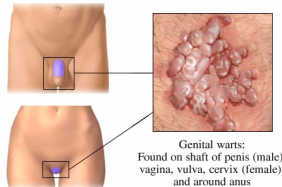
Genital warts usually appear as a small bump or group of bumps in the genital area. They can be small or large, raised or flat, or shaped like a cauliflower. Health care providers can diagnose warts by looking at the genital area during an office visit. Warts can appear within weeks or months after sexual contact with an infected partner—even if the infected partner has no signs of genital warts. If left untreated, genital warts might go away, remain unchanged, or increase in size or number. They will not turn into cancer.
Cervical cancer usually does not have symptoms until it is quite advanced. For this reason, it is important for women to get regular screening for cervical cancer. Screening tests can find early signs of disease so that problems can be treated early, before they ever turn into cancer.
Other HPV-related cancers might not have signs or symptoms until they are advanced and hard to treat. These include cancers of the vulva, vagina, penis, anus, and oropharynx (back of throat including base of tongue and tonsils). For signs and symptoms of these cancers, see www.cancer.govExternal Web Site Icon.
RRP is a condition in which warts grow in the throat. These growths can sometimes block the airway, causing a hoarse voice or troubled breathing.
How do people get HPV?
HPV is passed on through genital contact, most often during vaginal and anal sex. HPV may also be passed on during oral sex and genital-to-genital contact. HPV can be passed on between straight and same-sex partners—even when the infected partner has no signs or symptoms.
A person can have HPV even if years have passed since he or she had sexual contact with an infected person. Most infected persons do not realize they are infected or that they are passing the virus on to a sex partner. It is also possible to get more than one type of HPV.
Rarely, a pregnant woman with genital HPV can pass HPV to her baby during delivery. Very rarely, the child can develop juvenile-onset recurrent respiratory papillomatosis (JORRP).
How does HPV cause genital warts and cancer?
HPV can cause normal cells on infected skin to turn abnormal. Most of the time, you cannot see or feel these cell changes. In most cases, the body fights off HPV naturally and the infected cells then go back to normal. But in cases when the body does not fight off HPV, HPV can cause visible changes in the form of genital warts or cancer. Warts can appear within weeks or months after getting HPV. Cancer often takes years to develop after getting HPV.
How common are HPV and related diseases?
HPV (the virus). Approximately 20 million Americans are currently infected with HPV. Another 6 million people become newly infected each year. HPV is so common that at least 50% of sexually active men and women get it at some point in their lives.
Genital warts. About 1% of sexually active adults in the U.S. have genital warts at any one time.
Cervical cancer. Each year, about 12,000 women get cervical cancer in the U.S. Almost all of these cancers are HPV-associated.
Other cancers that can be caused by HPV are less common than cervical cancer. Each year in the U.S., there are about:
1,500 women who get HPV-associated vulvar cancer
500 women who get HPV-associated vaginal cancer
400 men who get HPV-associated penile cancer
2,700 women and 1,500 men who get HPV-associated anal cancer
1,500 women and 5,600 men who get HPV-associated oropharyngeal cancers (cancers of the back of throat including base of tongue and tonsils) [Note: Many of these cancers may also be related to tobacco and alcohol use.]
Certain populations are at higher risk for some HPV-related health problems. This includes gay and bisexual men, and people with weak immune systems (including those who have HIV/AIDS).
RRP is very rare. It is estimated that less than 2,000 children get juvenile-onset RRP every year in the U.S.
How can people prevent HPV?
There are several ways that people can lower their chances of getting HPV:
Vaccines can protect males and females against some of the most common types of HPV that can lead to disease and cancer. These vaccines are given in three shots. It is important to get all three doses to get the best protection. The vaccines are most effective when given at 11 or 12 years of age.
Girls and women: Two vaccines (Cervarix and Gardasil) are available to protect females against the types of HPV that cause most cervical cancers. One of these vaccines (Gardasil) also protects against most genital warts. Gardasil has also been shown to protect against anal, vaginal and vulvar cancers. Either vaccine is recommended for 11 and 12 year-old girls, and for females 13 through 26 years of age, who did not get any or all of the shots when they were younger. These vaccines can also be given to girls beginning at 9 years of age. It is recommended to get the same vaccine brand for all three doses, whenever possible.
Boys and men: One available vaccine (Gardasil) protects males against most genital warts and anal cancers. This vaccine is available for boys and men, 9 through 26 years of age.
For those who choose to be sexually active, condoms may lower the risk of HPV. To be most effective, they should be used with every sex act, from start to finish. Condoms may also lower the risk of developing HPV-related diseases, such as genital warts and cervical cancer. But HPV can infect areas that are not covered by a condom - so condoms may not fully protect against HPV.
People can also lower their chances of getting HPV by being in a faithful relationship with one partner; limiting their number of sex partners; and choosing a partner who has had no or few prior sex partners. But even people with only one lifetime sex partner can get HPV. And it may not be possible to determine if a partner who has been sexually active in the past is currently infected. That's why the only sure way to prevent HPV is to avoid all sexual activity.
How can people prevent HPV-related diseases?
There are ways to prevent the possible health effects of HPV, including the two most common problems: genital warts and cervical cancer.
Preventing genital warts: A vaccine (Gardasil) is available to protect against most genital warts in males and females (see above).
Preventing Cervical Cancer: There are two vaccines (Cervarix and Gardasil) that can protect women against most cervical cancers (see above). Cervical cancer can also be prevented with routine cervical cancer screening and follow-up of abnormal results. The Pap test can find abnormal cells on the cervix so that they can be removed before cancer develops. An HPV DNA test, which can find HPV on a woman's cervix, may also be used with a Pap test in certain cases. Even women who got the vaccine when they were younger need regular cervical cancer screening because the vaccine protects against most, but not all, cervical cancers.
Preventing Anal Cancers: A vaccine (Gardasil) is available to protect against most anal cancers in males and females. Screening for anal cancer is not routinely recommended because more information is still needed to find out if screening and follow-up interventions prevent these cancers. However, some experts recommend yearly anal Pap tests to screen for anal cancer in gay and bisexual men and in HIV-positive persons. This is because anal cancer is more common in those populations.
Preventing Penile Cancers: There is no approved screening test to find early signs of penile cancer.
Preventing Oropharyngeal Cancers: There is no approved test to find early signs of oropharyngeal cancer[see www.cancer.orgExternal Web Site Icon]
Preventing RRP: Cesarean delivery is not recommended for women with genital warts to prevent juvenile-onset RRP (JORRP) in their babies. This is because it is not clear that cesarean delivery prevents JORRP in infants and children.
Is there a test for HPV?
The HPV tests on the market are only used to help screen women at certain ages and with certain Pap test findings, for cervical cancer. There is no general test for men or women to check one’s overall "HPV status," nor is there an approved HPV test to find HPV on the genitals or in the mouth or throat.
Is there a treatment for HPV or related diseases?
There is no treatment for the virus itself, but there are treatments for the diseases that HPV can cause:
Visible genital warts can be removed by the patient him or herself with prescribed medications. They can also be treated by a health care provider. Some people choose not to treat warts, but to see if they disappear on their own. No one treatment is better than another.
Cervical cancer is most treatable when it is diagnosed and treated early. But women who get routine Pap tests and follow up as needed can identify problems before cancer develops. Prevention is always better than treatment. [see www.cancer.orgExternal Web Site Icon]
Other HPV-related cancers are also more treatable when diagnosed and treated early. [see www.cancer.orgExternal Web Site Icon]
RRP can be treated with surgery or medicines. It can sometimes take many treatments or surgeries over a period of years.
|


