MENU

BILINGUAL BLOG – BLOG SONG NGỮ ANH VIỆT – SHARE KNOWLEGE AND IMPROVE LANGUAGE

--------------------------- TÌM KIẾM TRÊN BLOG NÀY BẰNG GOOGLE SEARCH ----------------------------

TXT-TO-SPEECH – PHẦN MỀM ĐỌC VĂN BẢN

Click phải, chọn open link in New tab, chọn ngôn ngữ trên giao diện mới, dán văn bản vào và Click SAY – văn bản sẽ được đọc với các thứ tiếng theo hai giọng nam và nữ (chọn male/female)

- HOME - VỀ TRANG ĐẦU

CONN'S CURENT THERAPY 2016 - ANH-VIỆT

150 ECG - 150 ĐTĐ - HAMPTON - 4th ED.

VISUAL DIAGNOSIS IN THE NEWBORN

Monday, February 13, 2012

The Muff March against 'designer vagina' surgery - Tuần hành chông phẫu thuật chỗ kín

The Muff March against 'designer vagina' surgery

On Saturday morning, women will march down Harley Street to protest against the pornification of our private parts

Kate O'Brien and Sinead King, members of the Muffia, in London in 2009.
Kate O'Brien and Sinead King, members of the Muffia, in London in 2009. Photograph: Anna Gordon

"Keep your mitts off our muffs!" "I love my vagina!" "You've put my chuff in a huff!" These are some of the slogans of the Muff March taking place along London's Harley Street Saturday morning. Its aim? To raise awareness of the increase in gynaecological cosmetic surgery – both on the NHS and in private clinics. The march, which has more than 300 supporters on Facebook, is organised by campaigning group UK Feminista and performance artists The Muffia, who dress up in nude bodysuits decorated with lavish pubic hair.

At its most modest, the Muff March is against the pornography-influenced obsession with removing pubic hair. But it's also about protesting against the sort of surgery that makes you cross your legs. Typical procedures on offer include labiaplasty (trimming or removing the labia) and vaginal rejuvenation (tightening – usually referred to by "designer vagina").

In the US this industry is worth $6.8m (£4.4m). In the UK the latest figures come from a 2009 report in the British Journal of Obstetrics and Gynaecology. It revealed that in 2008 the number of operations increased by 70% compared with the previous year: 1,118 labiaplasty operations on the NHS. (There were 669 in 2007 and 404 in 2006.) And that's just the NHS. The Harley Medical Group reported over 5,000 inquiries about cosmetic gynaecology last year, 65% for labial reduction.

Professor Linda Cardozo of King's College London recently warned of the risks of labiaplasty: permanent scarring, infections, bleeding and irritation. "The private sector is not recorded, audited or regulated. At least if you have it on the NHS you have to go through your GP and that's a gatekeeper." (Although one anonymous blogger writes on the NHS website: "I have flaps of skin everywhere and the whole thing is a total mess. I will never be able to be intimate again.")

I recently heard of a woman GP very concerned by the number of girls in their mid-teens coming to her worried about what their genitals looked like: she thought it was becoming an issue largely because of the fashion for shaving off pubic hair, which made them more self-conscious. Of course, there are rare cases where there is an underlying medical reason for this surgery, but they are just that, extremely rare. A doctor who has treated women seeking labiaplasty told me: "When you examine them, they are completely normal."

Some experts suggest this is a new form of body dysmorphic disorder. Others see it as a depressing but logical extension of the pornification of our culture. As it becomes more acceptable for young people to watch porn (where a "standardised" genital appearance is encouraged and many of the women have no pubic hair), so young women having their first sexual experiences are being measuring – and measuring themselves – against this weird porn "norm". As one woman who has sought surgery says: "I browsed through one of my brother's Playboys to see what the girls looked like. Some seemed to have very small or almost no labia." In a world where not even your labia can ever be pretty enough, it's time to fight back. Forward march, muffs!

Me? Competitive? I can't help it – I'm almost 50 - Ngũ niên tuổi cạnh tranh?

Me? Competitive? I can't help it – I'm almost 50

New research has shown that men are at their most competitive between the ages of 45 and 54

'I won, I won, I won …' Hattenstone acknowledges his competitive side.
'I won, I won, I won …' Hattenstone acknowledges his competitive side. Photograph: Graeme Robertson

A funny thing happened the other day when I was playing football. I went into a challenge with a player and he came out with a chipped tooth. Apparently my elbow was raised. He kindly suggested it was 50-50. The thing is he works with me. You could say he was a younger, fitter, better version of myself – a new Porsche with multi-media trimmings, compared to my battered Cortina.

When we arrived back at the office, I got a lot of funny looks from colleagues. "You broke Patrick's tooth!" "What could have possessed you?" There was even a rumour that I'd broken his jaw. My colleagues made the connection between our line of work, his relative youth etc.

I have always prided myself on my lack of competitiveness; my easy-going insouciance. Now as I approach my 50th year I am beginning to realise what a sadly misguided git I have been. Even this pride at my lack of competitiveness has been competitive.

American psychologists at the University of Oregon have just revealed that between the ages of 45 and 54, men are at their most competitive. Participants in its research were asked to solve maths equations, either on their own or head-to-head with a rival. Nearly 70% of those aged between 45 and 54 wanted an opponent, whereas only half of those between 25 and 34 did. It all makes a horrible kind of sense. The older, balder, fatter, stupider and more irrelevant we become, the more we feel we have to prove ourselves. So, I run obsessively, stare at my belly, imagining it morphing into a six-pack. When I go out with younger colleagues, there's a bit of me that wants to be able to drink more and vomit less than they do. Even my daughters have told me that these days I have to have the last word in arguments. I find myself going through homework, and saying appalling things such as, "What do teachers know? Listen to me", when I don't have a clue.

Still, at least I'm not as bad as my boss, who does a marine-style lunchtime workout. When he sees me going for a run, he smirks, calls me a sissy and says he's doing real exercise. Pathetic. I'd never do that. Well, not since the time I tried it out, found I was weaker in every respect, and vowed never to be seen in shorts with him again.

The less we can achieve it, the more we want it

Bald, hunched, paunchy, a stranger to buff, grimly aware that my sexual peak was 31 years ago, outpaced by my six-year-old daughter when we run for the bus, I know that, at 49, I'm on the down slope of the sagathon that's going to end in death. So it is good to know that that shows there is one area in which I haven't yet peaked. Previous research has shown that, as cortisol and testosterone decline, so do cognitive performance levels. But here's the twist.Older men want it more even if they can achieve it less - this explains why Ivan Lendl returned to tennis, and why I got embroiled in an incident at the pool last week. I was in the slow lane when I overtook an irritatingly lithe twentysomething swimmer who'd been lapping me. Breathless and smug, I lounged poolside on the edge of the pool - only to realise she'd stopped mid-length to chat to her personal trainer before resuming her implacable progress, damn her.

This incident confirms a gender split: : according to the report, men compete without regard for the likelihood of winning, whereas women don't compete if they can't win. I recognise this: women are more rational than men, though, because I'm competitive, I can't accept that truth.

Is this because men are happy only when asserting their dominance? Perhaps. There is something chilling - isn't there? - in Bernie Ecclestone's eyes when he appears in the shadow of his latest love, as if he's saying: don't you wish your girlfriend was hot like mine? To which the competitive male reply is to change the rules: don't you wish you were two feet taller like me? Nobody said male competitiveness was a beautiful thing.

If we can't win, but we can tilt the playing field until we do. That way we can be winners even as we mutate into the seven loser dwarfs of our declining years – wheezy, paunchy, hunchy, baldy, grumpy, squinty, and surly.

Stuart Jeffries

The Olympic-sized disaster that's waiting to happen - Thảm họa quy mô Olympic sắp sửa xảy ra


The Olympic-sized disaster that's waiting to happen

Thảm hoạ quy mô Olympic sắp sửa xảy ra

The London Olympics will be a health minefield, if new research published by Lancet is anything to go by

Thế vận hội Olympic Luân đôn sẽ là một bãi mìn y tế, nếu nghiên cứu mơí công bố của Lancet cũng đúng như lần trước.

A crowd watching a sporting event

At risk? So many people, so many potential diseases … Photograph: Datacraft Co Ltd/Getty Images/imagenavi

Có nguy cơ như vậy sao? Càng nhiều người, càng nhiều căn bệnh tiềm tàng…

Ảnh: Datacraft Co Ltd/Getty Images/imagenavi

There we all were naively thinking the Olympics would bring pride, excitement and tourism revenue to London this summer. But what none of us has properly accounted for, according to six new papers published in Lancet Infectious Diseases, are the health risks to visitors of stampedes, heatstroke and mass infections.

Tất cả chúng ta ở đây đều ngây thơ cho rằng Thế vận hội sẽ mang lại niềm tự hào, nhộn nhịp và khoản doanh thu về du lịch cho Luân đôn vào mùa hè này. Nhưng không ai trong chúng ta đánh giá đúng đắn, theo như sáu bài báo mới được công bố của Lancet về Bệnh truyền nhiễm, đó là những nguy cơ về sức khoẻ từ sự náo loạn của đám đông du khách, say nắng và vô khối bệnh lây nhiễm.

Events ranging from Barack Obama's inauguration and Glastonbury through to the Hajj pilgrimage and football World Cups have all provided evidence that is now being used to minimise the health risks that will accompany the London games. A system called Bio Diaspora will be used, which tracks air traffic to help anticipate the global spread of diseases. The internet will also be closely monitored to spot early geographical evidence of "disease activity".

Hàng loạt các sự kiện khác nhau từ Lễ nhậm chức của Barack Obama và Glastonbury xuyên suốt cuộc hành hương Hajj và Cup bóng đá Thế giới đã cung cấp bằng chứng xác thực mà giờ đây được sử dụng để giảm thiểu tối đa các nguy cơ về sức khoẻ đi kèm với thế vận hội Luân đôn. Một hệ thống sẽ được sử dụng có tên là Bio Diaspora, theo dõi lưu thông không khí nhằm giúp dự đoán sự lây lan bệnh tật trên diện rộng. Mạng Internet cũng sẽ được giám sát chặt chẽ để phát hiện sớm những dâú hiệu địa lý về việc “bệnh đang hoành hành”

Computer models are already being run to assess a range of different crowd-movement scenarios. The same was done at last year's Notting Hill Carnival, where scientists simulated the ways crowds might interact and disperse, so they could manage crowd flow more effectively.

Mô hình máy tính cũng đang được vận hành để đánh giá một loạt các kịch bản di chuyển khác nhau của đám đông Điều này cũng đã được thực hiện tương tự tại Lễ hội ở Notting Hill vào năm ngoái, các nhà khoa học đã mô phỏng cách mà đám đông tương tác và phân tán, vì thế họ có thể quản lý lưu lượng đám đông hiệu quả hơn.

Cardiovascular health problems are also a concern. During the World Cup in Germany in 2006, the "emotional stress" saw a doubling of such illneses. It's a sobering thought: the more medals Great Britain challenges for, the more audience members might suffer heart attacks.

Các vấn đề về sức khoẻ Tim mạch cũng là một mối quan tâm. Trong suốt kỳ World Cup 2006 tại Đức, sự “căng thẳng về xúc cảm” đã làm tăng gấp đôi vấn đề tim mạch. Đây là một suy nghĩ rất nghiêm túc: Càng nhiều thách thức giành huy chương tại Anh thì càng nhiều khán giả có thể bị lên các cơn đau tim.

Translated by Lê Thị Ngọc Sương-Y2E, ngocsuong.3107@gmail.com


Why do Poles eat more veg than the rest of us? - Người Ba lan ăn nhiều rau hơn chúng ta


Why do Poles eat more veg than the rest of us?

Tại sao người Ba lan ăn nhiều rau hơn chúng ta?


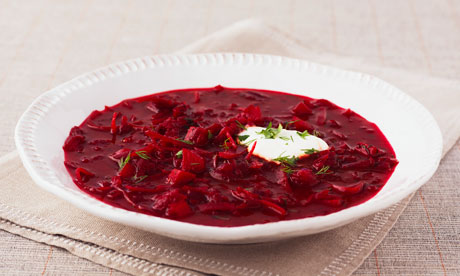
barscht with sour cream

Củ cải đường sốt kem.

Because there's a lot more to Polish cuisine than you might have thought

Bởi lẽ có nhiều phương thức nấu ăn của người Ba Lan hơn bạn tưởng.

Poland is not a country often associated with vegetables. When I stayed with a Polish family last year, the food the Baniaks cooked was delicious – think homemade dumplings, potato pancakes, and chicken soup – but it was a bit light on greens. In fact, the only green dish I particularly remember was a gyros, a layered leaf salad ... from Greece.

Balan không phải một đất nước gắn liền với các loại rau. Khi tôi ở với một gia đình Ba Lan năm ngoái, thực phẩm mà gia đình Baniaks nấu rất ngon – gồm bánh bao, bánh kếp khoai tây tự làm lấy và soup gà - nhưng nó chỉ có rất ít rau xanh. Trên thực tế, món ăn xanh duy nhất tôi đặc biệt nhớ đó là gyros, món rau trộn tầng … có xuất xứ từ Hy Lạp

But first impressions can be misleading. The Grocer magazine has revealed that, in fact, Poles eat more vegetables a day (477g) than any other country in Europe – and nearly twice as much the UK's measly 258g.

Tuy nhiên, những cảm nhận đầu tiên có thể khiến ta hiểu nhầm, Tạp chí Grocer đã tiết lộ rằng, trên thực tế, trong một ngày người Ba Lan ăn rau nhiều hơn bất kỳ quốc gia nào tại châu Âu (477 g) - và nhiều hơn hai lần nước Anh vốn chỉ ăn có (258 g).

Ewa Michalik, author of Food of Poland, and the owner of Patio, a Polish restaurant in west London, says we shouldn't be surprised: "We cook a lot of cabbage, and we also eat a lot of beetroot, which has been forgotten as a vegetable over here." Poland's most famous vegetable dish, she says, is the kapusta – a salad Michalik makes from red and white cabbage, and accompanies with apples. A typical Polish meal often contains both a salad and a hot vegetable soup made from beetroot (barscht), cauliflower, celery, or leek. While we're speaking, a customer orders gołabki – parcels of cabbage wrapped around rice. "It's very tasty," says Michalik.

Ewa Michalik, tác giả cuốn sách Thực phẩm Ba Lan, bà chủ của Patio - một nhà hàng Ba Lan ở phía Tây London, “Chúng tôi hẳn không quá ngạc nhiên,” cô chia sẻ: "chúng tôi dùng rất nhiều cải bắp để nấu ăn, và chúng tôi cũng ăn nhiều củ cải đường, dường như những thực phẩm đó bị lãng quên ở đây" Món rau nổi tiếng nhất ở Ba Lan – kapusta - món salad được Michalik chế biến từ cải bắp đỏ và trắng, và kèm với táo. Một bữa ăn điển hình của người Ba Lan có salad và món canh nóng hổi nấu từ củ cải đường, súp lơ, cần tây hoặc tỏi tây. Trong khi chúng tôi đang nói chuyện, một thực khách yêu cầu món gołabki - món bắp cải cuộn cơm. "Nó rất ngon" Michalik thốt lên.

Translated by levanthuong6101992@gmail.com

Top five regrets of the dying 5 ĐIỀU HỐI TIẾC NHẤT LÚC HẤP HỐI


Top five regrets of the dying

5 ĐIỀU HỐI TIẾC NHẤT LÚC HẤP HỐI

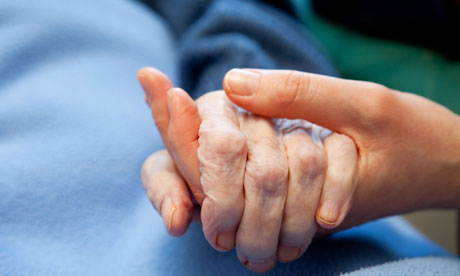
Bronnie Ware is an Australian nurse who spent several years working in palliative care, caring for patients in the last 12 weeks of their lives. She recorded their dying epiphanies in a blog called Inspiration and Chai, which gathered so much attention that she put her observations into a book called The Top Five Regrets of the Dying.

Một nữ y tá người Úc tên Bronnie Ware đã có nhiều năm chuyên chăm sóc người bệnh ở thời kỳ 12 tuần cuối của cuộc đời họ. Cô đã ghi lại những điều mà người bệnh còn hối tiếc trước khi nhắm mắt. đăng trên blog có tên Inspiration and Chai, và thu hút được nhiều chú ý tới mức cô đã tổng kết các các quan sát của mình và viết thành cuốn sách có tên: “5 điều hối tiếc nhất lúc lâm chung”.

There was no mention of more sex or bungee jumps.

Ware writes of the phenomenal clarity of vision that people gain at the end of their lives, and how we might learn from their wisdom. "When questioned about any regrets they had or anything they would do differently," she says, "common themes surfaced again and again."

Đã không có câu trả lời nào đề cập đến sự ham muốn về tình dục hay những cú nhảy bungee mạo hiểm. Ware viết về sự khôn ngoan có tính hiện tượng về tầm nhìn mà mọi người có được vào lúc cuối đời, và làm thế nào chúng ta có thể học hỏi từ sự khôn ngoan đó. "Khi được hỏi về bất kỳ hối tiếc họ có hoặc bất cứ điều gì họ muốn làm khác đi", cô nói, "những chủ đề phổ biến nổi lên nhiều lần lập đi lập lại."

Here are the top five regrets of the dying, as witnessed by Ware:

Dưới đây là năm điều hối tiếc phổ biến nhất của những người sắp qua đời, mà Ware đã chứng kiến:

1. I wish I'd had the courage to live a life true to myself, not the life others expected of me.

"This was the most common regret of all. When people realise that their life is almost over and look back clearly on it, it is easy to see how many dreams have gone unfulfilled. Most people had not honoured even a half of their dreams and had to die knowing that it was due to choices they had made, or not made. Health brings a freedom very few realise, until they no longer have it."

1. Giá mà tôi có đủ can đảm để sống một cuộc sống đúng với bản thân mình, chứ không phải là cuộc sống mà những người khác mong đợi ở tôi.

“Đây là niềm hối tiếc phổ biến nhất. Khi con người ta nhận ra rằng cuộc đời của họ đang gần đến điểm kết thúc, ngoảnh nhìn lại, thật dễ dàng để nhận ra có bao nhiêu giấc mơ đã trôi đi mà chưa thành hiện thực. Hầu hết mọi người đã không tôn trọng thậm chí chỉ một nửa giấc mơ của mình và giờ đây họ phải ra đi trong suy nghĩ rằng điều này hoàn toàn do những gì họ đã lựa chọn, hoặc không lựa chọn. Sức khỏe mang lại một sự tự do mà rất ít người nhận ra, cho đến khi họ không còn có nó được nữa”.

2. I wish I hadn't worked so hard.

"This came from every male patient that I nursed. They missed their children's youth and their partner's companionship. Women also spoke of this regret, but as most were from an older generation, many of the female patients had not been breadwinners. All of the men I nursed deeply regretted spending so much of their lives on the treadmill of a work existence."

2. Giá mà tôi đã không làm việc một cách khó nhọc.

“Điều hối tiếc này này đến từ tất cả các bệnh nhân nam mà tôi chăm sóc. Họ đã bỏ lỡ tuổi trẻ của con cái họ cũng như sự đồng hành của người bạn đời. Phụ nữ cũng có nhắc đến điều hối tiếc này, nhưng vì hầu hết họ đến từ thế hệ cũ, họ đã không cần phải là trụ cột gia đình. Tất cả những người đàn ông mà tôi đã chăm sóc đều hối hận một cách sâu sắc rằng họ đã chi tiêu quá nhiều cuộc sống của họ để chạy đua mà tồn tại”.

3. I wish I'd had the courage to express my feelings.

"Many people suppressed their feelings in order to keep peace with others. As a result, they settled for a mediocre existence and never became who they were truly capable of becoming. Many developed illnesses relating to the bitterness and resentment they carried as a result."

3. Giá mà tôi có đủ can đảm để bộc lộ cảm xúc của mình.

“Nhiều người phải ức chế cảm xúc của mình để giữ hòa khí với những người xung quanh. Kết quả là, họ phải tự nén mình xuống sống một cuộc sống tầm thường và không bao giờ trở thành người mà họ đã thực sự có khả năng trở thành. Nhiều căn bệnh phát triển liên quan đến sự cay đắng và oán giận mà họ đã phải ôm trong người”.

4. I wish I had stayed in touch with my friends.

"Often they would not truly realise the full benefits of old friends until their dying weeks and it was not always possible to track them down. Many had become so caught up in their own lives that they had let golden friendships slip by over the years. There were many deep regrets about not giving friendships the time and effort that they deserved. Everyone misses their friends when they are dying."

4. Giá mà tôi giữ liên lạc với bạn bè của tôi.

“Thường thì họ sẽ không thực sự nhận ra những lợi ích đầy đủ của những người bạn cũ cho đến những tuần cuối cùng của cuộc đời, và không phải lúc nào cũng có thể tìm lại được bạn bè. Nhiều người đã bị kẹt trong cuộc sống riêng của họ đến nỗi đã để những tình bạn vàng trôi đi theo năm tháng. Đến cuối đời họ cảm thấy rất ân hận bởi đã không dành đủ thời gian và nỗ lực để chăm chút cho tình bạn của mình. Tất cả họ đều nhớ đến những người bạn của mình khi họ đang hấp hối”.

5. I wish that I had let myself be happier.

"This is a surprisingly common one. Many did not realise until the end that happiness is a choice. They had stayed stuck in old patterns and habits. The so-called 'comfort' of familiarity overflowed into their emotions, as well as their physical lives. Fear of change had them pretending to others, and to their selves, that they were content, when deep within, they longed to laugh properly and have silliness in their life again."

5. Giá mà tôi để cho bản thân mình được hạnh phúc hơn.

“Đây là một niềm hối hận phổ biến đến mức ngạc nhiên. Nhiều người cho đến phút cuối cùng mới nhận ra hạnh phúc chính là một sự lựa chọn cho cuộc sống. Họ bị kẹt trong những mô hình và thói quen cũ. Cái gọi là “sự dễ chịu” của sự quen thuộc đã lấn át đời sống tinh thần cũng như thể chất của họ. Sự sợ phải thay đổi đã khiến họ phải giả vờ với mọi người xung quanh và với chính bản thân họ, rằng họ đang rất mãn nguyện, nhưng thực ra, ở sâu bên trong, họ thèm được cười hết mình và có được lại sự khờ dại”.

What's your greatest regret so far, and what will you set out to achieve or change before you die?

Hối tiếc lớn nhất của bạn là gì cho đến nay, và bạn có kế hoạch gì để đạt được hoặc thay đổi nó trước khi bạn qua đời?

Translated by Ánh Trăng

http://www.guardian.co.uk/lifeandstyle/2012/feb/01/top-five-regrets-of-the-dying