 |
|
|
THE MYSTERY OF TIME
|
BÍ ẨN CỦA THỜI
GIAN
|
|
Time is One of the
Great Mysteries of Our Universe
Time on Earth is set
by the Sun's position in the sky.
|
Thời gian là một
trong những bí ẩn lớn của vũ trụ. Thời gian trên Trái đất sẽ được
tính theo vị trí của Mặt trời trên bầu trời.
|
|
The divisions of time we use today
were developed in ancient Babylonia four thousand years ago. Babylonian
astronomers believed the sun moved around the Earth every three hundred
sixty-five days.
|
Cách chia thời gian mà chúng ta dùng ngày nay được phát
triển ở xứ Babylon cổ đại cách đây 4 ngàn năm. Những nhà thiên văn học
Babylon tin mặt trời quay xung quanh
trái đất cứ ba trăm sáu mươi lăm ngày
một lần.
|
|
They divided the trip into twelve equal parts, or months.
Each month was thirty days. Then, they divided each day into twenty-four
equal parts, or hours. They divided each hour into sixty minutes, and each
minute into sixty seconds.
|
Họ chia chuyến đi này thành mười hai phần bằng nhau, hay
còn gọi là tháng. Mỗi tháng là ba mươi ngày. Sau đó, họ chia mỗi ngày thành
24 phần bằng nhau, hay còn gọi là giờ. Họ chia mỗi giờ thành sáu mươi phút,
và mỗi phút thành 60 giây.
|

Showing posts with label WH?-THẮC MẮC. Show all posts
Showing posts with label WH?-THẮC MẮC. Show all posts
Saturday, August 19, 2017
BÍ ẨN CỦA THỜI GIAN


Thursday, July 20, 2017
FIVE QUESTIONS NO ONE CAN ANSWER Năm câu hỏi không ai có thể trả lời
 |
|
|
FIVE QUESTIONS NO ONE CAN ANSWER
|
Năm câu hỏi không ai
có thể trả lời
|
|
|
|
|
Science doesn't have all the answers. But it has the ones
you can trust.
It's worth remembering that no science claims to be the
definitive answer to anything. Proclaiming the 'one truth' is the hallmark of
faith, not evidence based reasoning.
Any scientific study, or reasoning, is only the answer
based on what's known so far.
|
Khoa học không có tất cả các câu trả lời. Nhưng nó có
những câu trả lời bạn có thể tin cậy.
Cần nhớ rằng khoa học không tuyên bố có câu trả lời dứt khoát cho bất cứ
điều gì. Việc tuyên bố chỉ có 'một sự thật' là dấu ấn của đức
tin, không phải bằng chứng dựa trên luận lý.
Bất kỳ nghiên cứu khoa học, hoặc luận lý nào, chỉ là câu
trả lời dựa trên những gì đã được biết đến cho đến nay.
|
|
1. Are we alone in
the universe?
The odds are, given the vast size of the universe, and the
infinite number of celestial bodies flying around and infinite number of
solar systems, we are not alone.
Yet so far we've not found any.
It's possible that Earth is the first life in the
universe, after all it has to began somewhere.
Or we could be the last.
It has been covered, sort of, by the Fermi paradox.
|
1. Chúng ta có một
mình trong vũ trụ không?
Thật lạ là, với kích thước rộng lớn của vũ trụ,
và với vô
số các thiên thể bay quanh và vô số hệ mặt trời, chúng tôi không đơn
độc một mình.
Tuy nhiên, cho đến nay chúng ta vẫn không tìm thấy bất kỳ
ai khác.
Có thể Trái đất là sự sống đầu tiên trong vũ trụ, nhưng
dù sao đi nữa thì nó
đã bắt đầu ở nơi nào đó.
Hoặc chúng ta có thể là những người cuối cùng.
Nó đã bị che phủ mooth
phần bởi một nghịch
lý của Fermi.
|
Wednesday, March 7, 2012
What sank the Titanic? Scientists point to the moon Thảm họa chìm tầu Titanic: Lỗi do "chị Hằng"?

|
| |
| What sank the Titanic? Scientists point to the moon
| Thảm họa chìm tầu Titanic: Lỗi do "chị Hằng"?
|
| By Jim Forsyth
| Jim Forsyth
|
| (Reuters) - A century after the Titanic disaster, scientists have found an unexpected culprit for the sinking: the moon.
| (Reuters) - Một thế kỷ sau thảm họa Titanic, các nhà khoa học vừa tìm ra rằng “chị hằng” chính là “thủ phạm” gây nên vụ đắm tàu. |
| Anyone who knows history or has seen the blockbuster movies knows that the cause of the transatlantic liner's accident 100 years ago next month was that it hit an iceberg.
| Sau khi xem bộ phim cùng tên, mọi người đều biết rằng nguyên nhân gây nên vụ tai nạn bi thảm cách đây 100 năm là do con tàu đâm vào băng. |
| "But the lunar connection may explain how an unusually large number of icebergs got into the path of the Titanic," said Donald Olson, a Texas State University physicist whose team of forensic astronomers examined the moon's role.
| “Nhưng mối liên hệ với mặt trăng có thể giải thích tại sao những tảng băng lớn bất thường lại nằm trên đường đi của Titanic,” Donald Olson, nhà vật lý học ở ĐH bang Texas và là thành viên nhóm thiên văn học đã tiến hành đánh giá vai trò của mặt trăng trong vụ tai nạn, nói.
|
| Ever since the Titanic sank in the early hours of April 15, 1912, killing 1,517 people, researchers have puzzled over Captain Edward Smith's seeming disregard of warnings that icebergs were in the area where the ship was sailing.
| Kể từ khi con tàu Tinanic chìm vào rạng sáng ngày 15/4/1912, khiến 1.517 người thiệt mạng, và các nhà nghiên cứu vẫn không hiểu được tại sao thuyền trưởng Edward Smith dường như không bận tâm tới cảnh báo rằng có nhiều tảng băng trong khu vực mà con tàu đang đi qua.
|
| Smith was the most experienced captain in the White Star Line and had sailed the North Atlantic sea lanes on numerous occasions. He had been assigned to the maiden voyage of the Titanic because he was a knowledgeable and careful seaman.
| Smith là thuyền trưởng giàu kinh nghiệm nhất của hãng White Star Line và ông đã chỉ huy nhiều tàu đi qua vùng biển bắc Atlantic không biết bao nhiêu lần. Ông được giao nhiệm vụ điều khiển chuyến hạ thủy đầu tiên của con tàu Titanic vì ông vốn nổi tiếng là người cẩn thận và hiểu biết.
|
| Greenland icebergs of the type that the Titanic struck generally become stuck in the shallow waters off Labrador and Newfoundland, and cannot resume moving southward until they have melted enough to re-float or a high tide frees them, Olson said.
| Những tảng băng Greenland cùng loại với tảng băng mà tàu Titanic đã đâm vào hay mắc vào các vùng nước nông ở ngoài khơi Labrador và Newfoundland, và không thể di chuyển về phía Nam cho tới khi chúng tan chảy tới mức đủ để nổi lên hoặc phải nhờ thủy triều kéo ra, Olson giải thích.
|
| So how was it that such a large number of icebergs had floated so far south that they were in the shipping lanes well south of Newfoundland that night?
| Vậy làm cách nào mà nhiều tảng băng lớn lại trôi xa nhưng thế về phía Nam, đến nỗi trở thành nguyên nhân gây ra thảm họa kinh hoàng ở Newfoundland vào đêm đó? |
| The team investigated speculation by the late oceanographer Fergus Wood that an unusually close approach by the moon in January 1912 may have produced such high tides that far more icebergs than usual managed to separate from Greenland, and floated, still fully grown, into shipping lanes that had been moved south that spring because of reports of icebergs.
| Nhóm nghiên cứu điều tra suy đoán của nhà hải dương học Fergus Wood rằng mặt trăng tiến gần trái đất một cách bất thường vào tháng 1/1912 có thể tạo ra những đợt thủy triều cực mạnh, đẩy nhiều tảng băng tách khỏi Greenland để trôi về phía nam hơn bình thường. Vào thời gian đó, những tảng băng này vẫn có thể nổi dù kích thước còn rất lớn. |
| Olson said a "once-in-many-lifetimes" event occurred on January 4, 1912, when the moon and sun lined up in such a way that their gravitational pulls enhanced each other. At the same time, the moon's closest approach to earth that January was the closest in 1,400 years, and the point of closest approach occurred within six minutes of the full moon. On top of that, the Earth's closest approach to the sun in a year had happened just the previous day.
| Olson nói rằng, sự kiện hiếm đến mức “nhiều đời mới có một lần” đã xảy ra vào ngày 2/1/1912, khi mặt trăng và mặt trời nằm thẳng hàng, khiến lực hấp dẫn của chúng tăng cường lẫn nhau. Đồng thời, khoảng cách từ mặt trăng đến trái đất vào tháng 1 năm đó ngắn nhất trong 1.400 năm, và khoảng thời gian khoảng cách này đạt cực tiểu chỉ xảy ra trong 6 phút khi trăng tròn. Thêm vào đó, thời điểm trái đất ở gần mặt trời nhất trong năm vừa mới xảy ra ngay ngày hôm trước. |
| "This configuration maximized the moon's tide-raising forces on the Earth's oceans," Olson said. "That's remarkable."
| “Vị trí sắp xếp các thiên thể này khiến lực thủy triều trên trái đất đạt cực đại,” Olson nói. “Thật qua lớn.” |
| His research determined that to reach the shipping lanes by mid-April, the iceberg that the Titanic struck must have broken off from Greenland in January 1912. The high tide caused by the bizarre combination of astronomical events would have been enough to dislodge icebergs and give them enough buoyancy to reach the shipping lanes by April, he said.
| Nghiên cứu của nhóm Olson xác định được rằng để trôi đến tuyến đường hàng hải vào giữa tháng 4, tảng băng trôi va trúng tàu Titanic phải vỡ ra từ Greenland vào tháng 1/1912. Thủy triều cao do sự kết hợp những sự kiện thiên văn đã khiến các tảng băng vỡ ra và giúp chúng trôi đến nơi con tàu đi qua vào tháng 4. |
| Olson's team has sought to use tide patterns to determine exactly when Julius Caesar invaded Britain and prove the legend that Mary Shelley was inspired by a bright full moon shining through her window to write the gothic classic "Frankenstein."
| Nhóm nghiên cứu của Olson đã tìm cách sử dụng các mẫu thủy triều để xác định chính xác thời điểm Julius Caesar xâm chiếm nước Anh và chứng minh truyền thuyết nói rằng Mary Shelley đã lấy cảm hứng từ một mặt trăng tròn sáng chiếu xuyên qua cửa sổ của mình để viết tác phẩm cổ điển gothic "Frankenstein".
|
| The team's Titanic research may have vindicated Captain Smith - albeit a century too late - by showing that he had a good excuse to react so casually to a report of ice in the ship's path. He had no reason at the time to believe that the bergs he was facing were as numerous or as large as they turned out to be, Olson said.
| Nghiên cứu của nhóm này về Titanic có thể minh oan cho thuyền trưởng Smith - mặc dù đã qua một thế kỷ - bằng cách minh chứng rằng ông đã không có một lý do chính đáng để phản ứng lại một cách cẩu thả một báo cáo về băng trên đường của con tàu. Vào thời điểm đó ông không có lý do để tin rằng ông đã phải đối mặt với nhiều băng hoặc băng lớn như trên thực tế đã xảy ra, Olson cho biết.
|
|
|
|
Sunday, July 10, 2011
Why Fingers Wrinkle in Water - Tại sao da nhăn khi ngâm nước
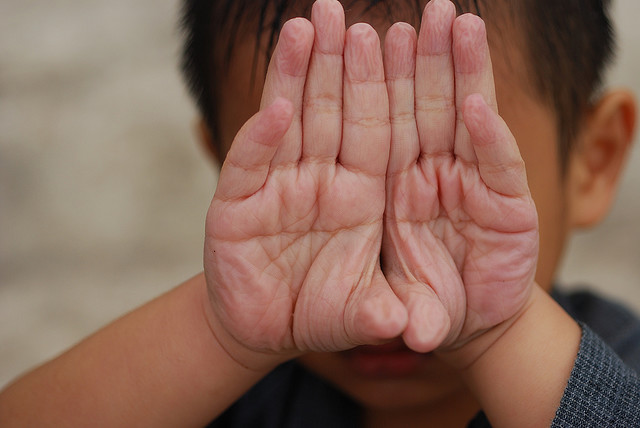
| Why Fingers Wrinkle in Water | Tại sao da nhăn khi ngâm nước
|
| Today I found out why fingers wrinkle in water. For the quick answer, water washes away an oily substance that protects your skin. When that happens, a certain type of dead cell on your skin will absorb the water causing the cells to swell up, but the layer underneath does not. So the swelling, combined with the places the skin is connected underneath to the non-swelled layer, causes your finger tips to look all wrinkly.
| Hôm nay tôi đã phát hiện ra lý do tại sao các ngón tay bị nhăn khi ngâm nước. Câu trả lời nhanh chóng cho điều đó là nước đã rửa sạch chất nhờn bảo vệ da của bạn. Khi điều đó xảy ra, một loại tế bào chết trên da của bạn sẽ hấp thụ nước khiến cho các tế bào đó phồng lên, nhưng các lớp bên dưới thì không hấp thụ nước. Do đó, sự phồng lên kết hợp các vị trí với da nối kết ở bên dưới với các lớp không thấm nước khiến các ngón tay của bạn trông có vẻ nhăn nheo.
|
| So that’s the quick, generic answer. More technically, there is a waxy/oily substance your skin secretes from the sebaceous glands called “sebum”. In these glands, sebum is produced within special cells and is then secreted when these cells burst. This substance, among other benefits, has the dual effect of helping your skin and hair stay hydrated underneath, so it doesn’t get dry and cracked, while also helping to protect your skin from excess moisture from the outside. You will have probably noticed sebum at some point in your hair if you go a couple days without washing it. Your hair will start to feel very oily when you run your hands through it. When you are in water for extended periods, this sebum gets washed away from your skin and hair, removing this protective layer.
| Như vậy đó là câu trả lời nhanh, tổng quát. Xét sâu về mặt kỹ thuật, thì có một chất sáp/dầu được tuyến bã của da tiết ra được gọi là “bã nhờn”. Trong các tuyến, bã nhờn được tạo ra bên trong các tế bào đặc biệt và nó được tiết ra khi các tế bào này bị vỡ. Ngoài những lợi ích khác, chất này có tác dụng đôi giúp cho da và tóc của bạn ngậm nước bên dưới, vì vậy da và tóc sẽ không bị khô và nứt, đồng thời cũng giúp bảo vệ da bạn khỏi độ ẩm cao qua mức từ bên ngoài. Bạn có thể nhận thấy bã nhờn tại một vài nơi trên tóc nếu bạn để vài ngày không gội đầu. Bạn sẽ cảm thấy tóc rất nhờn khi bạn lấy tay vuốt tóc. Khi bạn ở trong nước thời gian dài, bã nhờn này bị cuốn trôi khỏi da và tóc của bạn, lớp bảo vệ này sẽ bị loại bỏ.
|
| Now you might be wondering why only your finger tips and toes get wrinkly and not the rest of your body (or at least not nearly as fast). The reason why is not 100% understood, but we do have a pretty good idea of what is going on here. The skin’s outermost layer, the epidermis, contains a protein called keratin. This protein helps strengthen your skin. Dead keratin cells also make up the epidermis’ surface layer, called the stratum corneum (Latin for ‘horny layer’, funny enough). So once all the protective sebum is washed away, these dead keratin cells absorb the water like a sponge and swell. This is why your skin is much easier to cut or break when it is waterlogged. The strong outer layer of dead keratin cells loses some of its toughness when waterlogged. The reason then that your toes and fingers get more wrinkly is that they contain a thicker layer of both living and dead keratin cells than the rest of your body. This causes them to swell more noticeably then the rest of your skin as the dead keratin cells absorb water.
| Bây giờ có thể bạn đang tự hỏi tại sao chỉ có các ngón tay và ngón chân là bị nhăn mà không phải phần còn lại của cơ thể bạn (hoặc ít nhất là gần như không nhanh như thế). Lý do tại sao không được hiểu hết 100%, chúng tôi có một ý tưởng khá tốt cho những điều đang xảy ra ở đây. Lớp ngoài cùng của da hay lớp biểu bì có chứa một protein gọi là keratin. Protein này giúp da của bạn được khỏe mạnh. Các tế bảo biểu bì chứa keratin này chết tạo ra một lớp mặt được gọi là corneum (tiếng Lantinh có nghĩ là “lớp sừng”, ngộ chưa). Vì vậy một khi tất cả bã nhờn bảo vệ bị rửa trôi, tế bào keratin chết hấp thụ nước giống như một vật xốp và phồng lên. Điều này lý giải tại sao da của bạn dễ bị cắt hoặc rách khi nó ngấm nước. Các lớp sừng bên ngoài tế bào keratin chết bị mất đi sự dẻo dai khi bị ngấm nước. Lý do mà các ngón tay và ngón chân bị nhăn nheo nhiều hơn là do chúng nó chứa một lớp tế bào keratin chết và sống dày hơn các phần còn lại của cơ thể. Điều này làm cho chúng phồng lên rõ hơn so với phần còn lại của da bạn bởi vì các tế bào keratin chết hấp thụ nước.
|
| The wrinkle effect occurs, rather than just general swelling, because the inner layer of living keratin cells stays more or less the same as it was before you were in the water, while the outer layer swells; the connections between these two layers stay closely bonded while the places not connected are free to swell, hence, the pruney fingers and toes.
| Kết quả có các nếp nhăn thay vì chỉ có phồng lên là vì các lớp tế bào keratin sống ở lớp bên trong gần như giữ nguyên trạng như trước khi bạn ngâm nước, trong khi các tế bào bên ngoài thì lại phồng lên; những nối kết giữa hai lớp này vẫn còn gắn bó chặt chẽ trong khi những chỗ khác không có kết nối thì tự do phồng/trương lên, do đó được gọi là ngón tay/chân nhăn nước.
|
|
| |

| Prune fingers give us better grip in slippery situations Long thought to be the effect of osmosis, scientists now think fingers wrinkle in the wet to give us better grip.
Human fingers go wrinkly in the bath to give us better grip in the wet, scientists have discovered, contradicting a widely held belief that osmosis is the cause.
Wet fingers and toes wrinkle after about five minutes in water but surgeons discovered nearly a century ago that cutting a certain finger nerve prevents wrinkling, suggesting that something other than osmosis was at work.
In a paper published in the journal Brain, Behaviour and Evolution, U.S. scientists report that “rather than being an accidental side effect of wetness, wet-induced wrinkles have been selected to enhance grip in wet conditions.”
The wrinkling creates a ‘tread’ similar to the tread on tyres designed for better road-grip under wet conditions, the paper said.
“We show that their morphology has the signature properties of drainage networks, enabling efficient removal of water from the gripped surface.”
In other words, the wrinkle patterns are designed to draw water away from the surface and improve grip.
“Moreover, of course, the fact that wet wrinkles happen nowhere else on the body except on the fingers and feet is consistent with this rain tread hypothesis,” the paper said.
Professor Maciej Henneberg, an expert in anthropological and comparative anatomy from the University of Adelaide and editor-in-chief of the Journal of Comparative Human Biology said wrinkling of fingers and toes is a human adaptation to life in water.
“Recently, various hypotheses relating human evolution to the life in water, mostly as wading or "grazing” in littoral areas, have been advanced by German, Belgian and Australian scholars,“ said Professor Henneberg, who was not involved in the finger wrinkle study.
“According to those hypotheses, our ancestors were what I call peri-aquatic — that is, spent a lot of time collecting foods along shores of seas, lakes and along riverbanks, often wading or immersing themselves partially in water. Littoral areas are rich in foods digestible for humans.” | Prune fingers give us better grip in slippery situations Long thought to be the effect of osmosis, scientists now think fingers wrinkle in the wet to give us better grip.
Human fingers go wrinkly in the bath to give us better grip in the wet, scientists have discovered, contradicting a widely held belief that osmosis is the cause.
Wet fingers and toes wrinkle after about five minutes in water but surgeons discovered nearly a century ago that cutting a certain finger nerve prevents wrinkling, suggesting that something other than osmosis was at work.
In a paper published in the journal Brain, Behaviour and Evolution, U.S. scientists report that “rather than being an accidental side effect of wetness, wet-induced wrinkles have been selected to enhance grip in wet conditions.”
The wrinkling creates a ‘tread’ similar to the tread on tyres designed for better road-grip under wet conditions, the paper said.
“We show that their morphology has the signature properties of drainage networks, enabling efficient removal of water from the gripped surface.”
In other words, the wrinkle patterns are designed to draw water away from the surface and improve grip.
“Moreover, of course, the fact that wet wrinkles happen nowhere else on the body except on the fingers and feet is consistent with this rain tread hypothesis,” the paper said.
Professor Maciej Henneberg, an expert in anthropological and comparative anatomy from the University of Adelaide and editor-in-chief of the Journal of Comparative Human Biology said wrinkling of fingers and toes is a human adaptation to life in water.
“Recently, various hypotheses relating human evolution to the life in water, mostly as wading or "grazing” in littoral areas, have been advanced by German, Belgian and Australian scholars,“ said Professor Henneberg, who was not involved in the finger wrinkle study.
“According to those hypotheses, our ancestors were what I call peri-aquatic — that is, spent a lot of time collecting foods along shores of seas, lakes and along riverbanks, often wading or immersing themselves partially in water. Littoral areas are rich in foods digestible for humans.” |
Thursday, February 24, 2011
Why do men’s and women’s shirts button on different sides? Tại sao cúc áo sơ mi nam và nữ nằm khác phía?
Why do men’s and women’s shirts button on different sides? Tại sao cúc áo sơ mi nam và nữ nằm khác phía?


Good question! The explanation you’re most likely to hear is that some women used to dress with the help of a maid, and since the majority of people are right-handed, women’s buttons are on the left to make things easier for the hired help. Men, meanwhile, apparently always dressed themselves, and so the shirts button from the right.
As often as I’ve read this story, though, I haven’t found any solid evidence to back it up. I personally think it’s a little shaky. First, it would imply that the rich and powerful women of history — those who would have had maids — were so rich and powerful that their influence extended to the smallest details of the work of clothing designers and manufacturers the world over. Sure, with enough money you can buy your way out of trouble with the law, or make your own government policies. But even if Bill Gates, the Pope, Oprah, Barack Obama and the ghost of Elvis all wanted to add those button-up butt flaps to jeans, do you think Levi Strauss and Co. are gonna give in?
Let’s not forget, too, that for every woman with a maid helping her dress, there may have been a man in the household with a servant. Did these manservants not help their masters dress? Were they all lefties?
The alternative explanation—those darn men, always getting in fights to the death, often kept their right hands tucked into their coats to keep them warmed up for swordplay—I can’t find as much fault with, but no solid backing, either. We’re sorry we don’t have a straight answer for you, but that just puts us on par with everyone else.
Assuming that the first story is true, though, why are left-side buttons still around in a day and age when only a small number of women are still dressed by servants? That’s an easier question to answer. It’s an established norm. Whatever the reason, women’s shirts button from the left and while that could be changed, there doesn’t seem much reason to do it, since the only people who seem to be talking about it are you and me. And I don’t know about you, but I don’t have much sway in the world of fashion.
Why is my last button hole horizontal?
Some people exert more stress on their clothing in the area of the lower stomach and waist. Between any extra bulk that may reside in that area and the force of bending actions at the waist, the bottom button on dress shirts is prone to shifting upward. Were there a vertical buttonhole, the button would easily become unfastened again and again. A horizontal hole prevents this and keeps the shirt closed at the bottom. The horizontal top buttonhole at the collar accomplishes the same thing.
What’s all this stuff in my belly button?
Sure, it’s a slightly different kind of button, but let’s roll with it. Thanks to the work of dogged bellybutton researchers like Karl Sven Woytek Sas Konkovitch Matthew Kruszelnicki (better known as Dr. Karl) of the University of Sydney and Georg Steinhauser, a Project Assistant and Chemist at the Department of Radiation Physical Analysis and Radiochemistry at the Atomic Institute in Vienna, we know the following:
• Bellybutton lint consists primarily of stray fibers from our clothing mixed with some dead skin cells and bits of body hair.
• Contrary to many people’s expectation, these bellybutton lint building materials migrate up from underwear rather than down from our shirts, the result of friction between body hair and underwear fiber.
• Women build up less bellybutton lint because of their finer and shorter body hairs.
• The average mass of a ball of bellybutton lint is 1.82 mg.
Any other button questions we missed?
Wednesday, February 23, 2011
Why did the writer 'O. Henry' end up in jail? Tại sao nhà văn O . Henry ngồi tù?
Why did the writer 'O. Henry' end up in jail? Tại sao nhà văn O . Henry ngồi tù?

O. Henry is the pen name of American writer William Sydney Porter (September 11, 1862 – June 5, 1910). O. Henry short stories are known for wit, wordplay, warm characterization and clever twist endings. Porter grew up in North Carolina, then moved to Texas in the 1880s. Like many writers, this short story author wasn't very good with money. That was a problem, because before he began writing stories, Porter began working at the First National Bank of Austin as a teller and bookkeeper. The bank was operated informally and Porter had trouble keeping track of his books. In 1894, some of the money that passed through his hands turned up missing. He lost his job, and at first it looked like the whole thing might blow over.
Porter and his family moved to Houston in 1895, where he started writing for the Post. His salary was only $25 a month, but it rose steadily as his popularity increased. Porter gathered ideas for his column by hanging out in hotel lobbies and observing and talking to people there. This was a technique he used throughout his writing career. While he was in Houston, the First National Bank of Austin was audited and the federal auditors found several discrepancies. They managed to get a federal indictment against Porter. Porter was subsequently arrested on charges of embezzlement, charges which he denied, in connection with his employment at the bank.
Porter's father-in-law posted bail to keep Porter out of jail, but the day before Porter was due to stand trial on July 7, 1896, he fled, first to New Orleans and later to Honduras. While he was in Honduras, Porter coined the term "banana republic", subsequently used to describe almost any small tropical dictatorship in Latin America. His wife was too sick to join him and six months later, he got word that his wife was dying, so he returned to the United States to be with her and face trial. Athol Estes Porter died on July 25, 1897 from tuberculosis (then known as consumption). Porter, having little to say in his own defense, was found guilty of embezzlement in February 1898, sentenced to five years jail, and imprisoned on March 25, 1898, at the Ohio Penitentiary in Columbus, Ohio.
It seemed like a terrible tragedy for him, yet it was a great day for American literature. From his jail cell, Porter began writing short stories and a New York daily paper eagerly published them. Porter had taken the pen name O. Henry, fearing that as he got progressively more famous somebody would dredge up his past and publicly humiliate him. From this low point in Porter's life, he began a remarkable comeback. Three years (released early on July 24, 1901, for good behavior) and about a dozen short stories later, he emerged from prison as O. Henry. He moved to New York City, where over the next ten years before his death in 1910, he published over 300 stories and gained worldwide acclaim as America's favorite short story writer.
While it didn't help support his proclaimed innocence that he had fled the country, his defenders depicted him as being basically honest, just not very good with money. There is some support for that claim. Read the first three lines of his most famous story, The Gift of the Magi, in which he describes an impossible set of change: "One dollar and eighty-seven cents. That was all. And 60 cents of it was in pennies... " "The Gift of the Magi" is about a young couple who are short of money but desperately want to buy each other Christmas gifts. Unbeknownst to Jim, Della sells her most valuable possession, her beautiful hair, in order to buy a platinum fob chain for Jim's watch; while unbeknownst to Della, Jim sells his own most valuable possession, his watch, to buy jeweled combs for Della's hair. The essential premise of this story has been copied, re-worked, parodied, and otherwise re-told countless times in the century since it was written.
O. Henry stories are famous for their surprise endings, to the point that such an ending is often referred to as an "O. Henry ending." Most of O. Henry's stories are set in his own time, the early years of the 20th century. Many take place in New York City, and deal with ordinary people: clerks, policemen, waitresses. His stories are also well known for witty narration. O. Henry's work provides one of the best English examples of catching the entire flavor of an age. Whether roaming the cattle-lands of Texas, exploring the art of the "gentle grafter," or investigating the tensions of class and wealth in turn-of-the-century New York, O. Henry had an inimitable hand for isolating some element of society and describing it with an incredible economy and grace of language.
Henry's best known work is perhaps the much anthologized The Ransom of Red Chief, published in the collection Whirligigs in 1910. O. Henry's humorous, energetic style shows the influence of Mark Twain and Ambrose Bierce. The story tells about two kidnappers, who make off with the young son of a prominent man. They find out that the child is a real nuisance. In the end they agree to pay the boy's father to take him back. "Sam," says Bill, "I suppose you'll think I'm a renegade. but I couldn't help it. I'm a grown person with masculine proclivities and habits of self-defense, but there is a time when all systems of egotism and predominance fail. The boy is gone. I sent him home. All is off. There was martyrs in old times," goes on Bill, "that suffered death rather than give up the particular graft they enjoyed. None of 'em ever was subjugated to such supernatural tortures as I have been. I tried to be faithful to our articles of depredation; but there came a limit."
Some of his least-known, yet best work resides in the collection Cabbages and Kings, a series of stories which each explore some individual aspects of life in a paralytically sleepy Central American town while each advancing some aspect of the larger plot and relating back one to another in a complex structure which slowly explicates its own background even as it painstakingly erects a town which is one of the most detailed literary creations of the period.
The Four Million is another collection of stories. It opens with a reference to Ward McAllister's "assertion that there were only 'Four Hundred' people in New York City who were really worth noticing. But a wiser man has arisen—the census taker—and his larger estimate of human interest has been preferred in marking out the field of these little stories of the 'Four Million.'" To O. Henry, everyone in New York counted. He had an obvious affection for the city, which he called "Bagdad-on-the-Subway," and many of his stories are set there.
Shamanism and folk beliefs - tín ngưỡng sa-man và tín ngưỡng dân gian

Shamanism and folk beliefs - tín ngưỡng sa-man và tín ngưỡng dân gian
The ancient people of Asia believed that the world was populated with spirits that resided in plants, animals and natural phenomena. They worshipped them and made sacrifices to gain their favour.
The shaman
A shaman is an intermediary between humankind and the spirit world, occupying a role similar to that of a priest: a religious specialist, possessing the ability to communicate with spirits, to appeal to them to dispel evil, to explain turns of fate, and to transmit the instructions of spirits. He or she usually has healing and magical powers, and can influence the spirits to bring about good and evil.
The practice of shamanism
There are several elements of shamanism in Taoism. Killing and expelling demons with the aid of charms and incantations, invoking spirits, holding ritual offerings, and presenting written memorials to spirits with the aid of a medium are all shamanistic practices.
Shamanism is not unique to Asia. Most of the long-established religions have elements of its beliefs and practices – the rite of exorcism in Christianity, for example, in which a priest attempts to communicate with, and expel, an evil spirit from another person, an animal or an inanimate object such as a house.
Shamanism in Vietnam
Although shamanism exists in mainstream religion in Vietnam, it is mostly found in the traditions of the country’s ethnic minority groups, many of whom retain a shaman in each village. To invoke the spirits, a shaman uses songs and dances, spells and talismans leading to the induction of a trance-like state during which he or she is in direct contact with spirits.
In theory, such activities are labelled as superstition and are illegal. However, the law is largely ignored, and even the authorities recognise the tourism potential of such rituals. As an example, one ethnic group in the Central Highlands has a traditional annual festival in which the highlight is the ritual slaughter of a buffalo as a sacrifice to the spirits. This gory spectacle is now being promoted by the tourism department of the area and has become very popular.
The fortune-teller
Another type of shaman specialises in divination, a common practice throughout the country. Vietnamese people believe that there are good days and bad days, and one’s future welfare depends upon choosing the most propitious date and time before undertaking any significant venture or activity.
Divination by astrology is the main tool to be used to determine what day a person should move house, apply for a job or get married: in each case, the verdict of the fortune teller is taken very seriously. The recommendation is almost invariably followed to the letter. The cost of this service is seldom cheap, sometimes running into hundreds of dollars – a large sum in a poor country.
Sometimes the outcome is highly inconvenient – having to move house in the middle of the night, for example. In other cases, the advice can lead to major life changes – an ‘unsuitable match’ verdict upon a couple (or one of the sets of parents) seeking guidance upon a possible marriage almost inevitably leads to a break-up.
A man will sometimes consult the shaman to ask how he should deal with what he considers his wife’s unsuitable behaviour (deep-rooted Confucian subservience inhibits women from doing the same). Sometimes, this leads to divorce. Young people sometimes spend several months’ salary seeking a way forward after rejection by a girl or boyfriend.
Sunday, February 20, 2011
Who put the 'butter' in 'butterfly'? - Nguồn gốc từ 'butterfly' (bướm)
Who put the 'butter' in 'butterfly'?
Vladimir Nabokov


How charming is the butterfly! Symbol of the soul to the ancient
Egyptians, a symbol of the gentle west wind Psyche to the Greeks
and Romans, a lifelong study of the late Vladimir Nabokov,
and the delight of tourists who watch the masses of monarchs
in springtime on the Monterey peninsula in California, the
butterfly has fascinated humankind for thousands of years.
And it has also generated its share of misinformation.
The English common name did originate from the relatively
simple combination of “butter” and “fly,” there’s an Old English
citation for "buttorfleoge," because butterflies we thought to steal milk.
Where, then, does the "butter" of butterfly come from?
About this there are three theories. One, basing itself on an
archaic Dutch word for butterfly, 'boterschijte' is that this
reflects the color of a butterfly's bowel movements. The
problem with this, of course, is that other than to
void excess water, butterflies do not excrete!
A second explanation, i.e., that males of the common
brimstone butterfly (Gonepteryx rhamni, Pieridae) of England
are a buttery yellow, doesn't make much sense either:
Why name butterflies just for the yellow ones?
A third theory holds that, in medieval folklore, butterflies
were believed to be disguised witches or fairies who stole
butter from pantries and churns. The belief in butter-stealing
fairies still existed in England at the time of Shakespeare,
in whose "Midsummer Night's Dream" a fairy asks Puck:
"Either I mistake your shape and making quite,
Or else you are that shrewd and knavish sprite
Call'd Robin Goodfellow: are you not he
That fright the maidens of the villagery;
Skim milk; and sometimes labour in the quern,
And bootless make the breathless housewife churn;
And sometimes make the drink bear no barm;
Misleed night-wanderers, laughing at their harm?
Those that Hobgoblin call you, and sweet Puck,
You do their work, and they shall have good luck."
(... The housewife churns "bootlessly" because Puck has stolen her butter.)
In some cultures the butterfly can symbolize transformation or rebirth
into a new life after being inside a cocoon-like existence for a while.
One Japanese superstition says that if a butterfly enters your guestroom
and perches behind the bamboo screen, the person whom you most
love is coming to see you. In Chinese culture two butterflies flying together
is a symbolism for a loving couple, as related in a famous Chinese folk story
called Butterfly Lovers (a Chinese Romeo and Juliet). The Taoist philosopher
Chuang Tzu once had a dream of being a butterfly flying around without any
cares about humanity. When he woke up and realized it was just a dream,
he thought to himself "Was I before a man who dreamt about being a
butterfly, or am I now a butterfly who dreams about being a man?"

Subscribe to:
Posts (Atom)